
Thursday, November 12, 2026Nov 12

AP Interview: US must address waste, fraud in Afghan aid

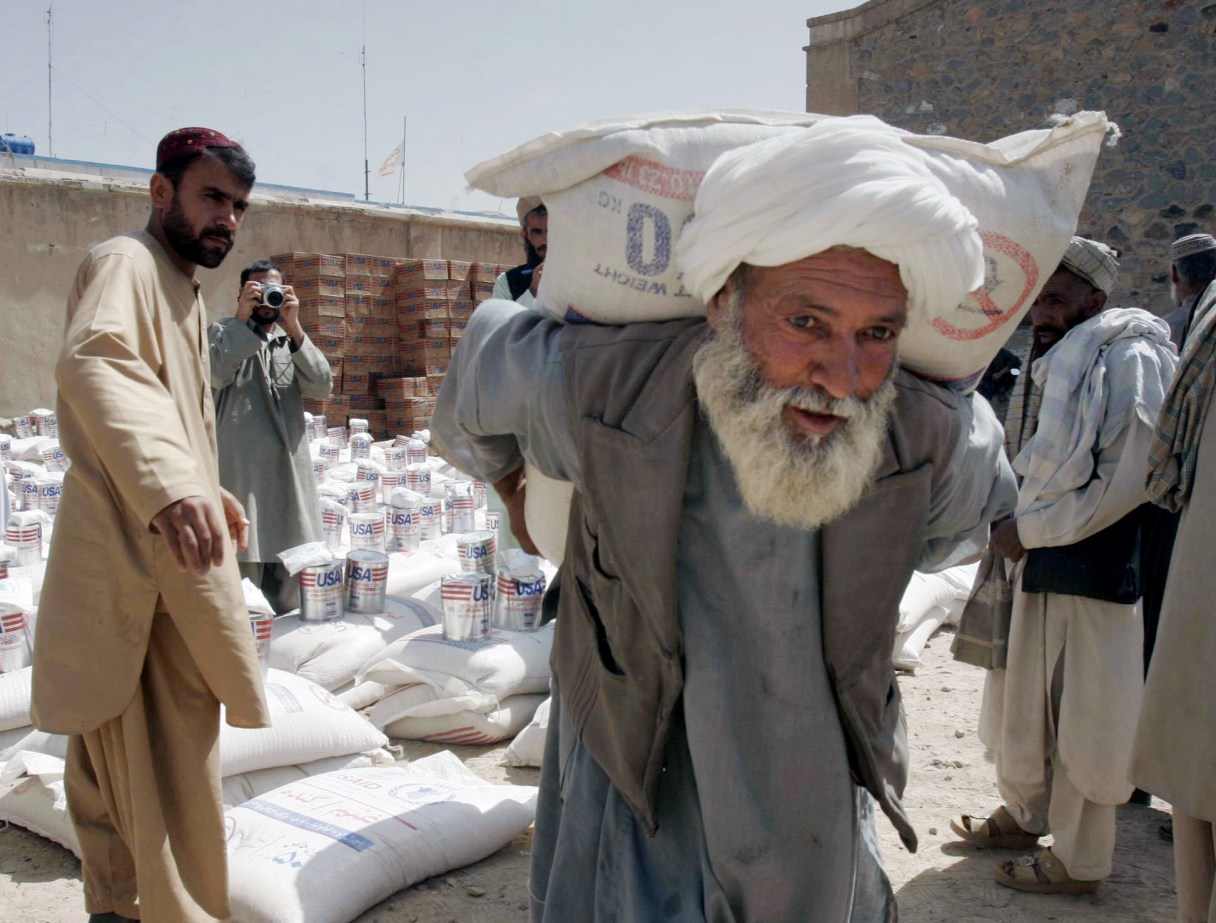
FILE - In this May 10, 2009, file photo, an Afghan man carries a sack of wheat distributed to poor displaced families of Helmand province in the city of Kandahar province south of Kabul, Afghanistan. With Washington set to send billions of dollars in fresh aid to Afghanistan despite the military drawdown, the U.S. official in charge of auditing assistance programs says “it’s not too late” to address the fraud and mismanagement that has bedeviled the 14-year effort to rebuild the country. (AP Photo/Allauddin Khan, File)
FILE - In this May 10, 2009, file photo, an Afghan man carries a sack of wheat distributed to poor displaced families of Helmand province in the city of Kandahar province south of Kabul, Afghanistan. With Washington set to send billions of dollars in fresh aid to Afghanistan despite the military drawdown, the U.S. official in charge of auditing assistance programs says “it’s not too late” to address the fraud and mismanagement that has bedeviled the 14-year effort to rebuild the country. (AP Photo/Allauddin Khan, File) FILE - In this May 10, 2009, file photo, an Afghan man carries a sack of wheat distributed to poor displaced families of Helmand province in the city of Kandahar province south of Kabul, Afghanistan. With Washington set to send billions of dollars in fresh aid to Afghanistan despite the military drawdown, the U.S. official in charge of auditing assistance programs says “it’s not too late” to address the fraud and mismanagement that has bedeviled the 14-year effort to rebuild the country. (AP Photo/Allauddin Khan, File)

KABUL, Afghanistan (AP) – With Washington set to send billions of dollars in fresh aid to Afghanistan despite the military drawdown, the U.S. official in charge of auditing assistance programs says “it’s not too late” to address the fraud and mismanagement that has bedeviled the 14-year effort to rebuild the country.

The military intervention launched after the Sept. 11 attacks has cost the United States $1 trillion, including some $110 billion in aid aimed at rebuilding one of the poorest, most violent and most corrupt countries on earth. To this day Afghanistan relies on foreign aid as it battles an increasingly potent Taliban insurgency.

But John Sopko, who has spent more than three years probing U.S.-funded projects as the special investigator general for Afghanistan reconstruction (SIGAR), said the U.S. government is partly to blame for the misused funds.

“What I’m identifying are not just Afghan or Afghan-related problems, they are problems with the way the United States government operates,” he said.

He said the Pentagon and the U.S. Agency for International Development suffer from corruption as well as poor planning, oversight and accountability. He said they often fail to coordinate with one another or measure programs’ effectiveness.