
Thursday, November 12, 2026Nov 12

UN weather agency: 2014 on track for hottest year

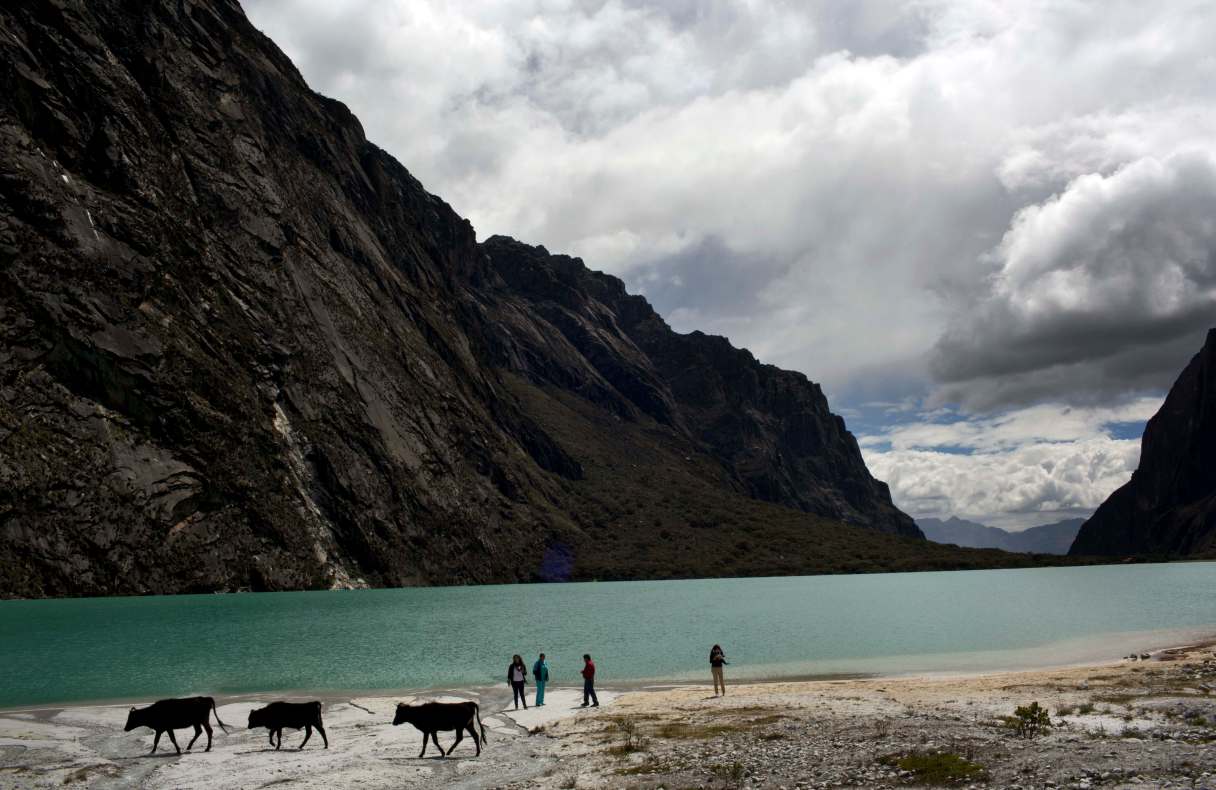
People gather near the Chinamacocha lake in the Huascaran National Park in Huaraz, Peru, Tuesday, Dec. 2, 2014. Glaciers have lost more one-fifth of their mass in just three decades, and the 70 percent Peru’s 30 million people who inhabit the country’s Pacific coastal desert, depend on glacial runoff for hydropower and to irrigate crops, meaning their electricity and long-term food security could also be in peril. Higher alpine temperatures are killing off plant and animal species in cloud forests and scientists predict Pacific fisheries will suffer. (AP Photo/Rodrigo Abd)
People gather near the Chinamacocha lake in the Huascaran National Park in Huaraz, Peru, Tuesday, Dec. 2, 2014. Glaciers have lost more one-fifth of their mass in just three decades, and the 70 percent Peru’s 30 million people who inhabit the country’s Pacific coastal desert, depend on glacial runoff for hydropower and to irrigate crops, meaning their electricity and long-term food security could also be in peril. Higher alpine temperatures are killing off plant and animal species in cloud forests and scientists predict Pacific fisheries will suffer. (AP Photo/Rodrigo Abd) People gather near the Chinamacocha lake in the Huascaran National Park in Huaraz, Peru, Tuesday, Dec. 2, 2014. Glaciers have lost more one-fifth of their mass in just three decades, and the 70 percent Peru’s 30 million people who inhabit the country’s Pacific coastal desert, depend on glacial runoff for hydropower and to irrigate crops, meaning their electricity and long-term food security could also be in peril. Higher alpine temperatures are killing off plant and animal species in cloud forests and scientists predict Pacific fisheries will suffer. (AP Photo/Rodrigo Abd)

LIMA, Peru (AP) – With temperature data showing 2014 currently tied for the hottest year on record, the U.N. weather agency on Wednesday rejected claims that global warming has paused.

The World Meteorological Organization said the global average temperature in January-October was 0.57 Celsius (1.03 Fahrenheit) above average, the same as in record hot year 2010.

The ocean temperature set a new record in the nine-month period, while land temperatures were the fourth or fifth highest since record-keeping began in the 19th century, the WMO said in a report released at U.N. climate talks in Lima and at its headquarters in Geneva.

“The provisional information for 2014 means that 14 of the 15 warmest years on record have all occurred in the 21st century,” WMO Secretary-General Michel Jarraud said in a statement. “There is no standstill in global warming.”

Climate skeptics point to a perceived hiatus in the temperature rise since 1998, an exceptionally hot year, to support their claims that man-made warming is not a big problem. Most climate scientists reject that idea. Michael Oppenheimer of Princeton University said the long-term warming trend is combined with natural variations that tend to be cyclical, with a period of lower-than-average warming followed by a period of rapid warming.