
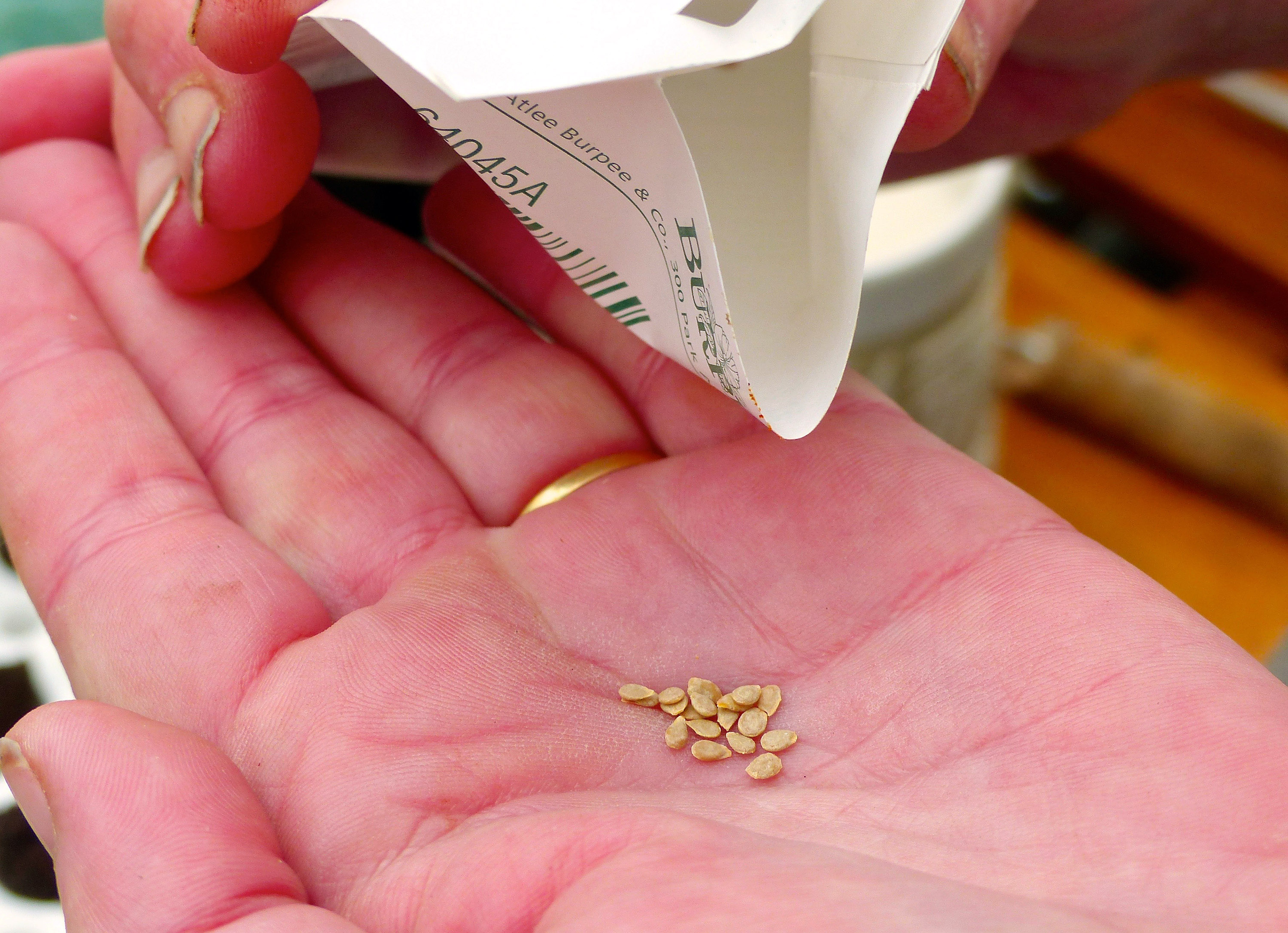
 If you’ve got a lot of leftover seeds from last season, you can test them to see if they’ll sprout.
Online
For more about testing leftover seeds for better performance, see this Oregon State University fact sheet: http://extension.oregonstate.edu/gardening/how-test-your-stored-seed-germination-0
Life expectancy
Here is the approximate life expectancy of certain seeds, according to “Knott’s Handbook for Vegetable Growers” (John Wiley & Sons, 2007):Vegetables* Six years: Lettuce.* Five years: Collards, cucumber, endive, muskmelon and radish.* Four years: Beets, cabbage, eggplant, pumpkin, squash, tomatoes and watermelon.* Three years: Asparagus, celery, peas and spinach.* Two years: Sweet corn, leek, okra, pepper.Flowers* Five to six years: Nasturtium, zinnia, calendula.* Four years: Celosia, cosmos, hollyhock, marigold, petunia, sweet peas.* Two to three years: Digitalis, impatiens, pansies and phlox.Herbs* Five years: Cilantro and dill.* Three to four years: Arugula and fennel.* Two years: Sage and chive.
If you save seeds, you might wonder whether those from last year are still viable. A quick and easy pre-season seed germination test can answer that question.
Much depends on how the seeds were collected and stored, says Ross Penhallegon, an associate professor emeritus and horticulturist with the Oregon State University College of Agricultural Sciences.
“Surplus seeds can’t be left out. Weevils might get in,” he says. “Typically, they should be placed in some kind of closed container, and then stored in a refrigerator or freezer over the winter.”