
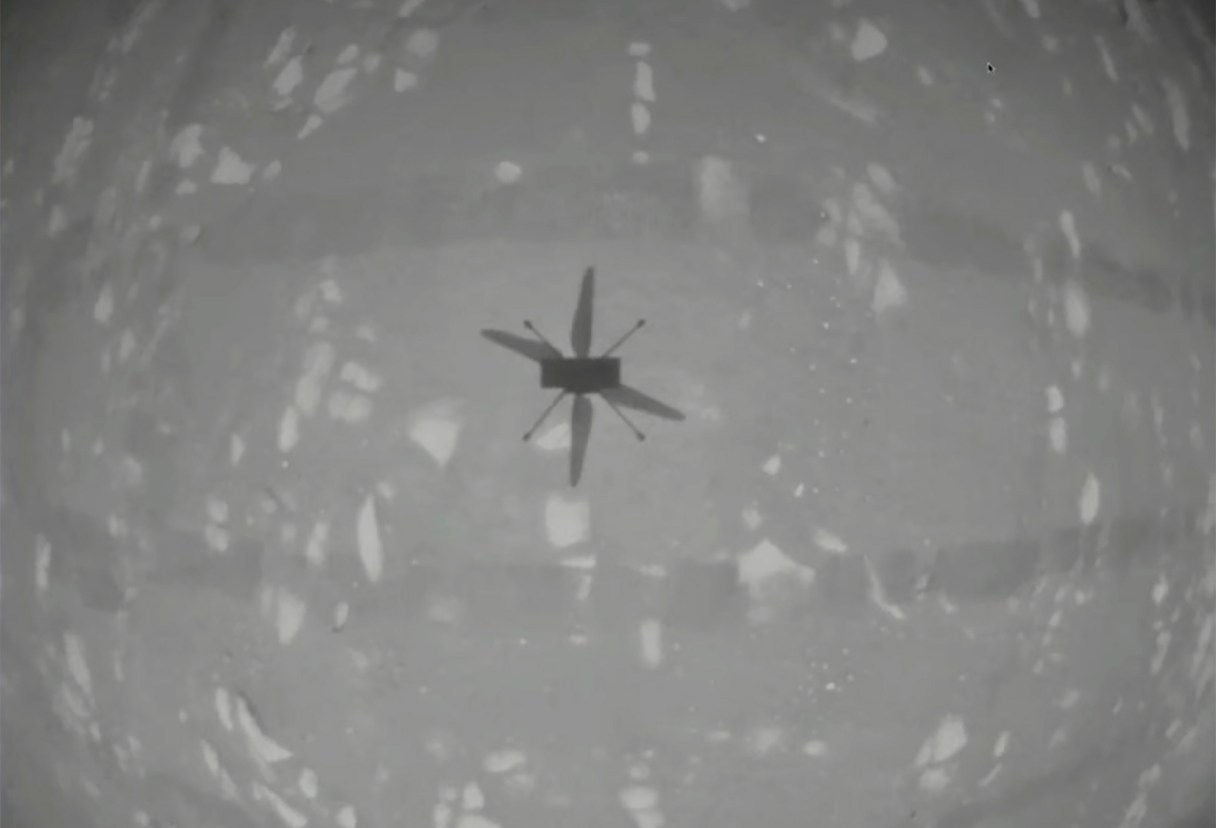
The little helicopter weighs only 4 pounds, and its first flight lasted a mere 30 seconds and reached an altitude of only 10 feet. But it did so on Mars. Stop and wonder about that for a moment. For the first time, humankind has achieved powered flight on another planet. A feat that would be nothing for a 10-year-old child to accomplish with a backyard drone takes on new meaning when it happens 178 million miles away on a planet with 1% of Earth’s atmosphere.
Engineers at NASA’s Jet Propulsion Laboratory in California didn’t know the flight had succeeded until more than three hours after it was over; that’s how long it took the burst of data to reach Earth. Hold that thought in your mind for a second.
In a year in which a pandemic has claimed more than 567,000 American lives and 3 million across the globe, in which the promise of American justice and equity is on trial again – this time in a Minneapolis courtroom, it’s worthwhile to look outside of ourselves for a second and to remember what we can accomplish as a species.
Sixty years ago this month, human spaceflight began. It wasn’t an American; it was a Russian cosmonaut – Soviet, actually – named Yuri Gagarin who made one orbit of Earth and set in motion the Space Race, which pitted the Americans and the Soviets against each other in a kind of Cold War for preeminence in the actual heavens.
That Space Race effectively ended in July 1969, when the late Neil Armstrong jumped off the last rung of the Lunar Module’s ladder to announce “a giant leap for mankind.” Back on Earth, while people across the globe were astonished that Earthlings were walking on the moon, many also wondered if those billions of dollars should have been spent instead on what we would now term social justice. The parallels to today are instructive, and we face some of those same choices. So was it worth it? Is it now?