
Thursday, November 12, 2026Nov 12

Pakistani Oscar-nominated film tackles ‘honor’ killings

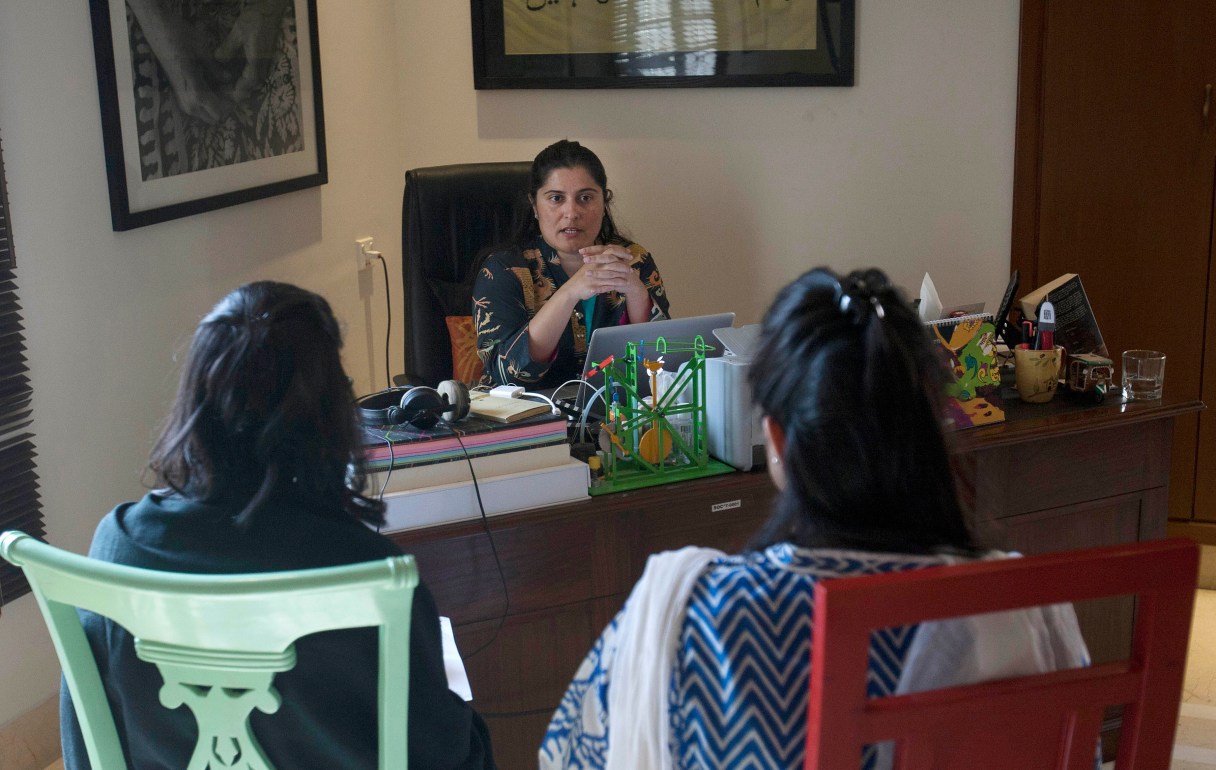
In this Tuesday, Feb. 2, 2016 photo, Pakistan's Oscar winning filmmaker, Sharmeen Obaid-Chinoy discusses with colleagues at her office in Karachi, Pakistan. Obaid-Chinoy is nominated for a second Oscar for her moving story of a teenage girl shot and dumped into a river because she married a man of her choosing. (AP Photo/Shakil Adil)
In this Tuesday, Feb. 2, 2016 photo, Pakistan's Oscar winning filmmaker, Sharmeen Obaid-Chinoy discusses with colleagues at her office in Karachi, Pakistan. Obaid-Chinoy is nominated for a second Oscar for her moving story of a teenage girl shot and dumped into a river because she married a man of her choosing. (AP Photo/Shakil Adil) In this Tuesday, Feb. 2, 2016 photo, Pakistan's Oscar winning filmmaker, Sharmeen Obaid-Chinoy discusses with colleagues at her office in Karachi, Pakistan. Obaid-Chinoy is nominated for a second Oscar for her moving story of a teenage girl shot and dumped into a river because she married a man of her choosing. (AP Photo/Shakil Adil)

KARACHI, Pakistan (AP) – When Saba Qaiser was 19 years old, her uncle and father shot her in the head, stuffed her in a bag and threw into a river to die. They said she had shamed her family when she married the boy of her choice.

She crawled from the water, severely wounded. It was pitch black. She grabbed hold of the scraggly bushes on the river’s edge and pulled herself to safety. In the distance, Saba could see only the single headlight of a motorcycle and then a gas station.

“Save me. Save me,” she pleaded to the doctor who eventually treated her.

Saba is the hero of the Oscar-nominated documentary “A Girl in the River: The Price of Forgiveness,” by Pakistani filmmaker Sharmeen Obaid-Chinoy.

It explores the practice of honor killings, where fathers, husbands and brothers kill their wives, daughters or sisters for shaming them, accusing them of “stealing” their honor. The offence could be as minor as a misinterpreted look in the direction of a boy, sitting too long in the presence of an unknown man or in Saba’s case, marrying a man of her choice.