
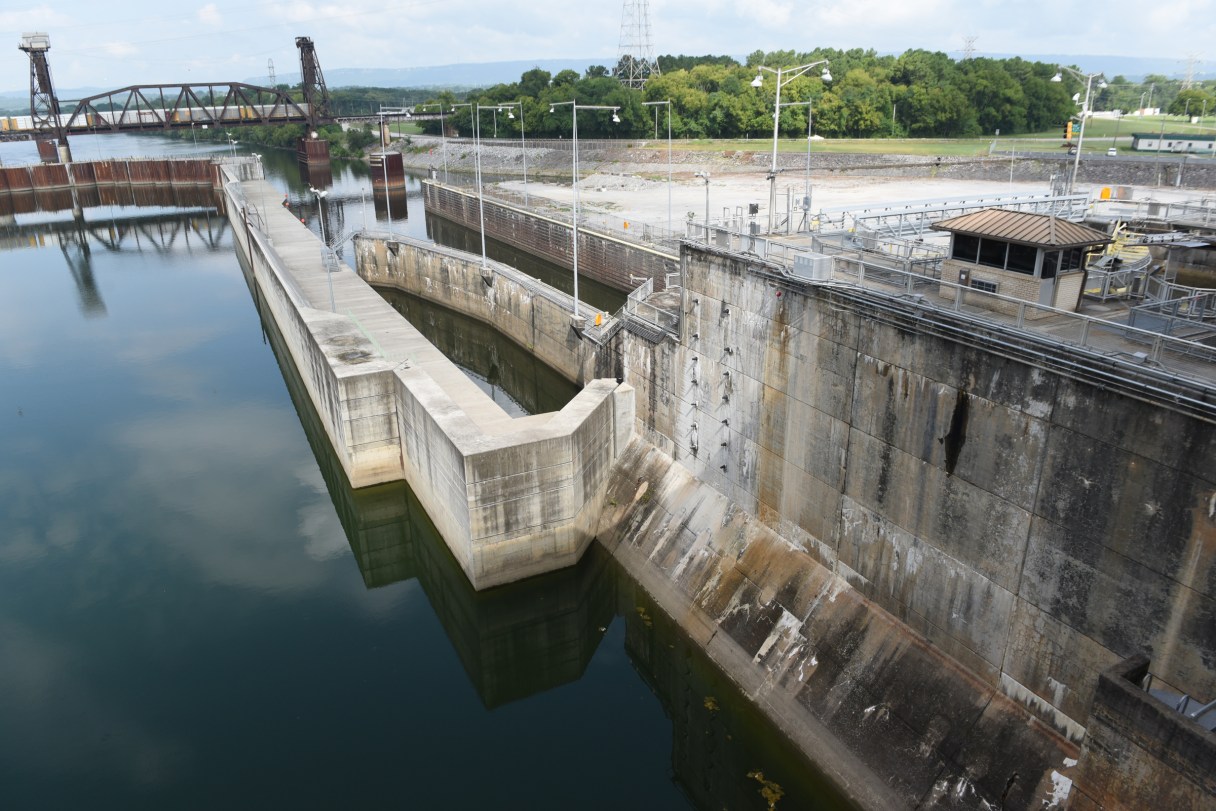
U.S. Sen. Lamar Alexander, R-Tenn., today disputed a new economic assessment that weakens the justification for building a new lock at the Chickamauga Dam, claiming the study doesn’t tell the full story of the value of the $858 million project.
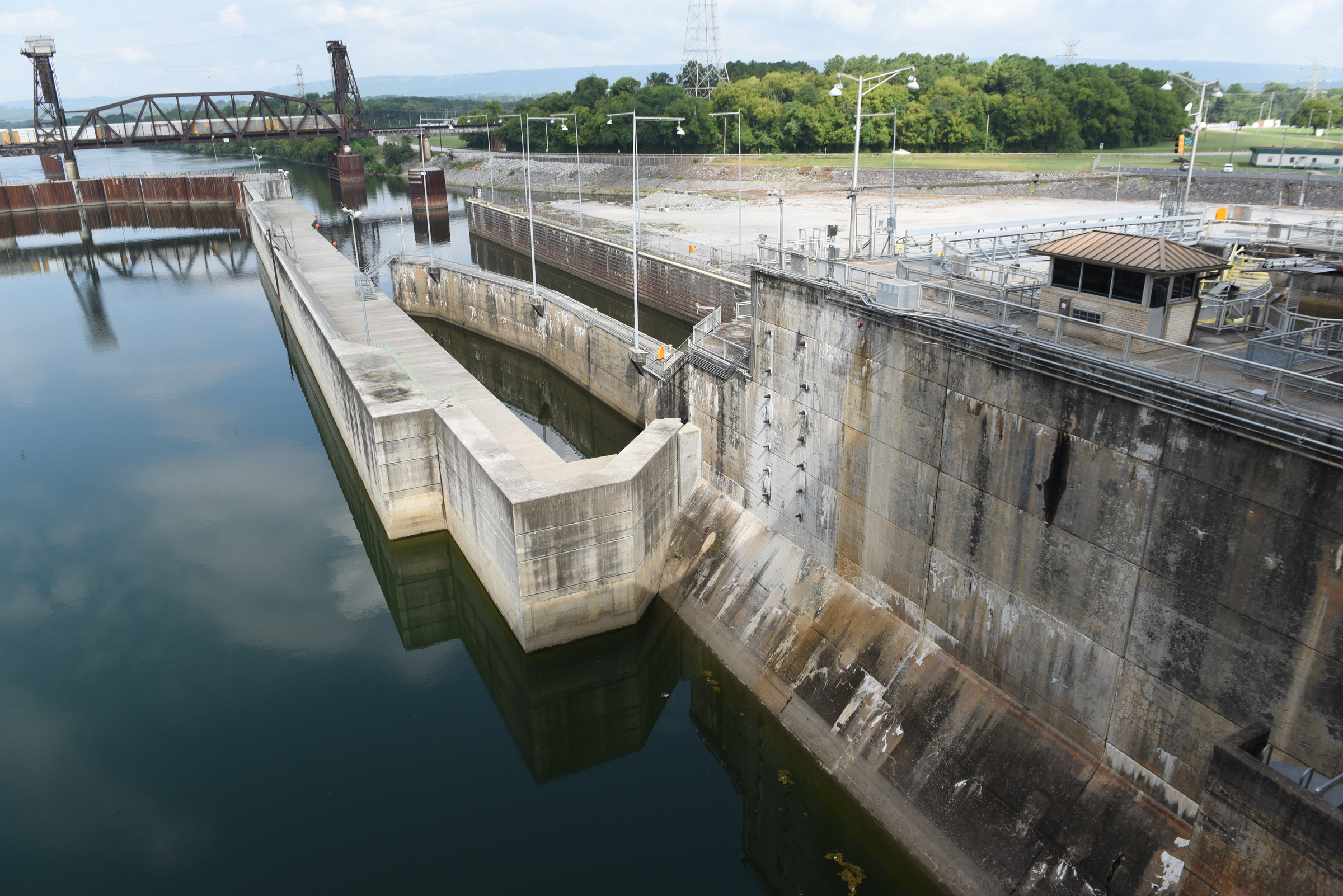 The stalled replacement lock project at the Chickamauga Lock is seen at left next to the original lock in this Aug. 11, 2015, file photo.
 Sen. Lamar Alexander speaks to reporters and editors at the Chattanooga Times Free Press on June 5, 2015.
Alexander, the chairman of the energy and water development appropriations subcommittee that oversees the Army Corps of Engineers, said barge traffic at the existing Chickamauga Lock has dropped because the lock isn’t as reliable as it once was and is smaller in size than other locks downstream on the Tennessee River.
“Traffic through the lock has been declining the last few years for this obvious reason: the existing lock is outdated, inefficient and unreliable, which is why it urgently needs to be replaced,” Alexander said. “Because the Corps’ updated economic analysis includes this artificially low lock usage data, it only tells half the story. The Corps should focus on the benefits of finishing the new lock, not second-guessing the work that has already been done.”
The Corps presented a study to the Inland Water Users Board Tuesday that suggested the benefits of the new lock may no longer justify its cost because the price tag for the project has more than doubled while barge use of the lock has dropped in half in the past decade.
Shippers, including Tate & Lyle in Loudon, Tenn., say they switched from river transportation to rail because the current, crumbling Chickamauga Lock in often closed for repairs. The Loudon plant brings 2 million tons a year of corn to the riverfront facility and its switch to rail is one of the major reasons for the drop off in commercial tonnage through the Chickamauga Lock in recent years.