
Wednesday, November 11, 2026Nov 11

AP PHOTOS: Peru dancers act out past violence in Andes

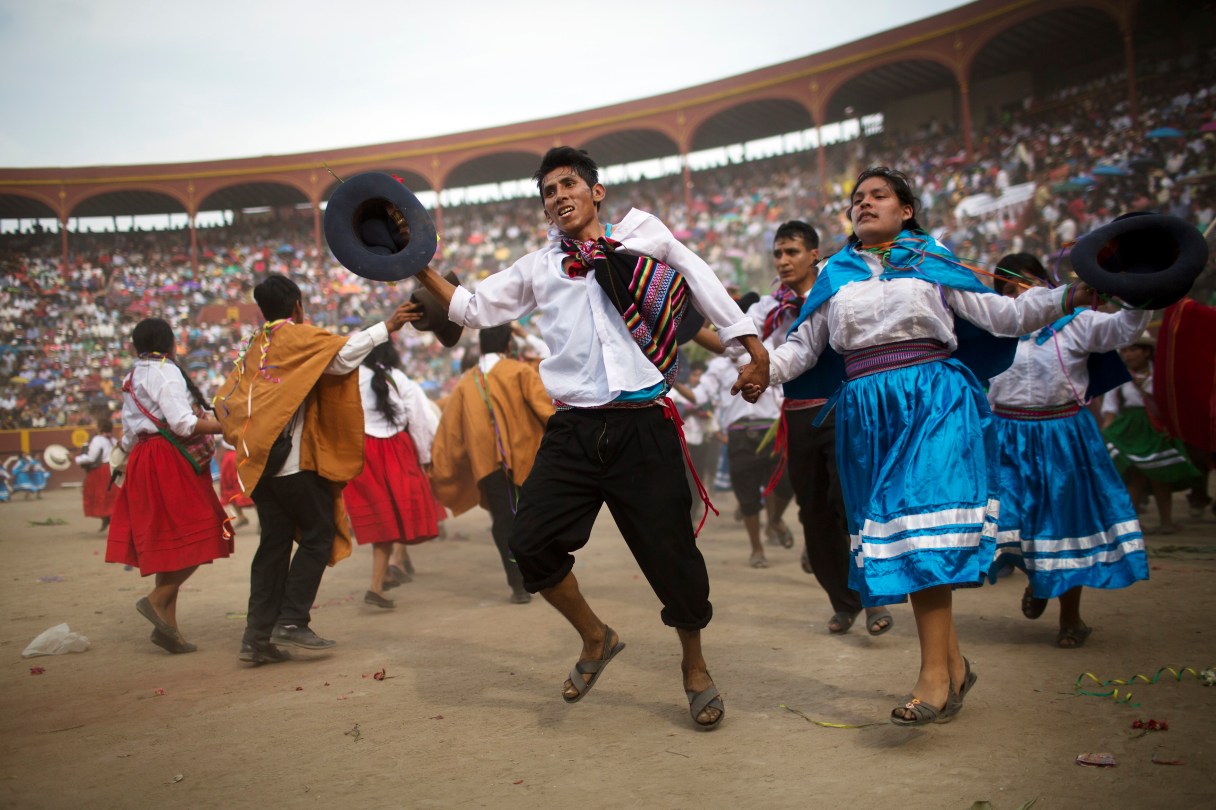
In this Sunday, March 29, 2015 photo, people perform a traditional dance during the Vencedores de Ayacucho dance festival, in the Acho bullring, in Lima, Peru. The one-day dance competition was the culmination of pre-Easter celebrations held in the Andean communities, an event brought to Peru’s capital because so many highlands people moved there fleeing violence. (AP Photo/Rodrigo Abd)
In this Sunday, March 29, 2015 photo, people perform a traditional dance during the Vencedores de Ayacucho dance festival, in the Acho bullring, in Lima, Peru. The one-day dance competition was the culmination of pre-Easter celebrations held in the Andean communities, an event brought to Peru’s capital because so many highlands people moved there fleeing violence. (AP Photo/Rodrigo Abd) In this Sunday, March 29, 2015 photo, people perform a traditional dance during the Vencedores de Ayacucho dance festival, in the Acho bullring, in Lima, Peru. The one-day dance competition was the culmination of pre-Easter celebrations held in the Andean communities, an event brought to Peru’s capital because so many highlands people moved there fleeing violence. (AP Photo/Rodrigo Abd)

LIMA, Peru (AP) – They danced all day, until the sun set over Latin America’s oldest bullring. But these were not typical dances of Peru’s highlands.

Each contained macabre reminders of the bitter conflict that these migrants from the Ayacucho region, or their parents, had endured.

The region suffered some of Peru’s worst modern-day atrocities. A truth commission found that more than 8,000 people died violently there during the 1980-2000 conflict with Shining Path rebels.

In Sunday’s dances, people of all ages, costumed as farmworkers, tigers, foxes, soldiers, police and members of citizen militias portrayed life as they know it, from the planting of corn and potatoes and their harvest to the political violence that afflicted their communities.

The festival was the culmination of pre-Easter celebrations held in the Andean communities, an event brought to Peru’s capital because so many highlands people moved there fleeing violence.