
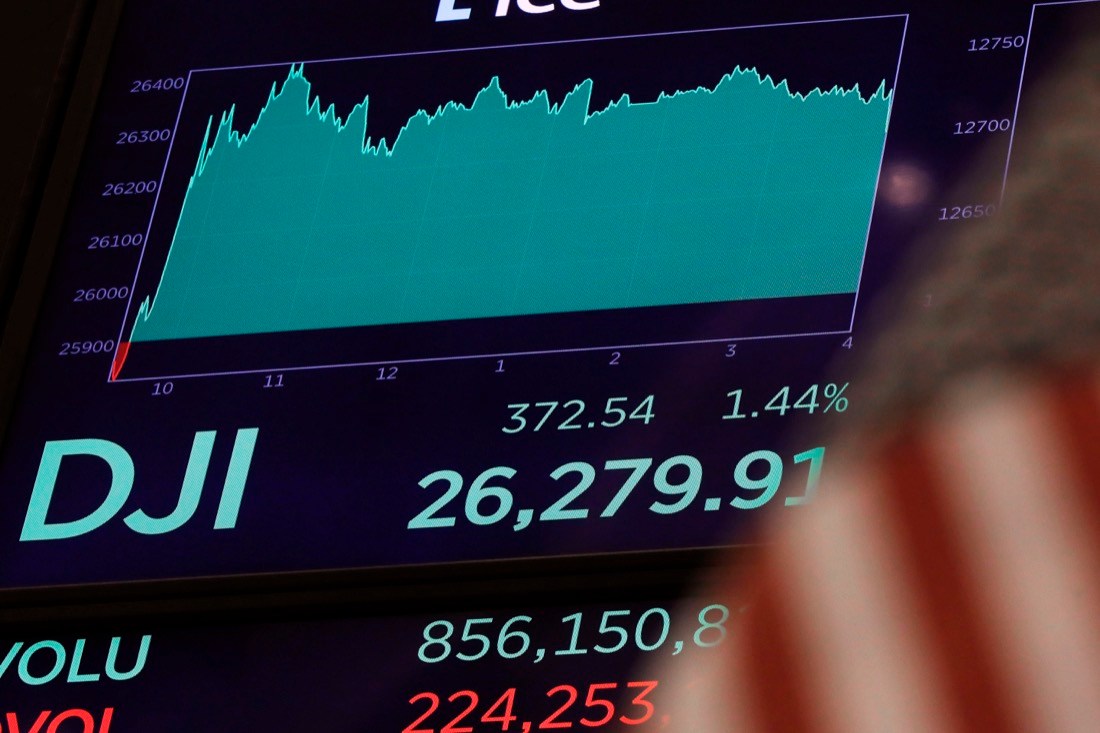
Investors have experienced increased anxiety over the past two weeks as the market indices have encountered some turbulence. Concerns over the trade war, slowing global growth and a puzzling interest rate cut by the Fed have conspired to heighten fears of an impending recession and trigger a bit of a selloff in the market.
No one panics when stocks move higher, but periods of declining value call for a reminder of the proper perspective regarding naturally cyclical market behavior.
Over the longer run, stock prices tend to rise. Since 1984, the value of the S&P 500 index (excluding dividends) has risen 16-fold, including all the ups and downs over that 35-year period. But that incredible growth has not followed a straight line, but instead has been subject to fluctuations, most often unpredictable, that must be accepted and tolerated by anyone willing to invest in stocks.
On average, the S&P 500 index will decline by 10% or more approximately once every 18 months. This is disconcerting for an investor with a short horizon, but over a sufficiently long time frame these corrections are scarcely recalled. A more severe decline of 20% or more is colloquially referred to as a “bear market.” These significant pullbacks occur much less frequently and often accompany cyclical downturns in the economy (recessions). The important point to remember is that in every case, stock values increased more in the next up cycle than they lost on the downswing.
 Christopher A. Hopkins
Investors may be tempted to ask, “why not sell out before the next dip?” This is an excellent strategy for maximizing profits and minimizing losses, except for one minor flaw: no one is able to pull it off. One can find examples of someone whose timing was perfect in a specific instance, but virtually nobody can replicate that success over time. No less than renowned economist (and market speculator) John Maynard Keynes gave up on the idea of market timing through bitter experience.