
Thursday, November 12, 2026Nov 12

Wisconsin Supreme Court upholds 2011 union law

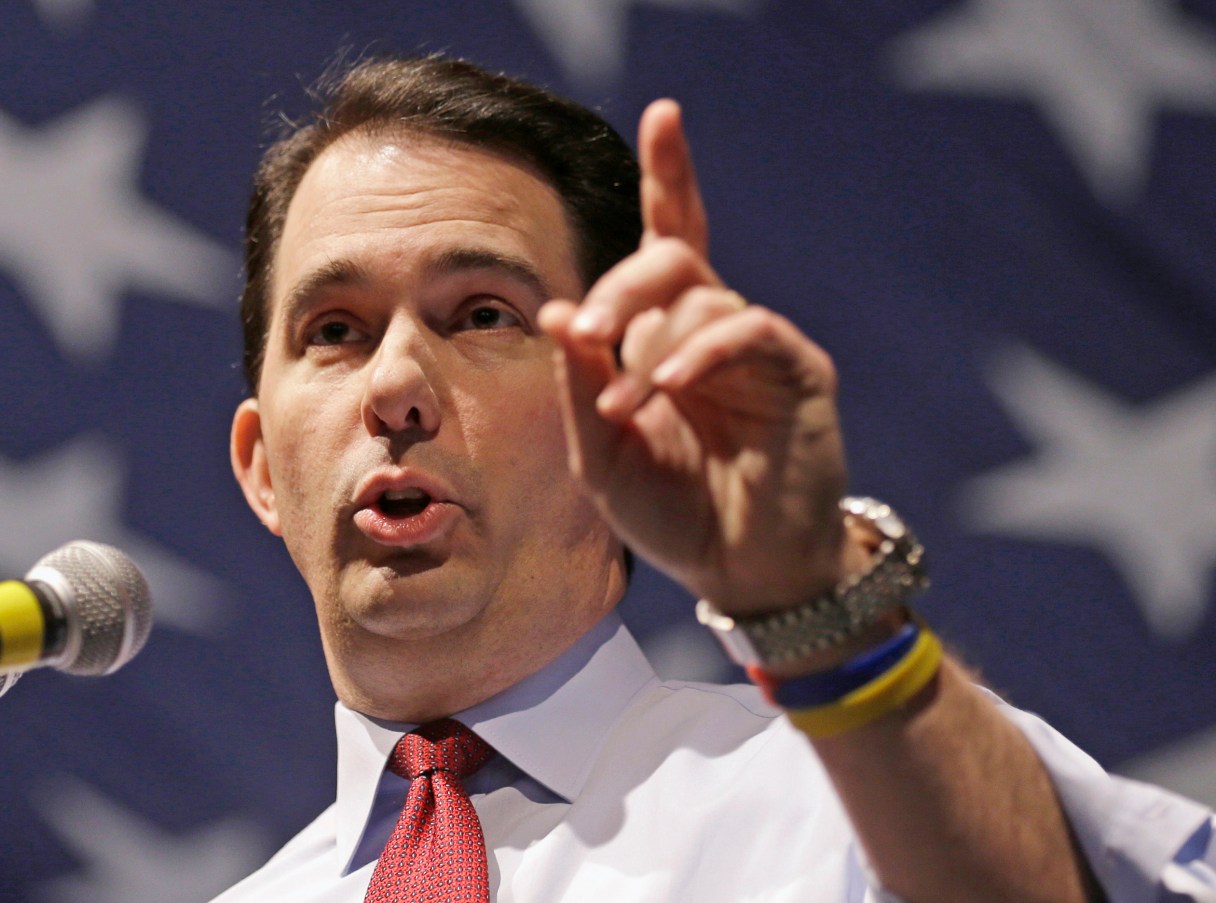
FILE - In this May 3, 2014, file photo, Wisconsin Republican Gov. Scott Walker speaks in Milwaukee. In a 5-2 ruling Thursday, July 31, 2014, the Wisconsin Supreme Court has upheld the 2011 law that effectively ended collective bargaining for most public workers, sparked massive protests and led to Walker's recall election and rise to national prominence. The ruling is a victory for Walker, who is considering a 2016 run for president and is seeking re-election this year. (AP Photo/Jeffrey Phelps, File)
FILE - In this May 3, 2014, file photo, Wisconsin Republican Gov. Scott Walker speaks in Milwaukee. In a 5-2 ruling Thursday, July 31, 2014, the Wisconsin Supreme Court has upheld the 2011 law that effectively ended collective bargaining for most public workers, sparked massive protests and led to Walker's recall election and rise to national prominence. The ruling is a victory for Walker, who is considering a 2016 run for president and is seeking re-election this year. (AP Photo/Jeffrey Phelps, File) FILE - In this May 3, 2014, file photo, Wisconsin Republican Gov. Scott Walker speaks in Milwaukee. In a 5-2 ruling Thursday, July 31, 2014, the Wisconsin Supreme Court has upheld the 2011 law that effectively ended collective bargaining for most public workers, sparked massive protests and led to Walker's recall election and rise to national prominence. The ruling is a victory for Walker, who is considering a 2016 run for president and is seeking re-election this year. (AP Photo/Jeffrey Phelps, File)

MADISON, Wis. (AP) – The Wisconsin Supreme Court on Thursday upheld the 2011 law that effectively ended collective bargaining for most public workers, sparked massive protests and led to Republican Gov. Scott Walker’s recall election and rise to national prominence.

The 5-2 ruling upholds the signature policy achievement of Walker in its entirety and is a major victory for the potential 2016 GOP presidential candidate, who is seeking re-election this year.

The ruling also marks the end of the three-year legal fight over the union rights law, which prohibits public worker unions from collectively bargaining for anything beyond base wage increases based on inflation. A federal appeals court twice upheld the law as constitutional.

“No matter the limitations or ‘burdens’ a legislative enactment places on the collective bargaining process, collective bargaining remains a creation of legislative grace and not constitutional obligation,” Justice Michael Gableman wrote for the majority.

The high court ruled in a lawsuit filed by the Madison teachers union and a union representing Milwaukee public workers. They had argued that the law, which came to be known as Act 10, violated workers’ constitutional rights to free assembly and equal protection.