
Thursday, November 12, 2026Nov 12

Central American migrants in Mexico want buses to U.S. border

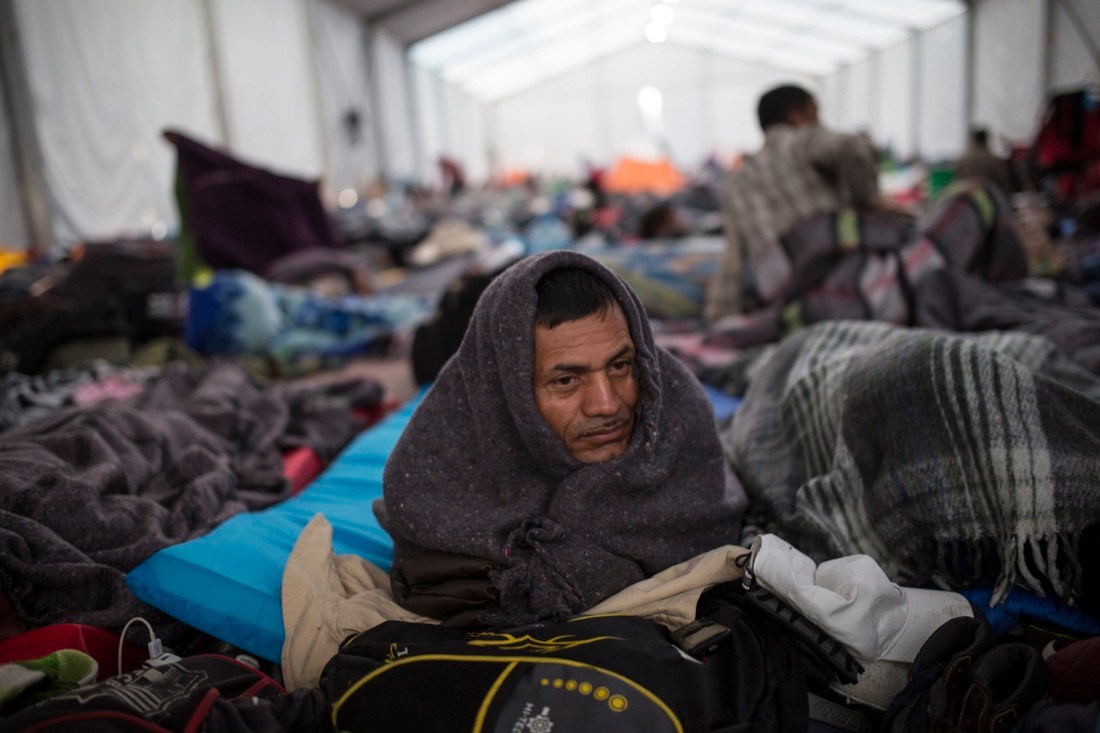
Alcides Padilla, from Honduras, wakes up at the Jesus Martinez stadium in Mexico City, Wednesday, Nov. 7, 2018. Central American migrants on Wednesday continued to straggle in for a rest stop at a Mexico City stadium, where about 4,500 continue to weigh offers to stay in Mexico against the desire of many to reach the U.S. border. (AP Photo/Rodrigo Abd)
Alcides Padilla, from Honduras, wakes up at the Jesus Martinez stadium in Mexico City, Wednesday, Nov. 7, 2018. Central American migrants on Wednesday continued to straggle in for a rest stop at a Mexico City stadium, where about 4,500 continue to weigh offers to stay in Mexico against the desire of many to reach the U.S. border. (AP Photo/Rodrigo Abd) Alcides Padilla, from Honduras, wakes up at the Jesus Martinez stadium in Mexico City, Wednesday, Nov. 7, 2018. Central American migrants on Wednesday continued to straggle in for a rest stop at a Mexico City stadium, where about 4,500 continue to weigh offers to stay in Mexico against the desire of many to reach the U.S. border. (AP Photo/Rodrigo Abd)

MEXICO CITY (AP) – Central American migrants in a caravan that has stopped in Mexico City demanded buses Thursday to take them to the U.S. border, saying it is too cold and dangerous to continue walking and hitchhiking.

Mexico City authorities say that of the 4,841 registered migrants receiving shelter in a sports complex, 1,726 are under the age of 18, including 310 children under five.

“We need buses to continue traveling,” said Milton Benitez, a caravan coordinator. Benitez noted that It would be colder in northern Mexico and it wasn’t safe for the migrants to continue along highways, where drug cartels frequently operate.

He said the route and departure time would be decided at a meeting Thursday night.

The Mexican government has said most of the migrants have refused offers to stay in Mexico, and only a small number have agreed to return to their home countries. About 85 percent of the migrants are from Honduras, while others are from the Central American countries of Guatemala, El Salvador and Nicaragua.