
Wednesday, November 11, 2026Nov 11

Gene therapy to fight a blood cancer succeeds in major study

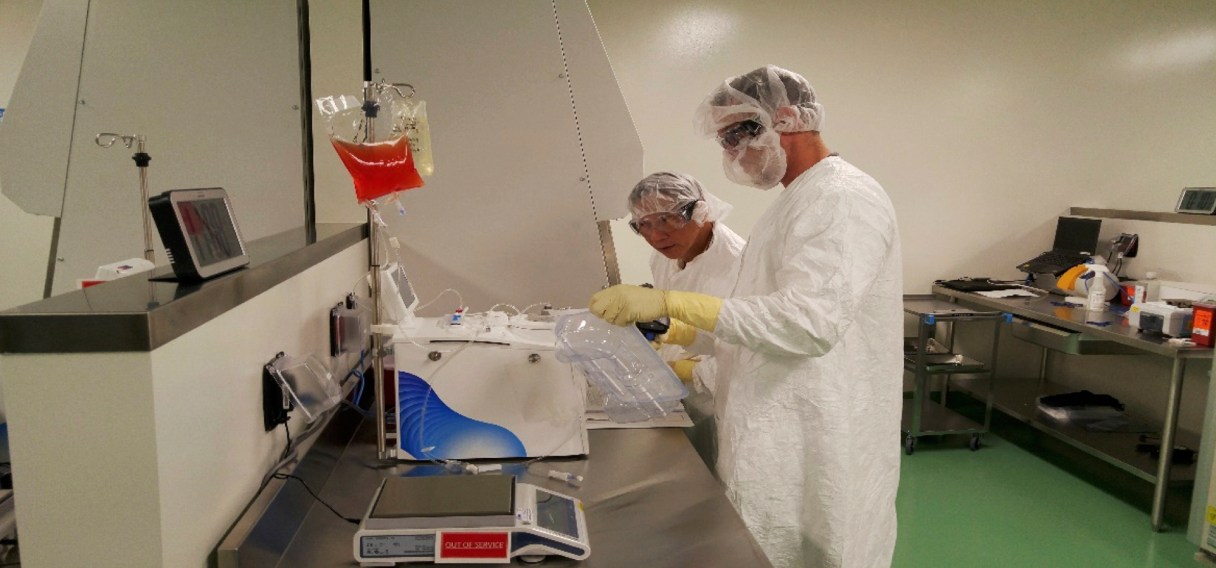
In this May 2016 photo provided by Kite Pharma, cell therapy specialists at the company's manufacturing facility in El Segundo, Calif., prepare blood cells from a patient to be engineered in the lab to fight cancer. The experimental gene therapy, called CAR-T cell, turns a patient's own blood cells into specialized cancer killers and worked in the study, with more than one third of very sick lymphoma patients showing no sign of disease six months after a single treatment, its maker said Tuesday, Feb. 28, 2017. (Kite Pharma via AP)
In this May 2016 photo provided by Kite Pharma, cell therapy specialists at the company's manufacturing facility in El Segundo, Calif., prepare blood cells from a patient to be engineered in the lab to fight cancer. The experimental gene therapy, called CAR-T cell, turns a patient's own blood cells into specialized cancer killers and worked in the study, with more than one third of very sick lymphoma patients showing no sign of disease six months after a single treatment, its maker said Tuesday, Feb. 28, 2017. (Kite Pharma via AP) In this May 2016 photo provided by Kite Pharma, cell therapy specialists at the company's manufacturing facility in El Segundo, Calif., prepare blood cells from a patient to be engineered in the lab to fight cancer. The experimental gene therapy, called CAR-T cell, turns a patient's own blood cells into specialized cancer killers and worked in the study, with more than one third of very sick lymphoma patients showing no sign of disease six months after a single treatment, its maker said Tuesday, Feb. 28, 2017. (Kite Pharma via AP)

An experimental gene therapy that turns a patient’s own blood cells into cancer killers worked in a major study, with more than one-third of very sick lymphoma patients showing no sign of disease six months after a single treatment, its maker said Tuesday.

In all, 82 percent of patients had their cancer shrink at least by half at some point in the study.

Its sponsor, California-based Kite Pharma, is racing Novartis AG to become the first to win approval of the treatment, called CAR-T cell therapy, in the U.S. It could become the nation’s first approved gene therapy.

A hopeful sign: the number in complete remission at six months – 36 percent – is barely changed from partial results released after three months, suggesting this one-time treatment might give lasting benefits for those who do respond well.

“This seems extraordinary … extremely encouraging,” said one independent expert, Dr. Roy Herbst, cancer medicines chief at the Yale Cancer Center.