
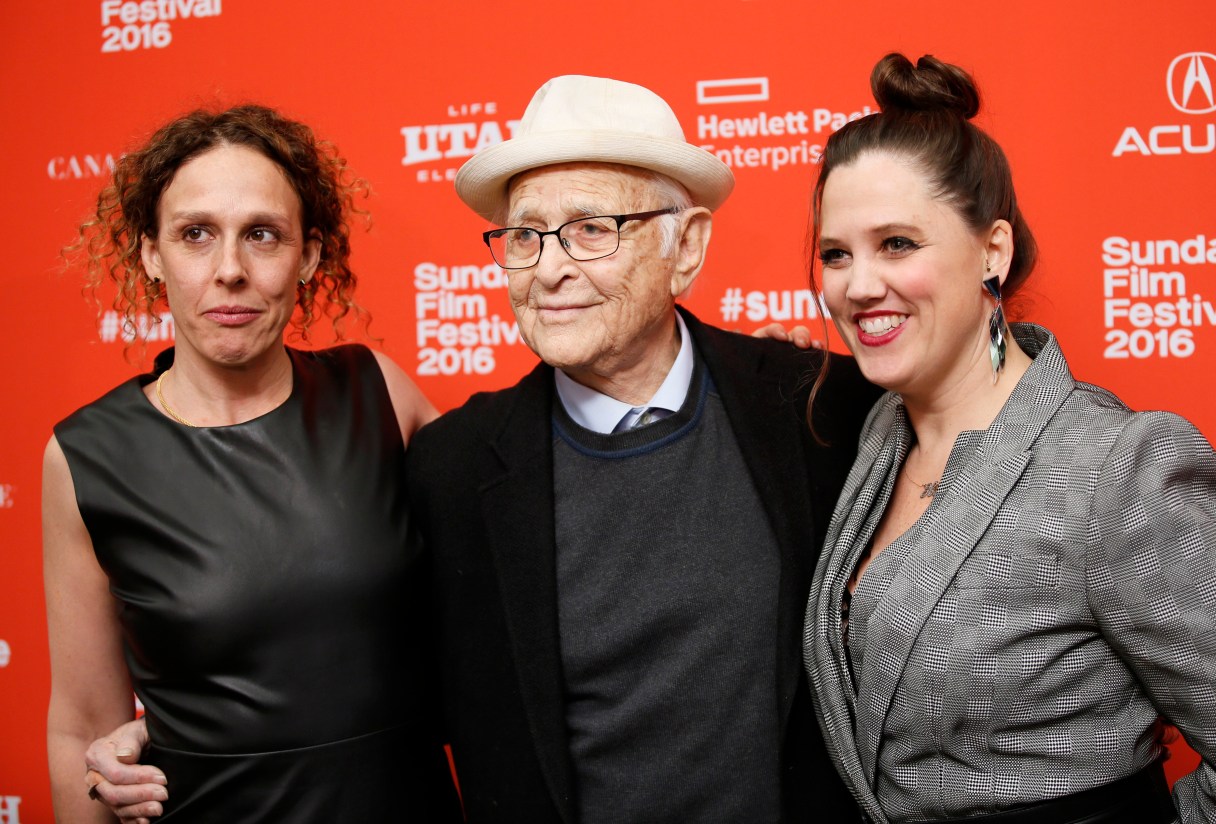
PARK CITY, Utah (AP) – Norman Lear was so touched by the documentary made about his life, he wanted to cuddle up with the entire audience at the Sundance Film Festival.
“If we could find the largest bed and we could all get in bed together, it would express everything I’m feeling right now,” Lear, 93, said after watching the film.
“Norman Lear: Another Version of You” was received with a standing ovation when it opened the Sundance Film Festival on Thursday night. Directed by Heidi Ewing and Rachel Grady, the film spans practically the whole of the 93-year-old artist and activist’s life, professionally and personally.
It explores Lear’s reasons for creating such groundbreaking sitcoms as “All in the Family,” ”Maude,” ”Good Times” and “The Jeffersons,” which were based as much on his personal experiences as his desire to bring real, relevant subjects to TV audiences.
“Another Version of You” skips through time, unfolding Lear’s story without chronological restraints. A theme throughout is Lear’s unresolved feelings for his father, who was jailed for fraud when Lear was 9. Lear grew up between uncles’ and grandparents’ houses, and the film frames his work – particularly in “All in the Family” – through this painful lens.