
Wednesday, November 11, 2026Nov 11

For some Californians, effects of punishing drought not over

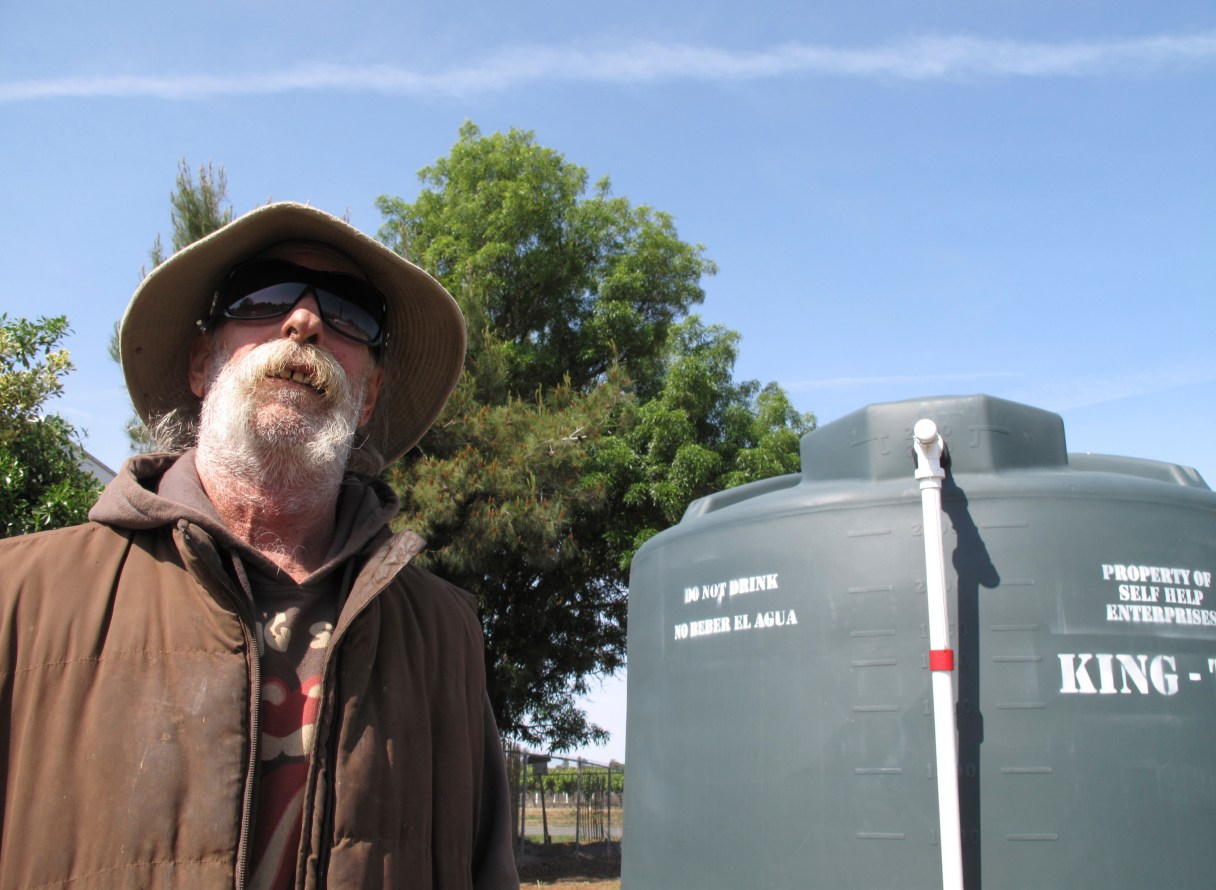
In this photo taken April 10, 2017, is David Miguel at his home in the community of Hardwick in the San Joaquin Valley where drought has yet to loosen its grip on some residents near Hanford, Calif. State officials lifted the drought emergency for much California, but thousands of people like Miguel still live on water tanks because their wells ran dry. (AP Photo/Scott Smith)
In this photo taken April 10, 2017, is David Miguel at his home in the community of Hardwick in the San Joaquin Valley where drought has yet to loosen its grip on some residents near Hanford, Calif. State officials lifted the drought emergency for much California, but thousands of people like Miguel still live on water tanks because their wells ran dry. (AP Photo/Scott Smith) In this photo taken April 10, 2017, is David Miguel at his home in the community of Hardwick in the San Joaquin Valley where drought has yet to loosen its grip on some residents near Hanford, Calif. State officials lifted the drought emergency for much California, but thousands of people like Miguel still live on water tanks because their wells ran dry. (AP Photo/Scott Smith)

HANFORD, Calif. (AP) – Knee-high tufts of grass dot the streets of Hardwick, a rural neighborhood with a few dozen homes hemmed in by vineyards and walnut and almond orchards in California’s agriculture-rich San Joaquin Valley.

Nearby, the Kings River – swollen with rainwater and Sierra Nevada snowmelt – meanders through fields. Water is abundant in the river but it may not last.

Despite winter storms that have turned much of California’s parched landscape to vibrant green, the drought has yet to loosen its grip on thousands of residents in the valley. Many people must still use water stored in large tanks in their yard to wash dishes and bathe.

Scientists at Stanford University and NASA say excessive pumping of wells during the drought has tapped out some underground sources of water that will never recover.

At the height of the drought, nearly 2,400 wells dried up, affecting 12,000 people, state officials said.