
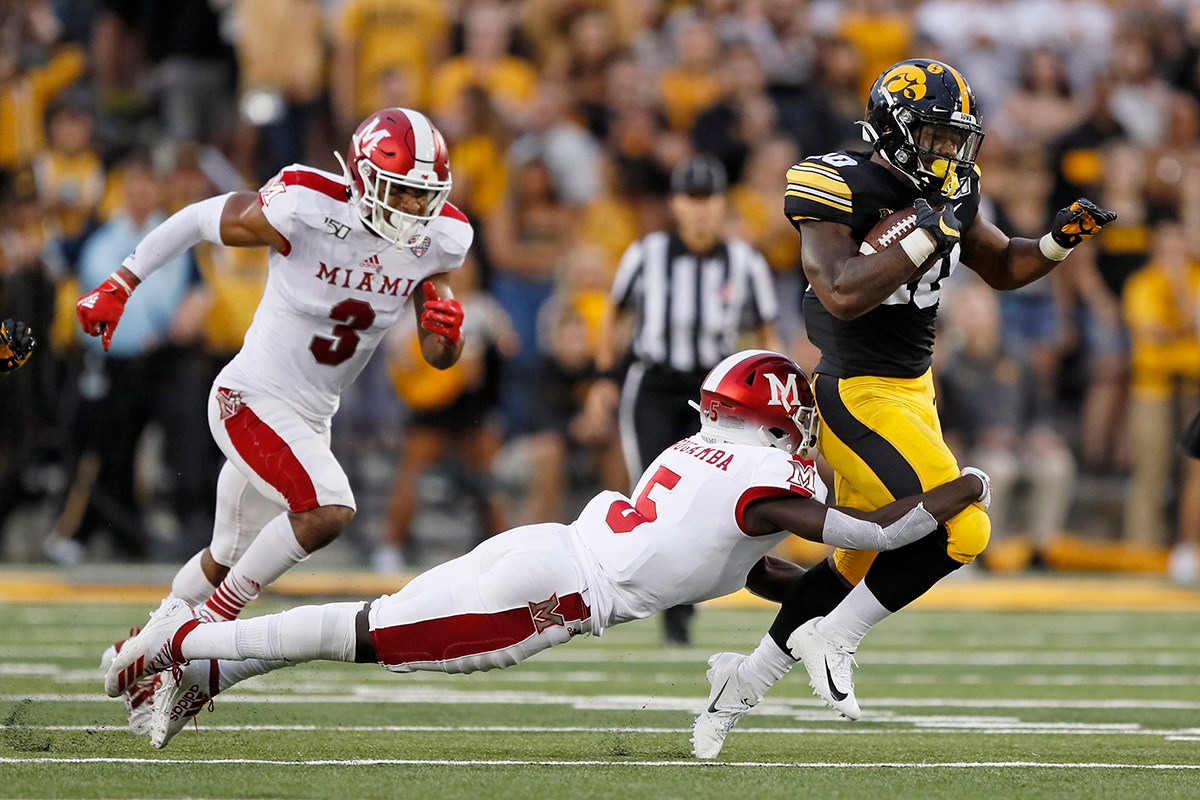
In many ways, the Mid-American Conference has little in common with the Power Five leagues that first come to mind when fans think of major college football.
There are no 75,000-seat stadiums in the MAC. Million-dollar per year coaches are rare. In a typical season, NFL scouts might find one or two potential first-round draft picks playing at the 12 MAC schools that dot the Midwest. The MAC’s biggest games – #MACtion, if you will – are often played on Tuesday and Wednesday nights. Its television deal with ESPN pays per year only a few million more than the $9 million Clemson pays coach Dabo Swinney.
Still, the MAC is one of 10 conferences that compete in the NCAA’s highest level of football, and Saturday it became the first of those to surrender to the coronavirus pandemic and cancel the fall sports season. So is the MAC an anomaly, done in by its small budgets, or is this a dire sign of things to come in college football?
“I won’t try to judge what other folks are doing,” MAC commissioner Jon Steinbrecher said. “I know we’re all in the same place. They all have their advisers. They’re going to make judgments based on the information they are receiving.”
Not long after the MAC announced it would explore second-semester seasons for all fall sports, including soccer and volleyball, the Big Ten – part of the Power Five that also includes the Atlantic Coast, Big 12, Pac-12 and Southeastern conferences – made its own announcement that seemed ominous given the timing.