
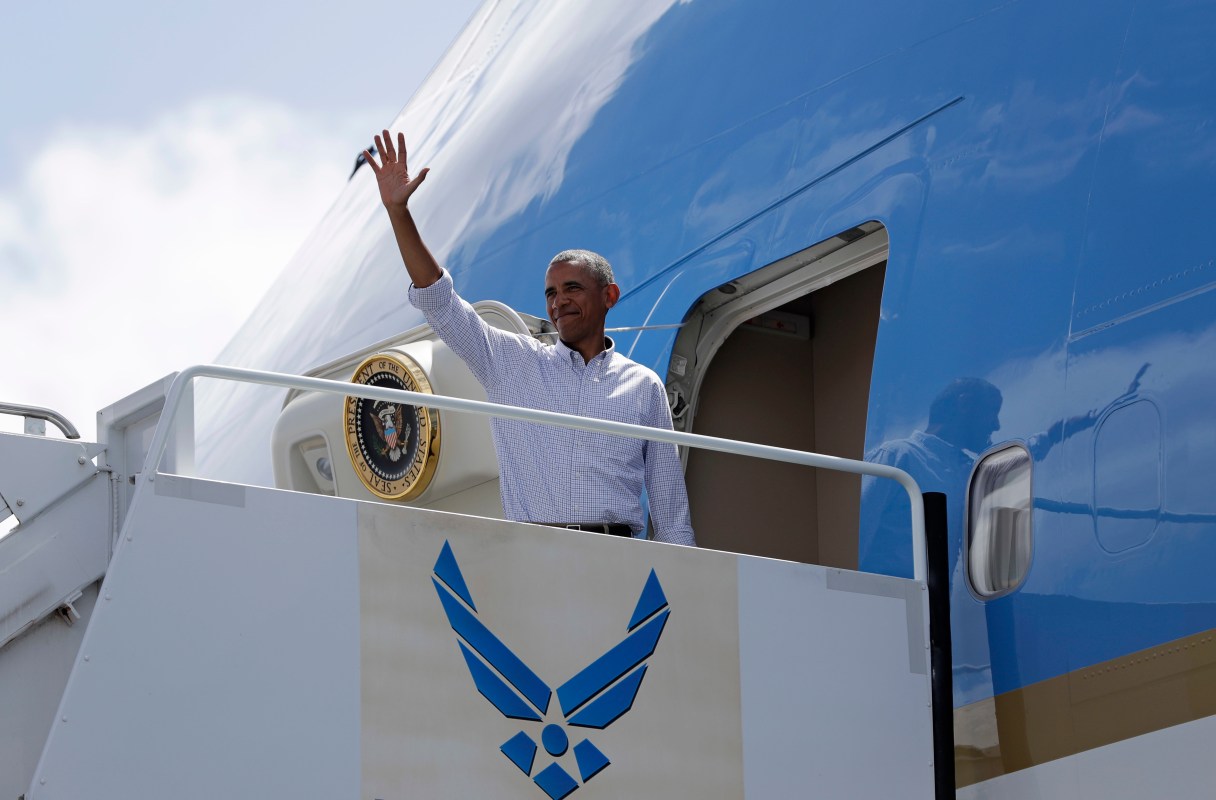
HONOLULU (AP) – Opening his final trip to Asia, President Barack Obama is expected to join Chinese leader Xi Jinping in announcing their countries are formally taking part in a historic global climate deal. Yet thornier issues like maritime disputes and cybersecurity shadow Obama’s visit.
The president departed Friday for Hangzhou, China, where he will meet on Saturday with Xi ahead of a summit of the Group of 20, a collection of industrial and emerging-market nations. Environmental groups and experts tracking global climate policy said they expected the two leaders would jointly enter the sweeping emissions-cutting deal reached last year in Paris. Unlikely partners on addressing global warming, the U.S. and China have sought to use their collaboration to ramp up pressure on other countries to take concrete action as well.
Entering the climate agreement has been an intricate exercise in diplomatic choreography. The deal was reached in December, and the U.S., China and many others signed it in April, on Earth Day. Even the third step – formally participating in the deal – doesn’t bring it into force in the U.S. or China. That won’t happen until a critical mass of polluting countries joins.
Aiming to build on previous cooperation, the U.S. and China have also been discussing a global agreement on aviation emissions, though there’s some disagreement about what obligations developing countries should face in the first years. The aviation issue is expected to be on the agenda for Obama’s meeting with Xi, along with ongoing efforts to phase out hydrofluorocarbons, another greenhouse gas.
The alliance on climate has been a rare bright spot between the U.S. and China in recent years, a relationship otherwise characterized by tensions over China’s emergence as a key global power. Washington has been deeply concerned about China’s territorial ambitions in waters far off its coast, while Beijing looks warily at Obama’s efforts to expand U.S. influence in Asia, viewing it as an attempt to contain China’s rise.