
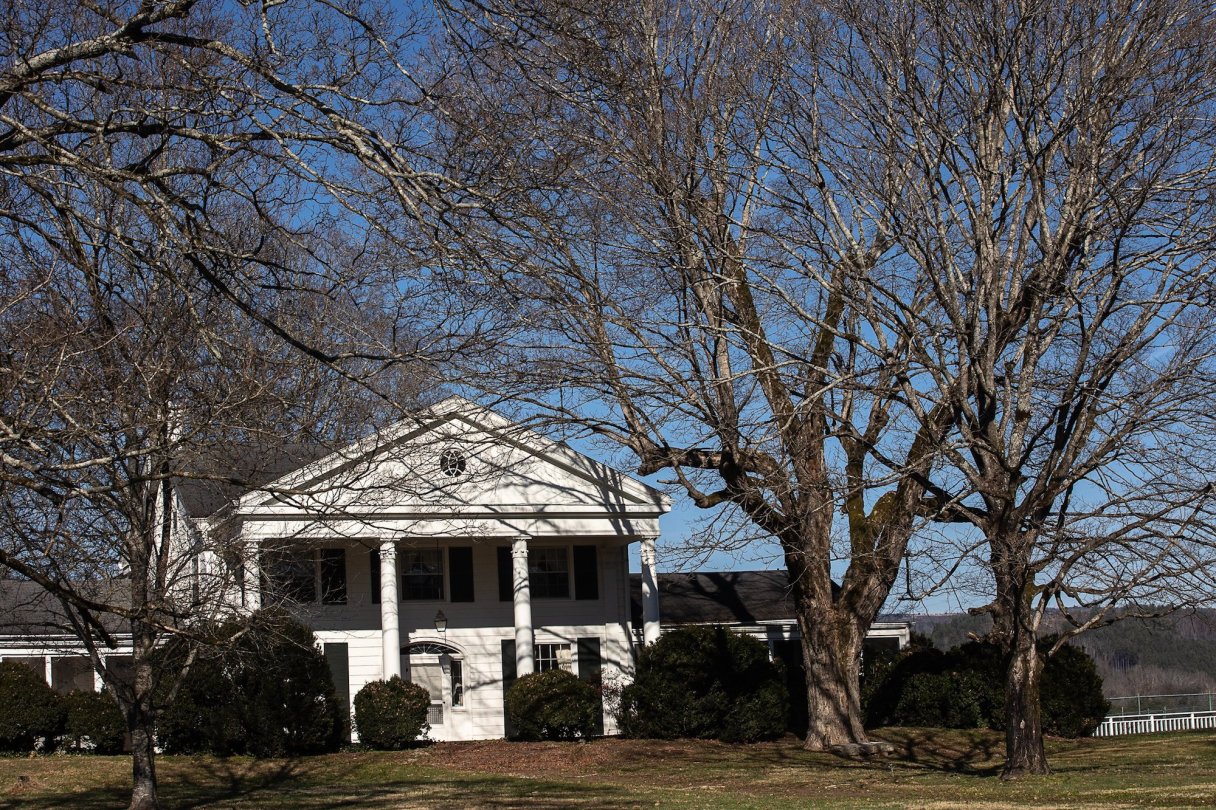
Hamilton County government’s recent acquisition of the McDonald farm in Sale Creek with plans for a community gathering site has given rise to a renewed interest in the McDonald family. While many citizens recall with pleasure their own encounters with Roy McDonald, founder of the Home Store groceries and the Chattanooga Free Press newspaper, most are unaware of the family’s involvement in the early history of the region.
The Scots-Irish McDonald family traces its colonial origins to Bryan McDonnel, son of Alexander McDonnel, who left Ireland in search of a new beginning. He arrived in New Castle, Md., in 1691. Early documents recount that Bryan McDonnel had been a soldier in the army supporting James II’s attempt to maintain his throne after the English parliament had “invited” his daughter, Mary, and her husband, William, to rule England. When William and Mary’s forces emerged victorious, leading to the English Glorious Revolution of 1688 and the signing of the English Bill of Rights, James II and many of his followers fled the isles.
Bryan McDonnel and wife Mary purchased land at Mill Creek Hundred in Delaware and lived there until their deaths. It was their son, Bryan McDonald II, who changed the spelling of the name. The historical record shows that Bryan II and his wife, Catherine Robinson McDonald, moved to Augusta County, Va., just before the French and Indian War. Bryan II died in 1757.
Within three generations, the McDonalds were in northern Hamilton County. James Richard McDonald settled in Sale Creek in the 1820s. After purchasing 1,500 acres near the Hiwassee Garrison, his father, Revolutionary War veteran Edward McDonald, moved the family westward across the mountains and settled in Rhea County. While Edward became a justice in his new county of residence, James Richard moved southward with his wife, Kitty Jones, to build his own home near a creek. Their home, a log cabin eventually covered by clapboard, stood as a testimony of the McDonald pioneer origins until it was destroyed by fire in 1970.