
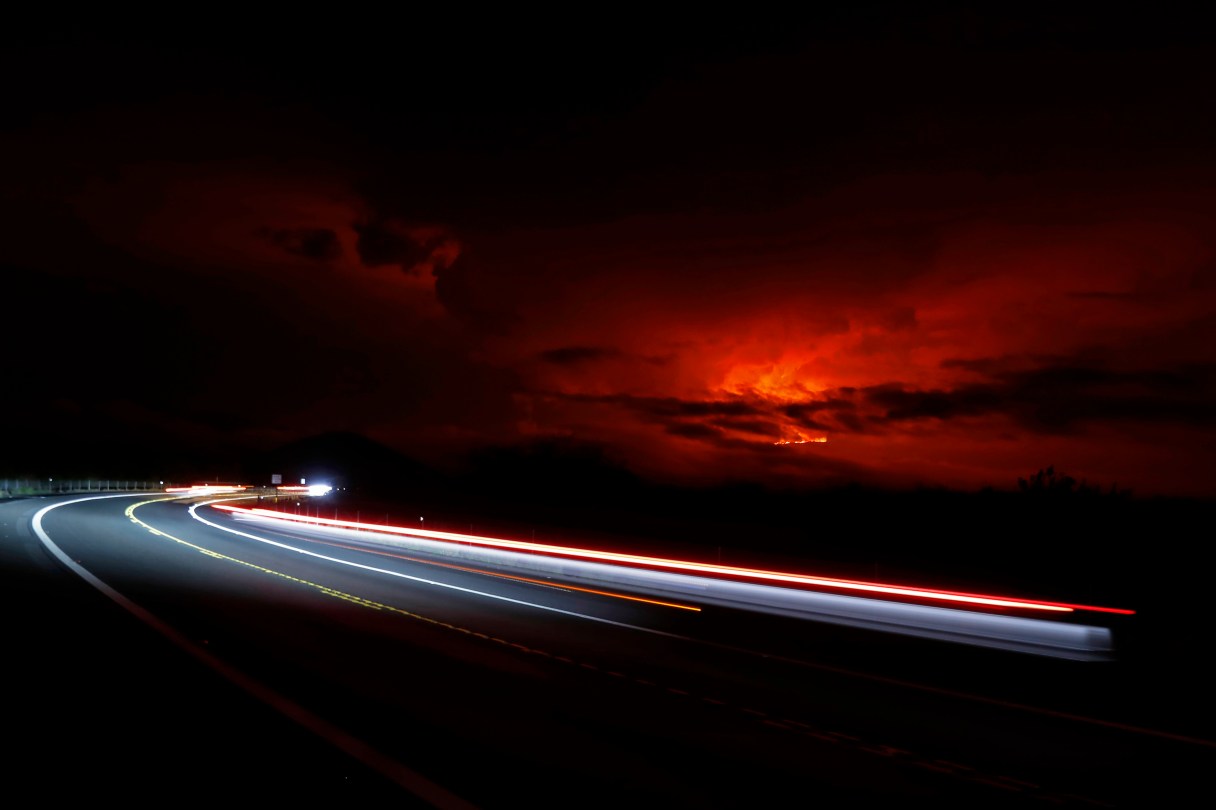
HONOLULU (AP) — Lava is shooting 100 feet to 200 feet (30 to 60 meters) into the air as Hawaii’s Mauna Loa, the world’s largest active volcano, erupts for the first time in nearly 40 years.
For now, lava is not threatening any homes or communities and no evacuation orders have been issued. Lava could eventually reach neighborhoods as it flows downhill though it could take a week or more for molten rock to reach populated areas.
Mauna Loa is spewing sulfur dioxide and other volcanic gases. They form volcanic smog, or vog, when they mix with vapor, oxygen and dust in sunlight. As a result, state health officials are urging people to cut back on outdoor exercise and other activities that cause heavy breathing.
Mauna Loa last erupted in 1984. Its smaller, more active neighbor, Kilauea volcano, has been erupting continuously for more than a year since September 2021.
WHERE IS MAUNA LOA?