
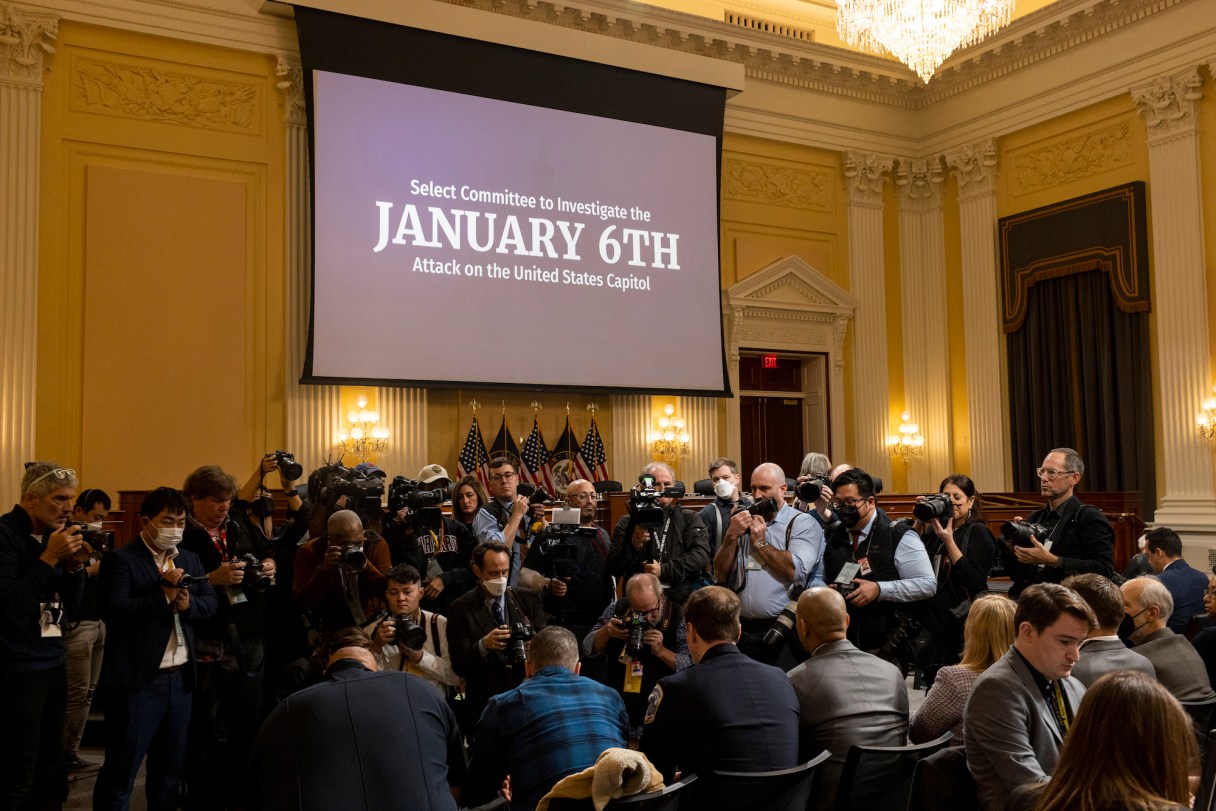
The Jan. 6 committee that concluded its work Monday represents the third and likely final chance for Congress to establish a historical record with regard to Donald Trump’s wrongdoing while president.
The first two opportunities were the first and second impeachment efforts. The House of Representatives did its job both times by impeaching Trump. The Senate, however, failed its constitutional role by declining to convict Trump either time, despite substantial evidence he committed high crimes and misdemeanors.
Now the House committee has turned to the legally different question of whether Trump committed actual, statutory crimes. After doing real and sustained investigation, and gathering evidence from more than a million documents and a thousand witnesses, the committee has taken the unprecedented step of referring a former president to the Department of Justice for criminal prosecution.
The panel recommended criminal charges against Trump for obstructing an official proceeding of Congress (namely the counting of the electoral votes); for conspiracy to defraud the U.S. by denying the election results; conspiracy to make a false statement; and for inciting, assisting, or providing aid and comfort to an insurrection.
On the merits, these recommendations are correct.