
As a boy, Homero Rivas II planned to live a wild life.
Growing up in South Texas, he climbed his first mountain with his father at 10 years old. He rode horses, camped, sailed and wind surfed. “My first memory was age three or four, being inside a cave,” says Rivas.
But in August of 1990, a week into his second year at the Naval Academy in Maryland, his plans dramatically changed when he fell four stories down the center of a stairwell in a dorm building. The fall left him in a hospital bed for nearly a year. He broke two vertebrae in his back, his pelvis, his left hip. The fall collapsed his right lung, snapped his wrist and dislocated his shoulder and broke most of his right ribs. It also left him with nerve damage in his right leg.
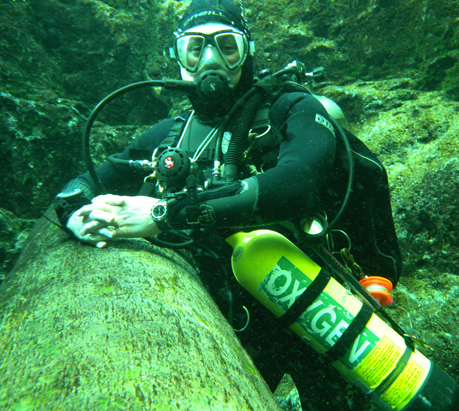 Homero Rivas II
For years he walked with a cane, and doctors had to fuse his left hip. But even though he couldn’t bend at the hip, or run or bike, he was determined to find ways to be the adventurer he wanted to be as a child. “I didn’t want to dwell on what could have been or what might of been, I wanted to focus on what I had and find a way to move forward with my life,” he explains.
Rivas is now a doctor in Chattanooga specializing in non-surgical spinal medicine at Spine Surgery Associates. And, although he still walks with a noticeable limp, he’s continued to challenge himself physically and mentally to keep the outdoors a part of his life. Most weekends he crawls or shimmies down into caves in Tennessee, Georgia and Alabama, an area which cavers refer to as TAG. And when he isn’t poking around dark places underground, he travels to scuba dive in underwater caves, rivers, quarries and lakes throughout the Southeast.