
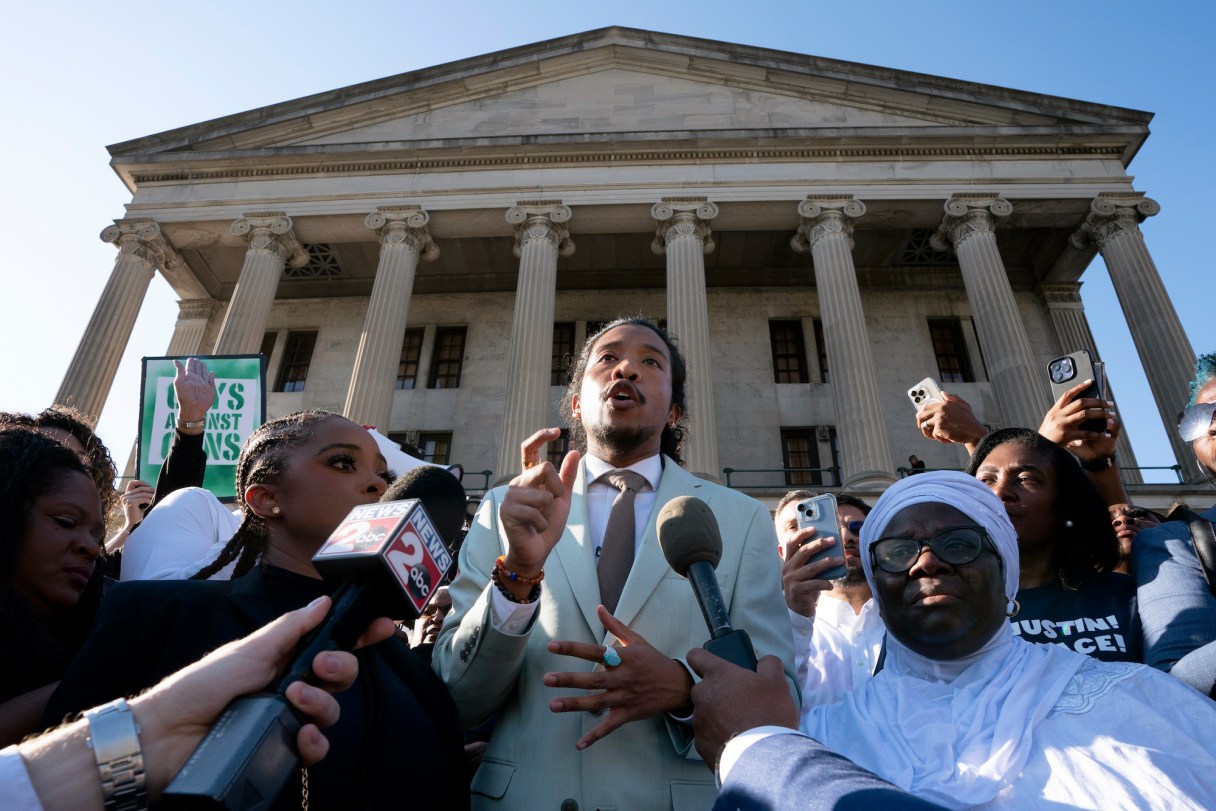
Tennessee loves to be recognized for its amazing vistas, historic arts and culture and music icons. But the news these days is full of what transpired in the state capital over the last week: the expulsion of two Black state representatives punished for protesting on the House floor for safer gun laws following a mass shooting at the private Christian Covenant School in Nashville.
The mostly white, male GOP supermajority in the state House denied any elements of racism in the decision to boot the Black legislators but not the white female lawmaker. Social media users exploded over the actions; the Twitter crowd declared Nashville Jim Crow 2.0, referring to the laws mandating segregation post-Civil War.
Newspapers reminded readers that the 1859 state capitol was built by enslaved people. And there’s a new spotlight on how the Ku Klux Klan originated in Tennessee and became a paramilitary focused on reversing progressive Reconstruction-era policies elevating the rights of Blacks in the South. Justin Jones, one of the two lawmakers who were expelled (both have since been reinstated), had previously campaigned to remove a bust of an early KKK grand wizard from the capital.
Some House members understood what was at stake. Memphis Rep. Karen Camper, a Democrat, urged: “For a simple rule violation we have elevated this to the highest level of admonishment. That’s not democracy … I beg of you not to do that today.”
Memphis is where the Rev. Dr. Martin Luther King Jr. was assassinated and where Justin Pearson, the other young Black man expelled, was a representative. The state legislature had already gerrymandered the area to minimize the influence of Black constituents and was irate at Pearson’s efforts to be heard, seen and acknowledged. Pearson said he had heard that state lawmakers and other Nashville officials had threatened to cut funding to Shelby County if he was reappointed to the seat.