
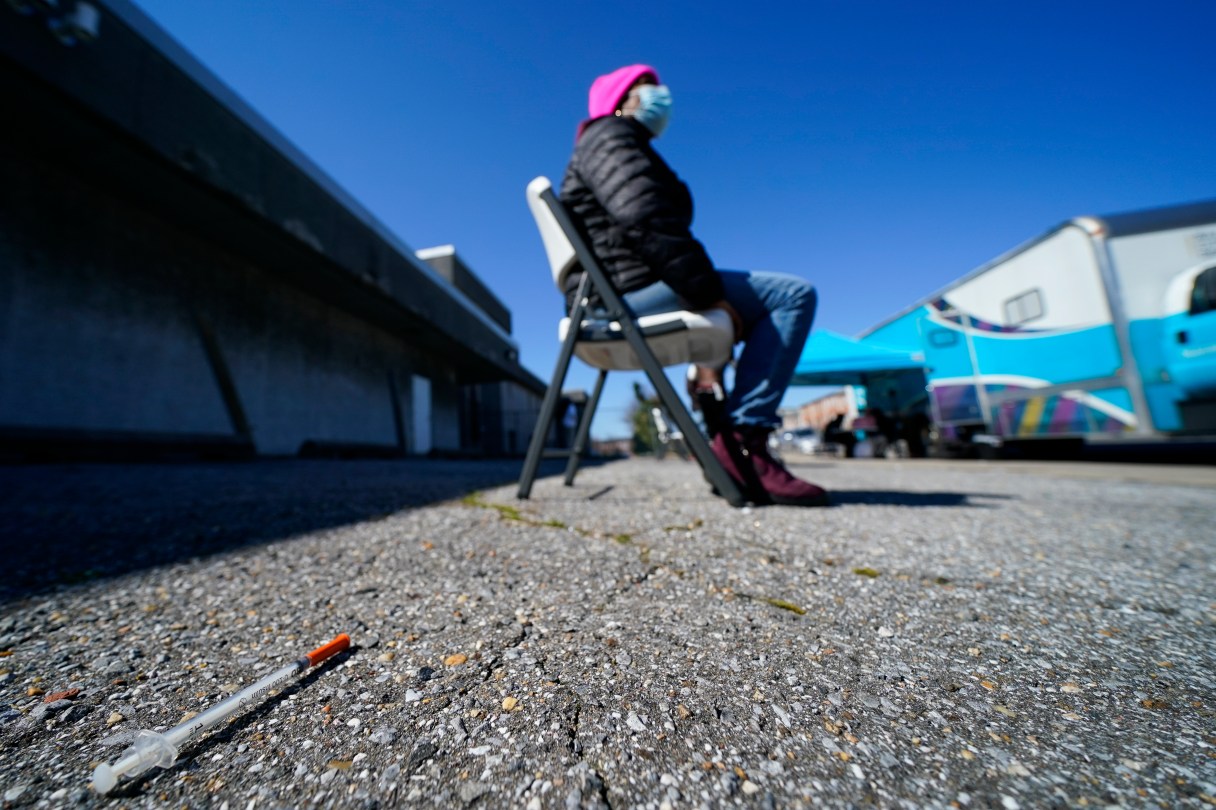
BALTIMORE (AP) — Anthony Kelly trudged through southwest Baltimore, each labored footstep a reminder of the roofing accident that left him with chronic pain and a raging opioid addiction several years after he returned home from serving in the Marines.
Doctors used metal plates to reconstruct his lower legs and Kelly spent months learning to walk again. So began his plodding journey into the depths of substance use disorder, a downward spiral that would gradually weaken his body and consume his mind, pulling him farther and farther away from the person he once was: a supportive husband and father, a hard-working professional, a proud veteran.
After his prescribed painkillers ran out, Kelly repeatedly traveled to Florida to take advantage of the state’s loosely regulated pain management clinics. Finally, he turned to a combination of heroin and cocaine that sometimes cost $500 per day.
More than a decade later, his substance use is more manageable and less expensive, though it remains a controlling force in his life. He takes buprenorphine, a prescription medication that’s considered the gold standard for treating opioid addiction by reducing cravings and easing withdrawal symptoms.
He gets the medication through a mobile health clinic housed in a retrofitted van, which parks in some of Baltimore’s most drug-ravaged communities, including Kelly’s neighborhood. Doctors and nurses meet with patients, write prescriptions and provide basic wound care, hepatitis C treatment, packages of the overdose reversal agent naloxone and more, all free of charge.