
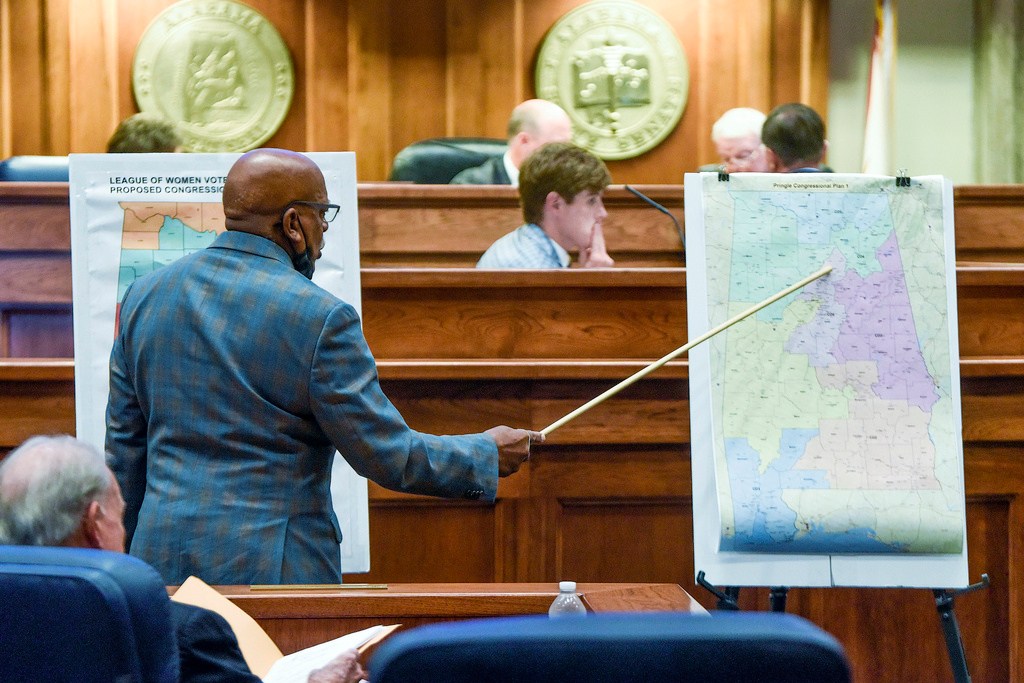
The three-judge panel overseeing a lawsuit over Alabama’s congressional map have scheduled a status conference for Friday, after the U.S. Supreme Court sided with their initial ruling that the maps may violate Section 2 of the Voting Rights Act.
The June 9 order from U.S. Circuit Court Judge Stanley Marcus and U.S. District Judges Anna Manasco and Terry Moorer called for a meeting at 8 a.m. June 16.
The Alabama Legislature approved new congressional maps at the end of 2021 that preserved the 7th Congressional District, stretching from Birmingham to the western Black Belt, as the state’s single majority-minority district. Democratic legislators and voting rights activists sued over the map, arguing it packed Black voters into a single district, locking Black voters living outside it of any meaningful participation in the political process.
In January 2022, the panel ruled that the state’s congressional map discriminated against Black voters and said the remedy appeared to be a second district where “Black voters either comprise a voting-age majority or something quite close to it.” The Alabama Attorney General’s Office appealed the ruling, and the U.S. Supreme Court stayed the lower court order in February 2022. It heard the case, now known as Allen v. Milligan, last October.