
Thursday, November 12, 2026Nov 12

EU agriculture officials work on ways to move Ukrainian grain to the world

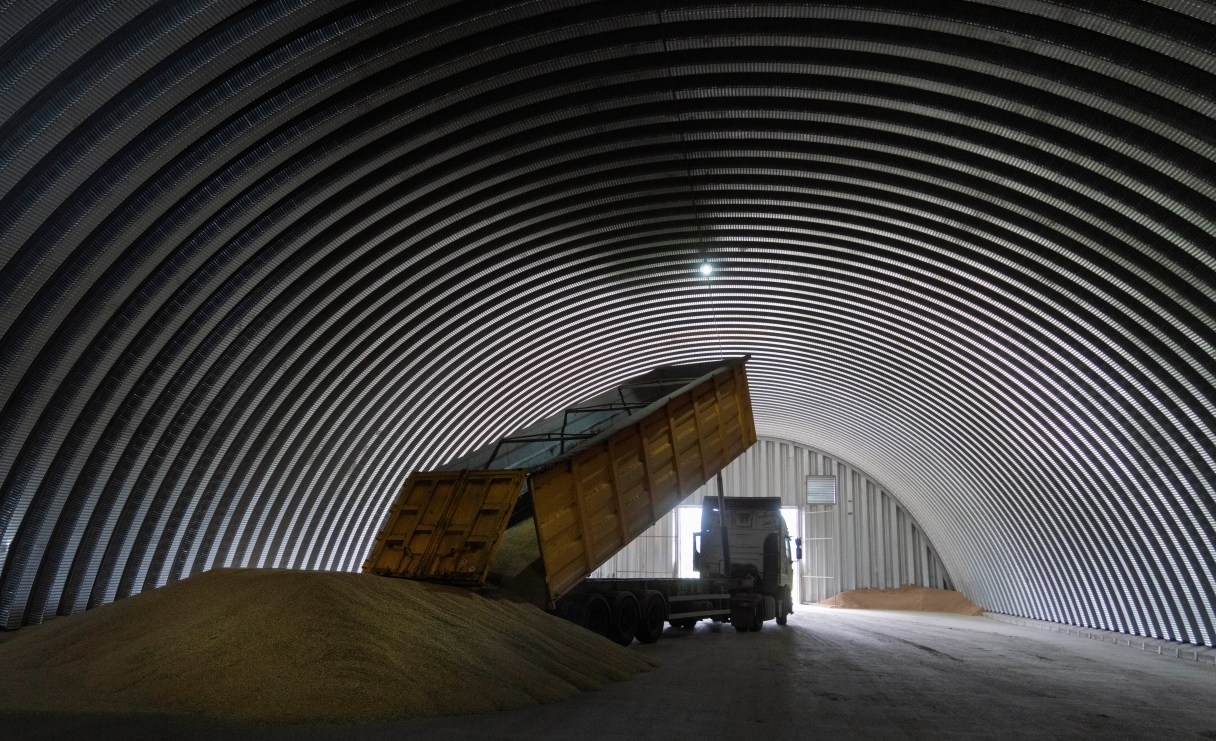
FILE - A dump track unloads grain in a granary in the village of Zghurivka, Ukraine, Tuesday, Aug. 9, 2022. European Union agriculture ministers are meeting to discuss ways of moving grain vital to global food security out of Ukraine after Russia halted a deal that allowed the exports. At the same time, they want to protect prices for farmers in countries bordering the war-ravaged nation. The ministers are meeting Tuesday, July 25, 2023 in Brussels for the first time since Russia pulled the plug on the wartime deal last week.(AP Photo/Efrem Lukatsky, File)
FILE - A dump track unloads grain in a granary in the village of Zghurivka, Ukraine, Tuesday, Aug. 9, 2022. European Union agriculture ministers are meeting to discuss ways of moving grain vital to global food security out of Ukraine after Russia halted a deal that allowed the exports. At the same time, they want to protect prices for farmers in countries bordering the war-ravaged nation. The ministers are meeting Tuesday, July 25, 2023 in Brussels for the first time since Russia pulled the plug on the wartime deal last week.(AP Photo/Efrem Lukatsky, File) FILE - A dump track unloads grain in a granary in the village of Zghurivka, Ukraine, Tuesday, Aug. 9, 2022. European Union agriculture ministers are meeting to discuss ways of moving grain vital to global food security out of Ukraine after Russia halted a deal that allowed the exports. At the same time, they want to protect prices for farmers in countries bordering the war-ravaged nation. The ministers are meeting Tuesday, July 25, 2023 in Brussels for the first time since Russia pulled the plug on the wartime deal last week.(AP Photo/Efrem Lukatsky, File)

THE HAGUE, Netherlands (AP) — The European Union will look at helping fund the costly transportation of grain out of Ukraine after Russia halted a deal that allowed Black Sea exports vital to global food security, a top agriculture official said Tuesday.

The thorny issue of how to get food products out of Ukraine — and help farmers in neighboring EU countries compete with a glut of cheap grain — is threatening to shake the 27-nation bloc’s unity in supporting Kyiv as it battles Russia’s invasion.

Agriculture Commissioner Janusz Wojciechowski said the European Commission, the EU’s executive arm, would look at the possibility of financial support for transport companies, but Europe’s economic powerhouse, Germany, opposes such a move.

Poland, along with Slovakia, Hungary, Romania and Bulgaria, want to extend a ban on Ukrainian grain imports until the end of the year but will still allow food to move through their countries to the world.

“What is not possible is to take the money from Brussels as compensation for the burden, but at the same time close the border to Ukraine, in part even for products that were allowed to be transported legally before the war,” German Agriculture Minister Cem Ozdemir said at a meeting of agriculture officials in Brussels.