
(Editor’s note: Second in a series)
National readers responded with interest when Professor Francis M. Parker, renowned educational leader, wrote a series of articles in 1889 promoting Chattanooga as the “ideal laboratory site” for understanding history, business and other significant “lessons.”
What could be learned through the Chattanooga experience and what sites were most educational? The professor created a list for intrigued readers.
First, he suggested a visit to Lookout Mountain, where one could view “various points of interest.” He confessed that Lookout Mountain “cannot be called a mountain in any proper sense of the term,” noting instead that it was actually a 100-mile-long Tennessee ridge extending “into the state of Alabama.” But from this mountain, visitors could view the “water of the Tennessee which has been, and is, the sculptor of the mountains. Chattanooga at our feet is in the ancient bend of the river … .”
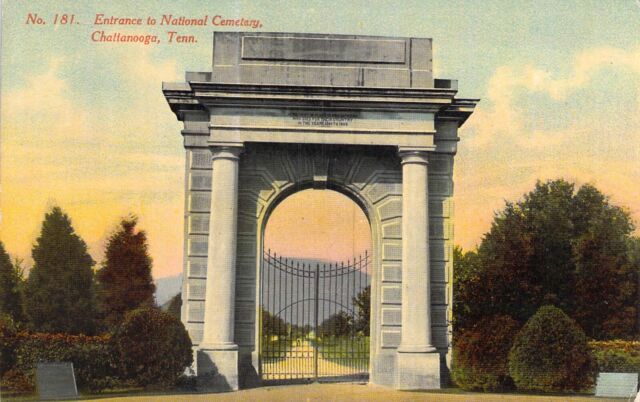
From that vantage point, Parker noted one could begin to plan the sites to visit, including Orchard Knob, Cemetery Hill [the Chattanooga National Cemetery], Fort Wood, Lookout Valley, Raccoon mountains [sic], Walden’s Ridge and the Suck. But before descending to the valley below, Parker suggested a careful study of the mountain through both a geological and historical lens.