
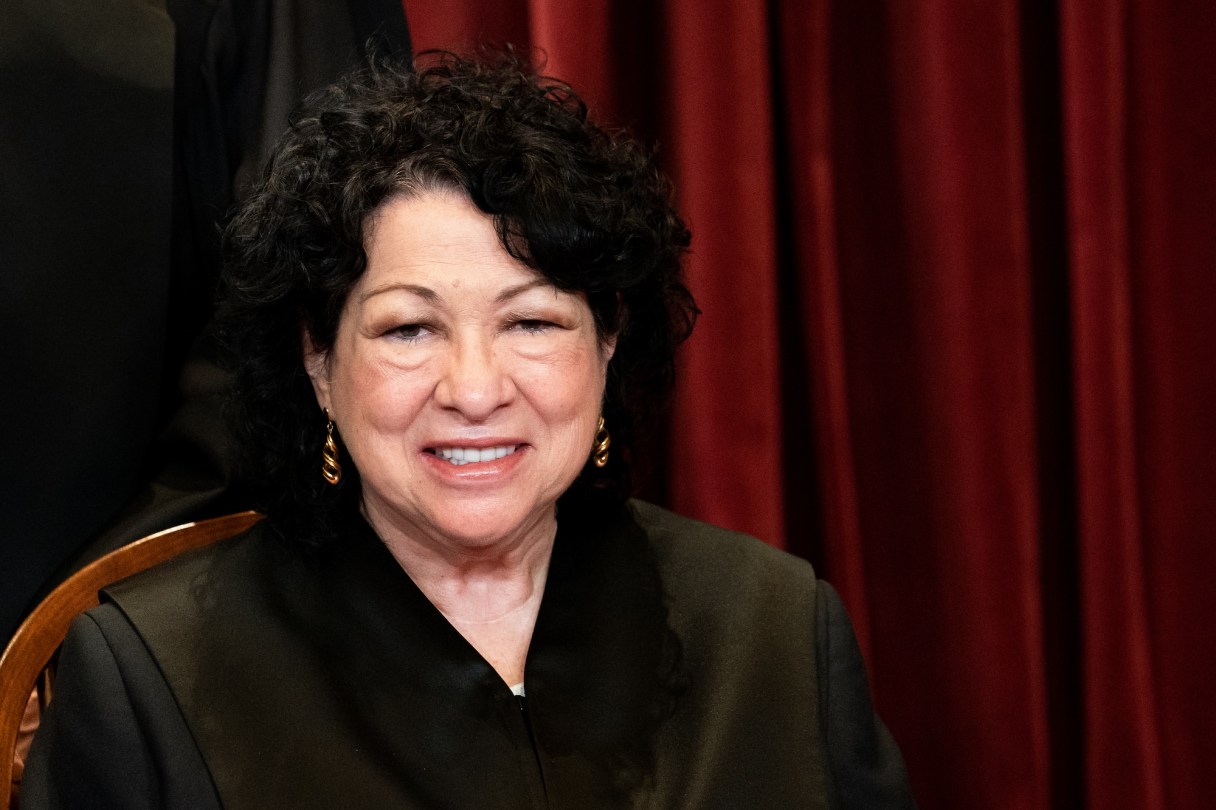
The left’s calls for Justice Sonia Sotomayor to step down so that President Joe Biden can name a younger replacement should be roundly condemned. To be sure, such pressure is an American tradition in the never-ending battle to “control” the Supreme Court. But the tactic is one that the justices themselves have a happy tradition of resisting.
A couple of disclosures: I attended law school with Sotomayor and I have some first-hand knowledge of how justices feel about these pressure campaigns. I was clerking for Justice Thurgood Marshall in 1980, when liberal activists made embarrassing efforts to persuade him to step down so that Jimmy Carter could nominate a replacement. Both before and after he lost the election to Ronald Reagan, the Carter administration sent emissaries to Marshall’s chambers to plead with him to retire. On election night, one television network reported as a fact his intention to comply. The report was nonsense. I can say with confidence that he never considered it.
There have, of course, been many such moments. More recently, Barack Obama tried unsuccessfully to persuade Ruth Bader Ginsburg to step aside so that he might appoint someone younger. And back in the 1960s, Lyndon Johnson successfully recruited Justice Arthur Goldberg to be ambassador to the United Nations, clearing the way to a high court seat for LBJ’s crony, Abe Fortas. (Goldberg later expressed regret for giving in.)
But such outside political pressure rarely leads a reluctant justice to step down. More often, it’s been the conviction of court colleagues that the justice is no longer up to the job.
In 1868, for example, as Justice Robert C. Grier’s cognitive powers began to fade, colleagues took notice. One worried justice wrote in a letter to an acquaintance that a recent Grier opinion showed that the 73-year-old court veteran “is getting a little muddy and may not have conveyed the idea clearly.” In 1869, Chief Justice Samuel Chase visited Grier to persuade him to step down, which he did.