
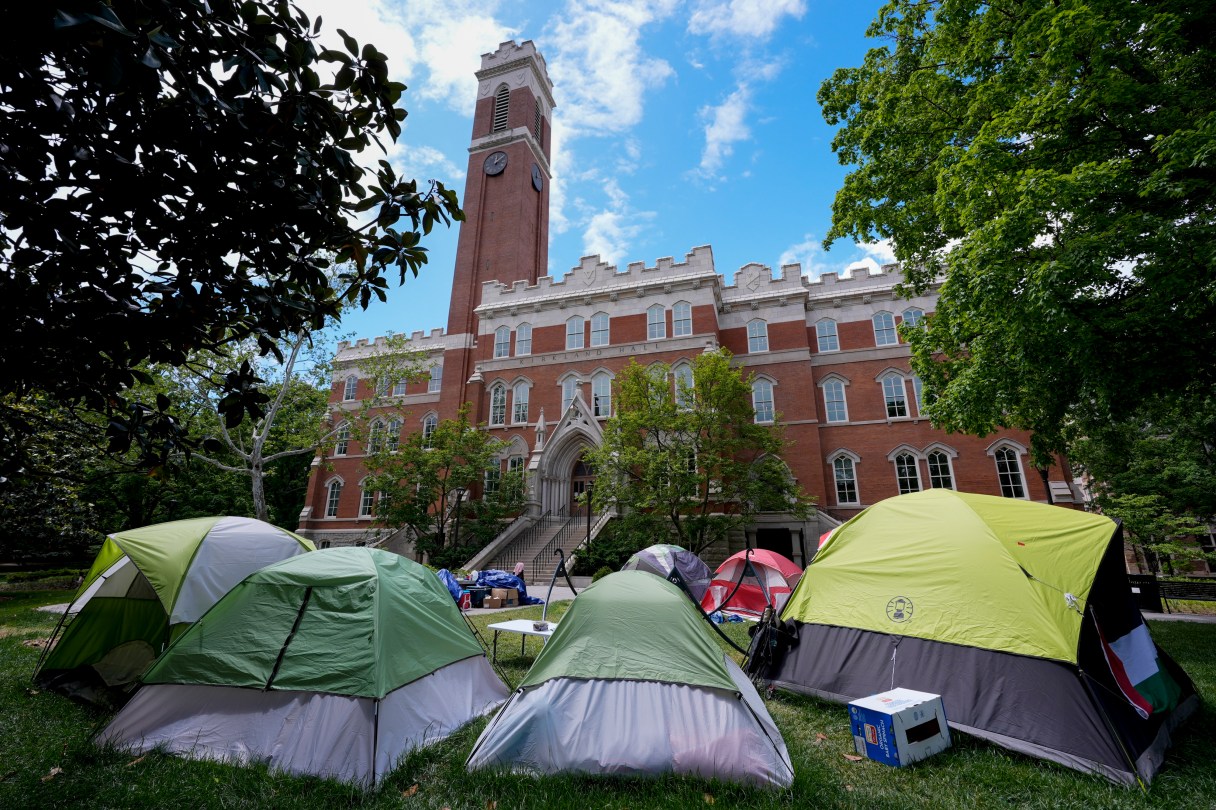
NEW YORK (AP) — Anti-war demonstrations ceased this week at a small number of U.S. universities after school leaders struck deals with pro-Palestinian protesters, fending off possible disruptions of final exams and graduation ceremonies.
The agreements at schools including Brown, Northwestern and Rutgers stand out amid the chaotic scenes and 2,400-plus arrests on 46 campuses nationwide since April 17. Tent encampments and building takeovers have disrupted classes at some schools, including Columbia and UCLA.
Deals included commitments by universities to review their investments in Israel or hear calls to stop doing business with the longtime U.S. ally. Many protester demands have zeroed in on links to the Israeli military as the war grinds on in Gaza.
The agreements to even discuss divestment mark a major shift on an issue that has been controversial for years, with opponents of a long-running campaign to boycott Israel saying it veers into antisemitism. But while the colleges have made concessions around amnesty for protesters and funding for Middle Eastern studies, they have made no promises about changing their investments.
“I think for some universities, it might be just a delaying tactic to diffuse the protests,” said Ralph Young, a history professor who studies American dissent at Temple University in Philadelphia. “The end of the semester is happening now. And maybe by the time the next semester begins, there is a cease-fire in Gaza.”