
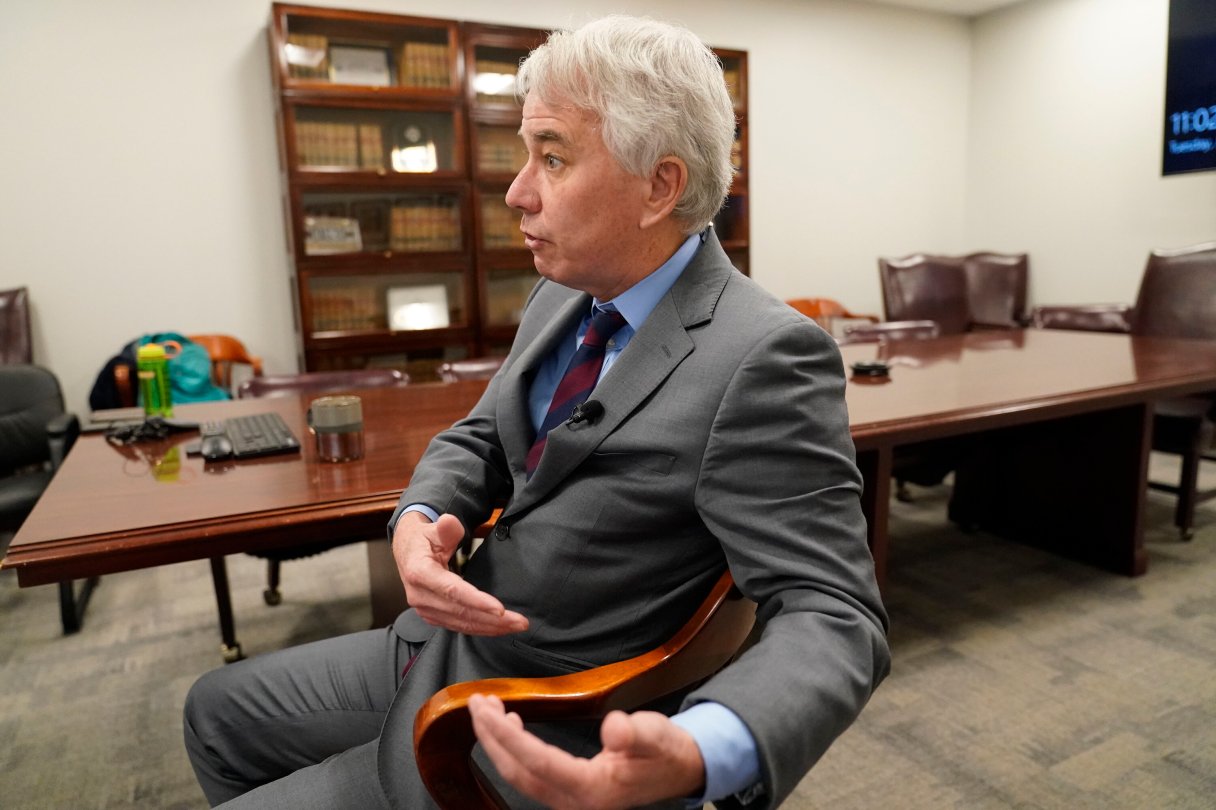
Tennessee’s lieutenant governor is backing a Memphis state senator’s move to force the ouster of Shelby County’s prosecutor for “dereliction of duty” in connection with felons caught carrying weapons.
Lt. Gov. Randy McNally, R-Oak Ridge, issued a statement Monday saying he “wholeheartedly” supports efforts by Republican state Sen. Brent Taylor to dismiss District Attorney General Steve Mulroy from office for “failing to properly prosecute convicted felons in possession of a firearm.”
Taylor sent McNally a letter Monday notifying him he plans to file a Senate resolution after the November election to remove Mulroy from office. The district attorney general said recently he plans to adopt a policy allowing nonviolent felons to avoid being prosecuted for possession of weapons.
McNally said Mulroy’s “explicit refusal to prosecute criminals with guns is inexcusable and unconstitutional. While district attorneys have prosecutorial discretion, that discretion is not a license to override or subvert the law of the land. DA Mulroy’s record of refusal to prosecute laws he does not personally care for is longstanding and clear. I believe it is time for him to go.”
Even though district attorneys general are elected by a county’s voters, the legislature can oust them with a two-thirds vote, according to a state law cited by Taylor in his letter.