
(Editor’s note: First in a series)
Students of Tennessee history almost always recognize the name, Cordell Hull, even if they cannot quite identify that he was a congressman, a U.S. senator, the longest-serving U.S. secretary of State and the father of the United Nations. Local residents often proudly recall that Hull’s service in the U.S. Senate was bookended by two outstanding public servants, Sen. William E. Brock and Sen. Nathan Bachman, both Chattanoogans.
In 1929, following the death of then-Sen. Lawrence D. Tyson, several prominent Tennesseans were considered to fill the vacancy. On Sept. 2, 1929, Tennessee Gov. Henry Horton announced to the press that William E. Brock had accepted, at 4 p.m. that afternoon, the commission as Tennessee’s next U.S. senator during a meeting at the executive residence. The governor explained that Brock would return to Chattanooga to prepare for a move to Washington, D.C., where, within the next few days, he would be sworn into office.
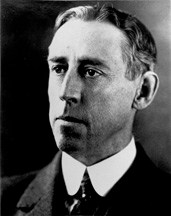
Upon his arrival home, Brock expressed his gratification and assured the crowd that he was committed to serving all the citizens of Tennessee as Sen. Tyson had. He admitted that his first act after being “commissioned” was to telephone his wife and then pose for “a flash photograph” in the hall of the governor’s mansion to accompany a brief statement he issued. In the statement, Brock pledged that he was a “Woodrow Wilson Democrat” and that he would honor the proud legacy of the Tennesseans who had served at the national level. Then, he had left for Chattanooga by motor car, accompanied by several close friends.
A more formal statement was issued from Chattanooga. “Personal ambition in private affairs is a noble incentive; in public affairs, it must yield to the Jeffersonian doctrine of the greatest good to the greatest number. I … neither sought, nor do I now accept the appointment of United States senator as a mere gratification of personal ambition. On the contrary, I am oppressed by a sense of responsibility.” He continued, “My interest in politics has been a matter of conviction. I have believed that businessmen gave too little time and thought to government. I have labored for the development and civic advancement of my city and state. I accept this appointment … humbly, as a call to a larger field of usefulness.”