
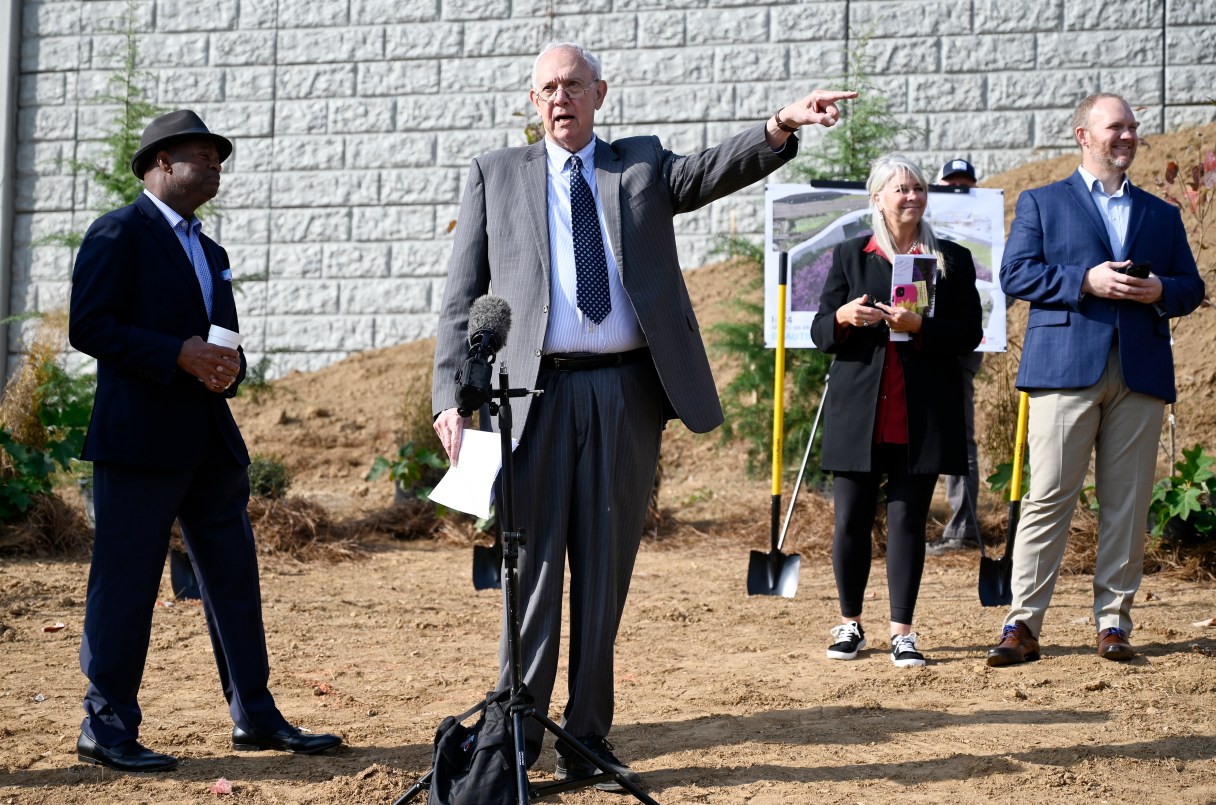

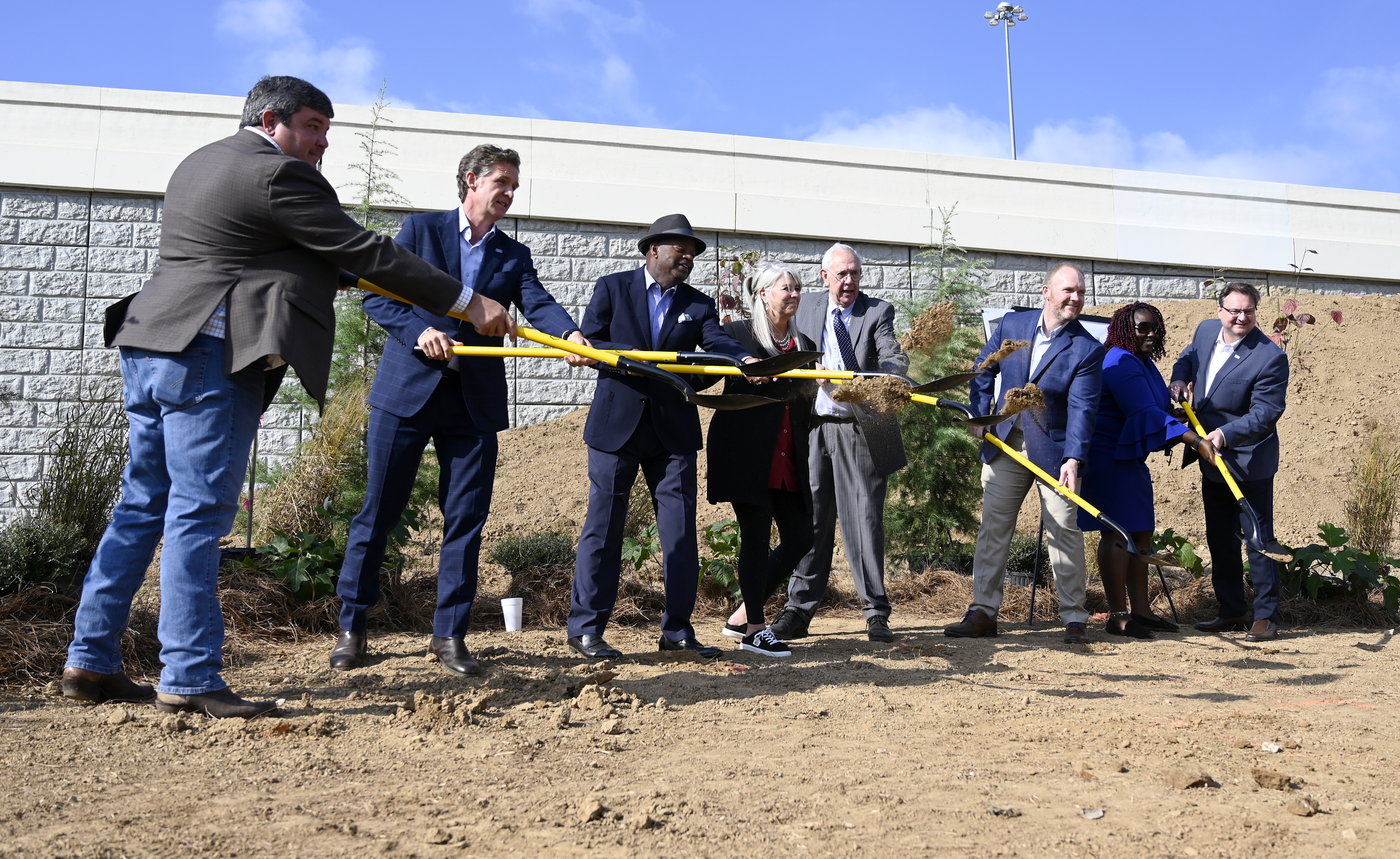
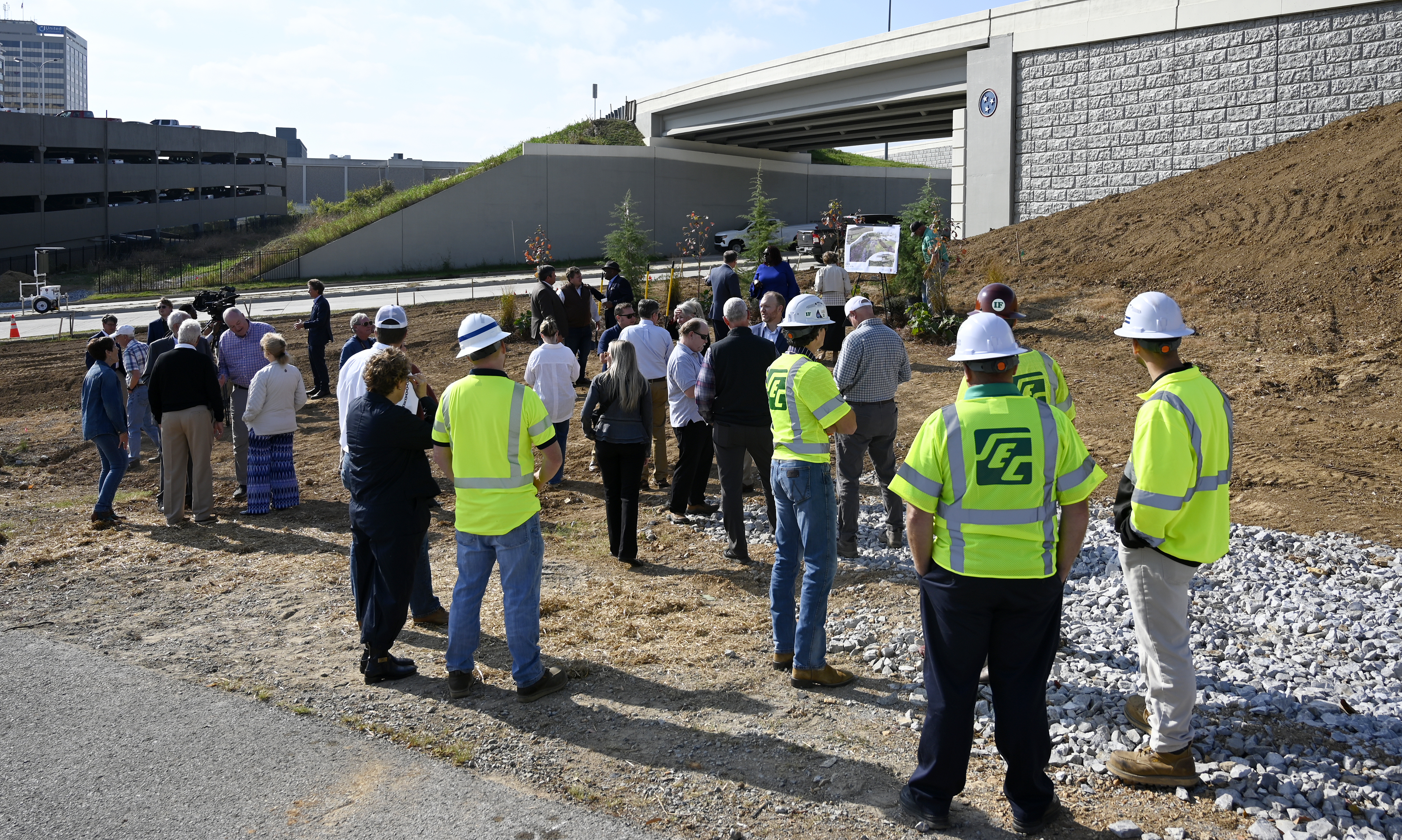
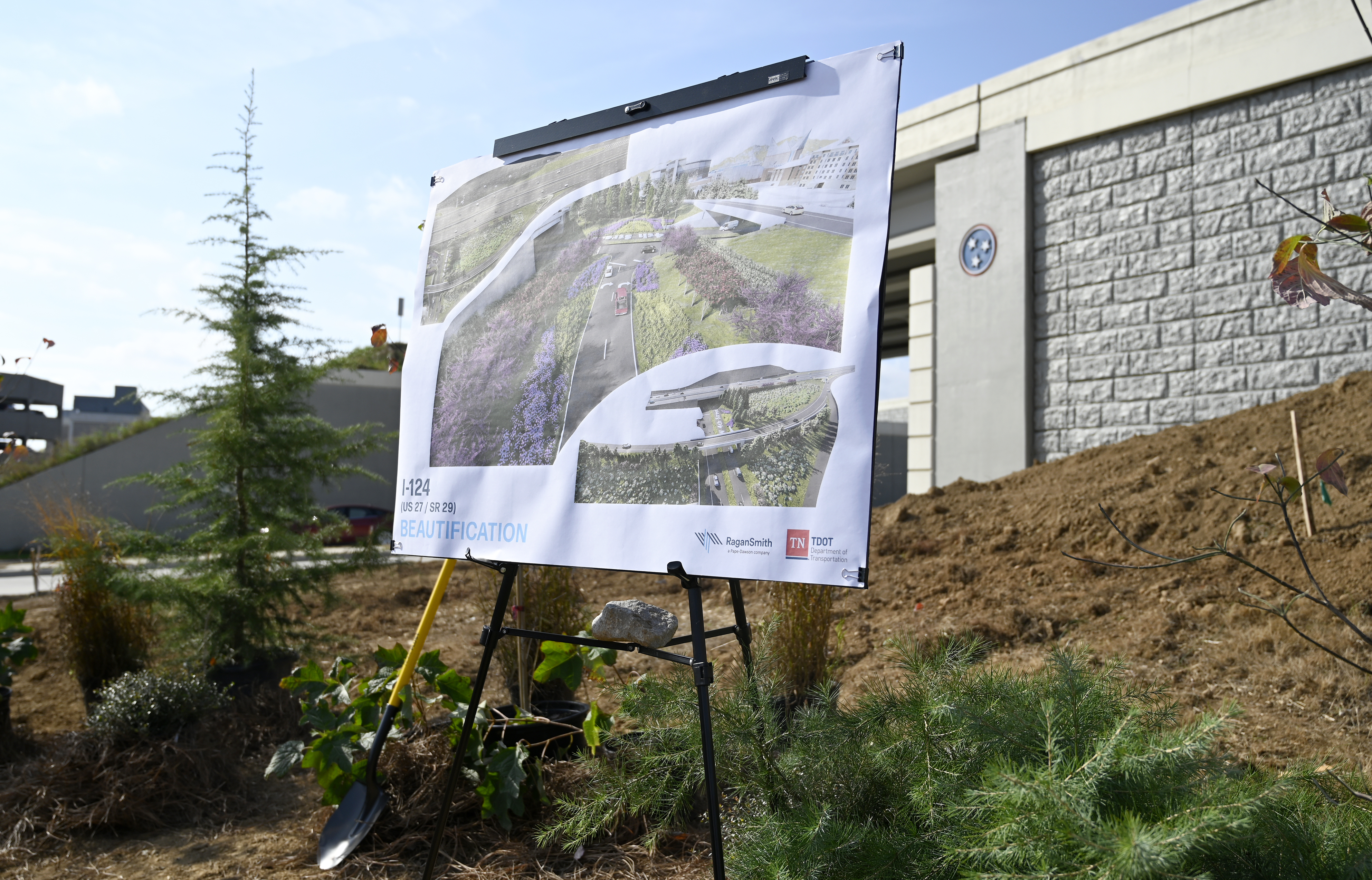
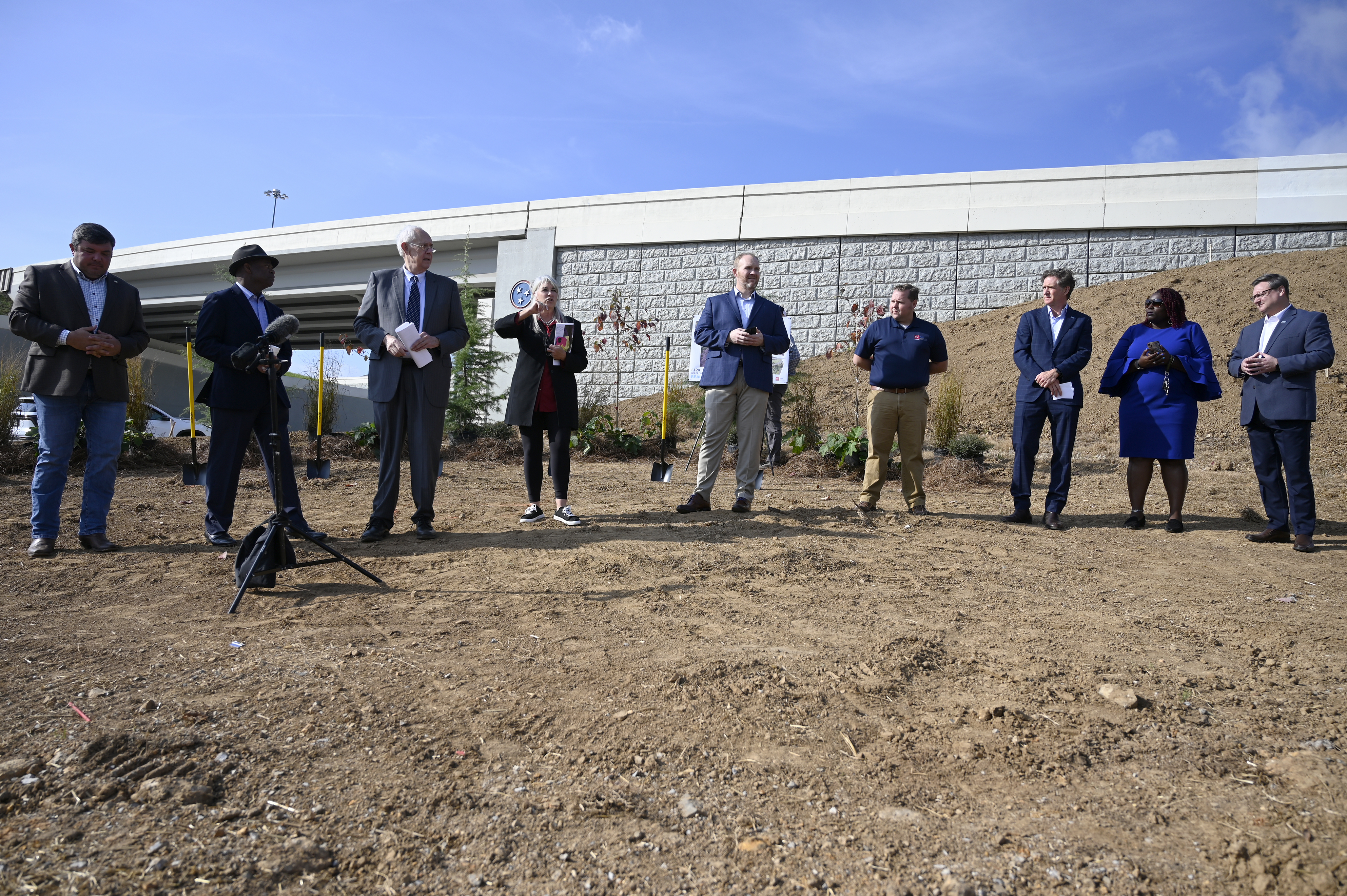
Officials broke ground Tuesday on the $3 million first phase of the Gateway to Chattanooga beautification project at the Fourth Street/U.S. Highway 27 interchange downtown, an effort intended to become a model for interstate landscaping.
The nonprofit Tennessee Interstate Conservancy, spearheaded by former Circuit Court Judge Neil Thomas III, joined forces with the Tennessee Department of Transportation, local governments, businesses and others to install landscaping using native and ornamental plants and make Chattanooga a model for interstate beautification across the state.
The contract was awarded to Knoxville-based Stansell Electric Co. in March.
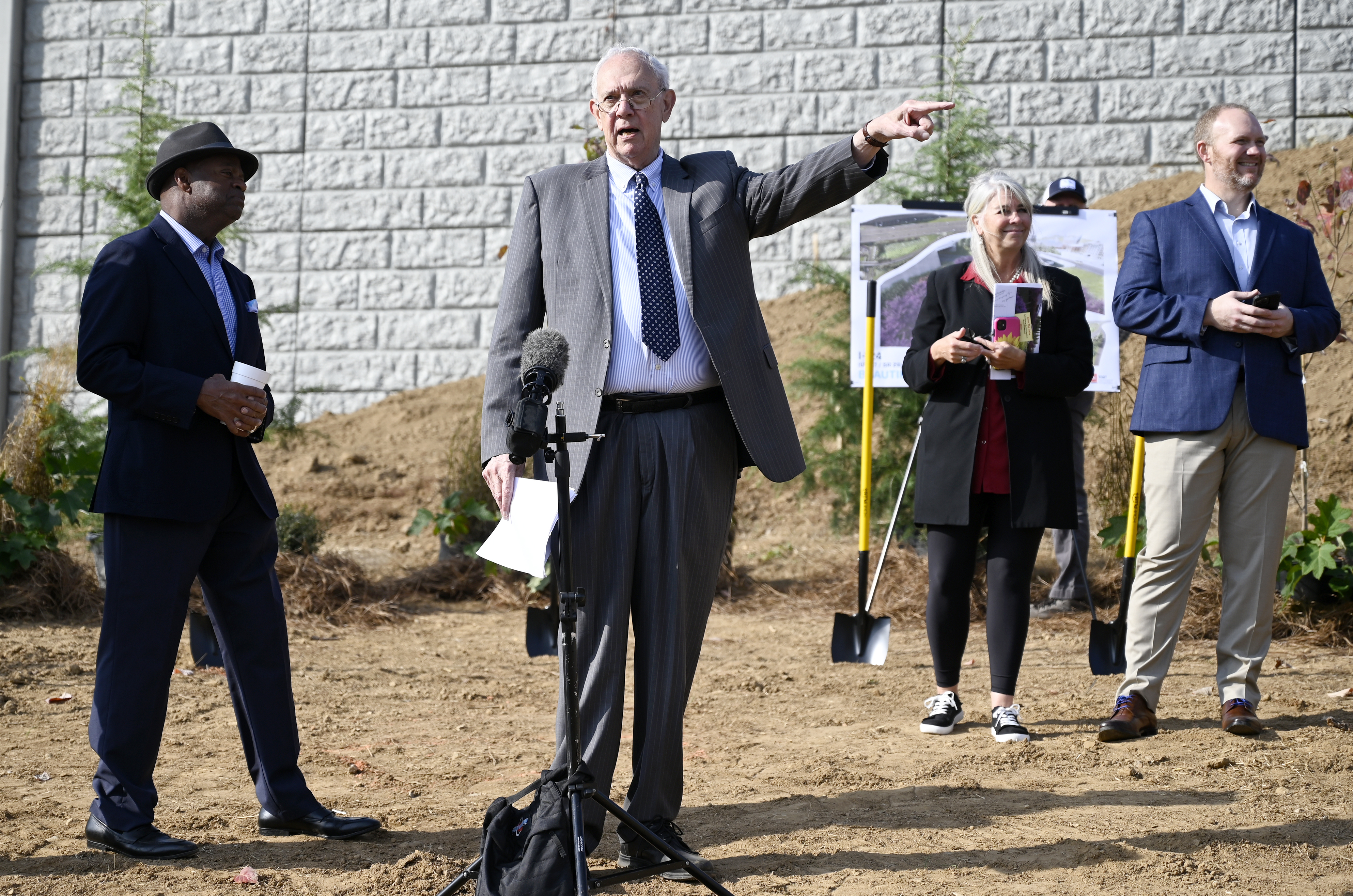
“This is a really momentous occasion because it’s been eight years and five months in the making,” a joyful Thomas said Tuesday standing in the dirt at the Fourth Street interchange for the official project groundbreaking. “This started out in June 2016 in the offices of TDOT.”
(READ MORE: ‘Gateway to Chattanooga’ landscaping project at Fourth Street begins)
Thomas said he started making plans several years ago with Shawn Bible, who was then the transportation agency’s beautification office manager. As they pursued their joint goal and met some unexpected obstacles, Thomas said he suggested Bible would retire before the project in Chattanooga was finished.
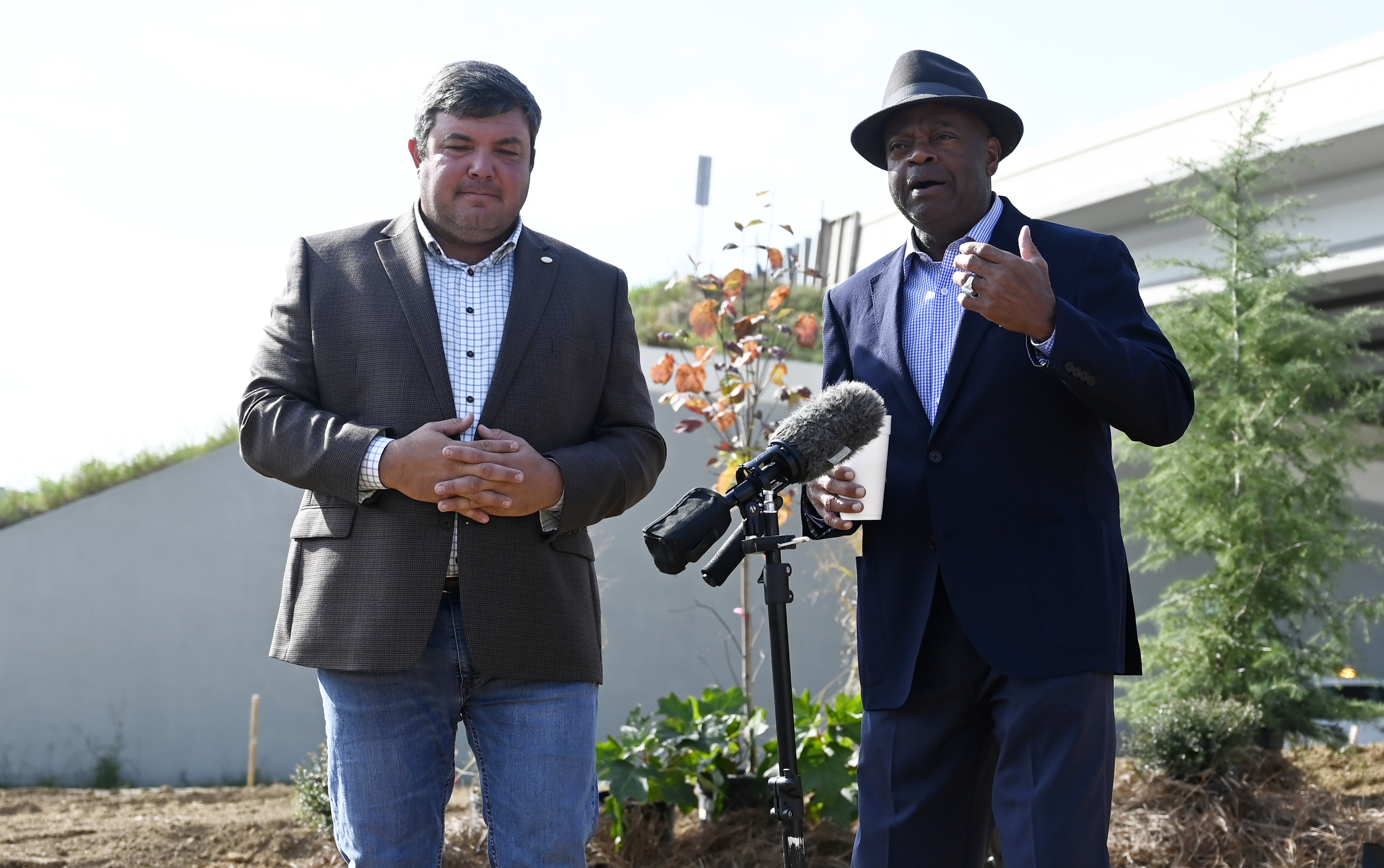
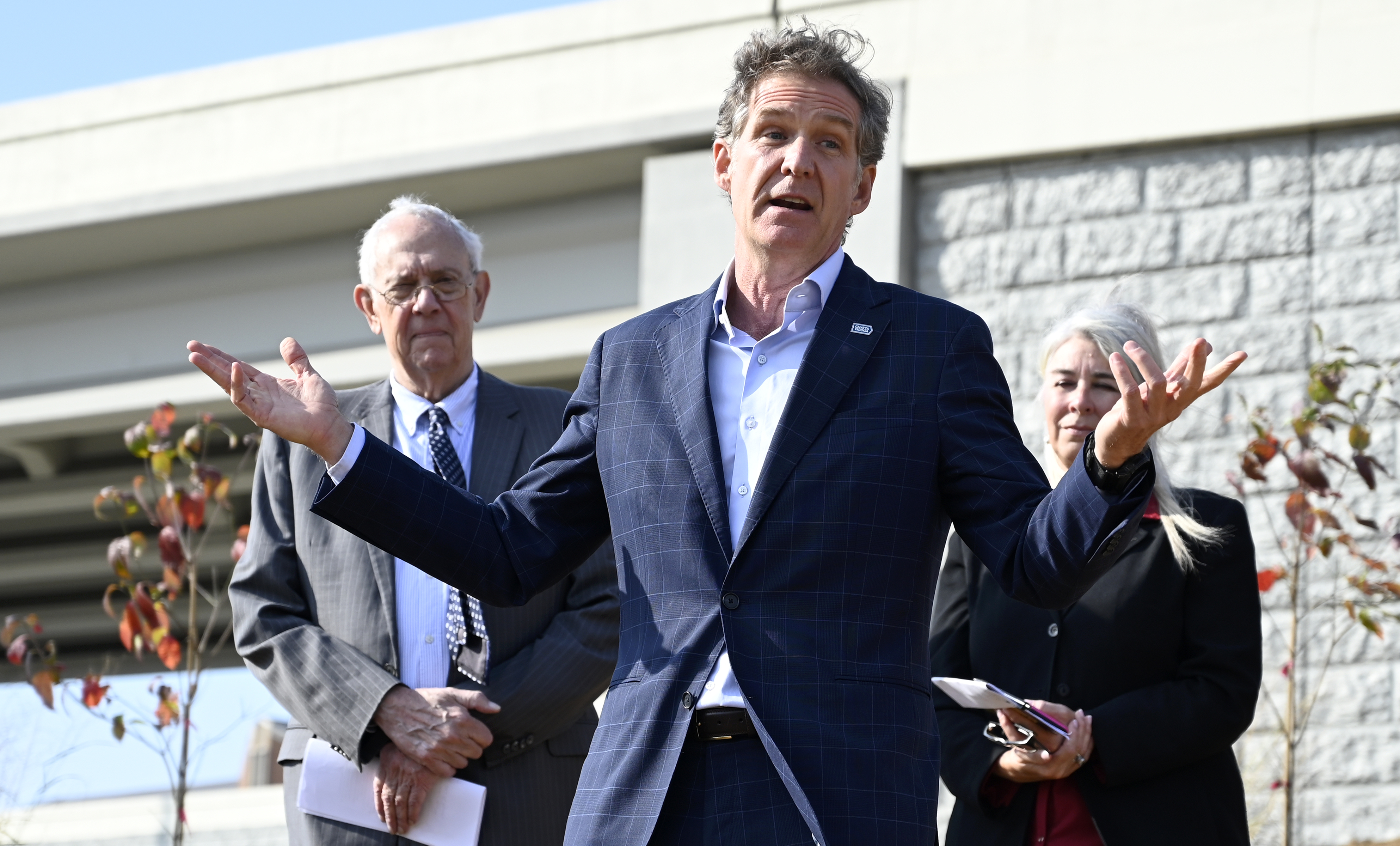
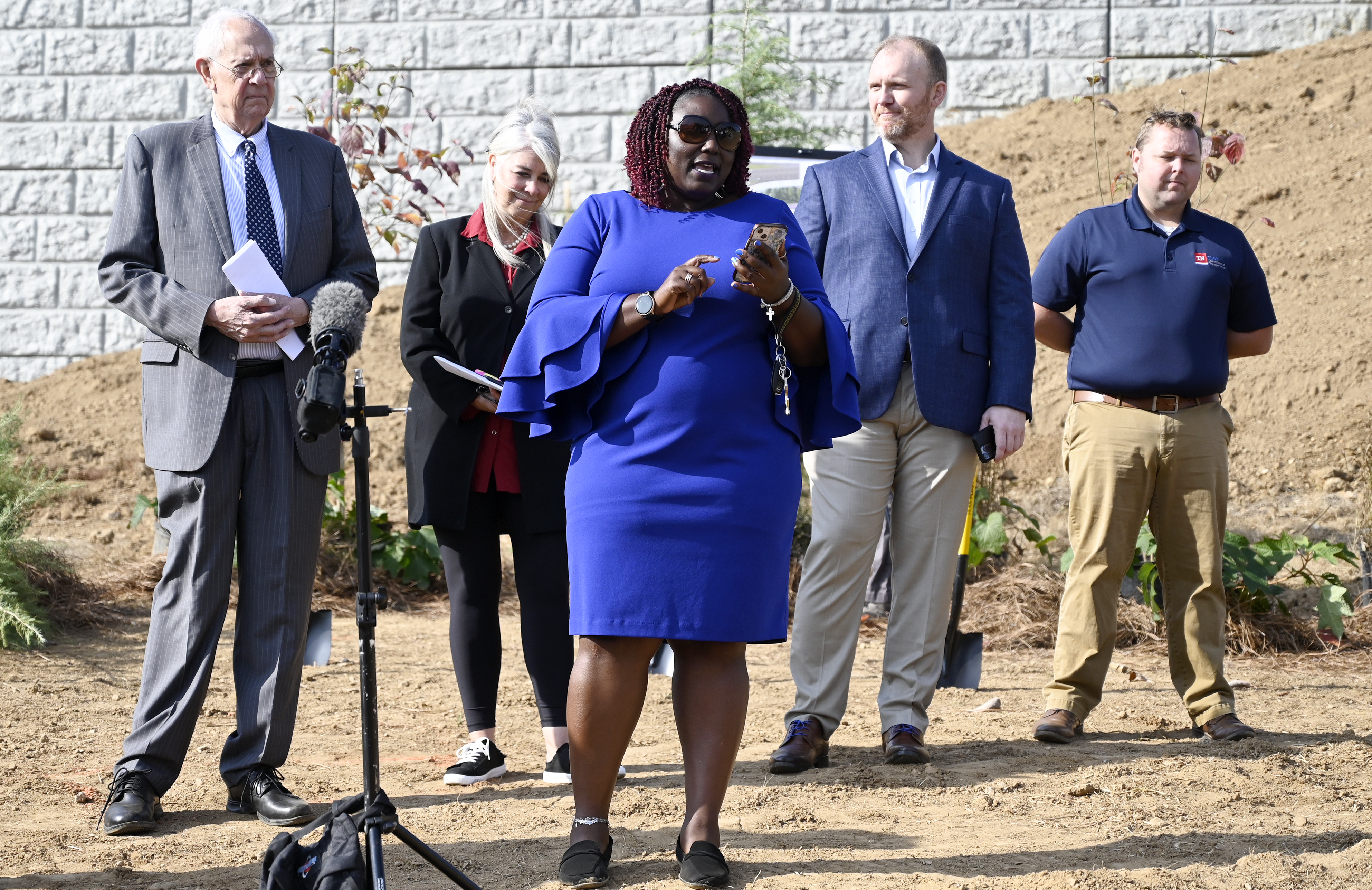
“Shawn retired in February of this year,” Thomas, president of the conservancy, said with a laugh.
He recalled where the idea came from and how its supporters joined together.
“This was a project that was conceived as the result of a trip through North Carolina to see the beauty of their development,” Thomas said. “The Interstate Conservancy is really a partnership of three groups — the state, the county and the city. The model was a partnership formed back in the 1980s, the Partners for Economic Progress, started by Joe Decosimo. What it does is it brings all the governmental entities and the private sector together.”
Tennessee’s neighboring state demonstrated the pride the North Carolina community had in itself, Thomas said. It was that vision he shared with Bible and other stakeholders as they joined the effort they hoped would have far-reaching effects.
“This is beautification and economic development,” Thomas said.
Tuesday’s groundbreaking celebrated the results of a public-private partnership, Jane Hampton Bowen, executive director of the conservancy, said in an emailed statement.
“Whether coming into our city or passing through the city, this Fourth Street ‘roadway to gateway’ will create a sense of place and pride, including three of the city’s most important and cherished core values in its overall design — economic, ecological and aesthetic factors,” Bowen said.
Bowen said the contractor plans to complete the project by late November.
The gateway work was originally planned as a much larger, single-contract project before the pandemic drove landscaping costs up and caused officials to delay.
The beautification work was first hoped to cap off the $143 million Highway 27 widening and straightening project through downtown Chattanooga, completed in 2021 with a $1 million damage assessment against the contractor for missing a Jan. 28, 2020, completion deadline.
The original comprehensive plan for the gateway — which had a prepandemic cost estimate of around $2.2 million — included more than 1,000 trees of various species, 4 to 5 acres of wildflower species, thousands of daylilies and irises — a state flower — on the 21 acres surrounding the interchanges at Fourth Street and M.L. King Boulevard. Landscaping was envisioned to transform the open spaces into lush plantings with species that provide visual interest year-round.
The coronavirus hit Chattanooga in March 2020, leading to uncertainty about plant availability and higher prices that drove up project costs.
The first bids in June 2021 were far higher than appropriations and were rejected, so the project was split, breaking out the Fourth Street interchange, or one-third of the entire project, to push the cost nearer to original estimates. When the project drew only one bid in May 2022, again it was too high and was rejected.
The gateway project remained in limbo until the contract for the current work was awarded in March for the first third of the larger plan now under way.
Troy Gardner — with RaganSmith, the project landscape architect on the project — said the plantings will provide something for everybody.
“This project will have year-round interest for everyone to enjoy,” Gardner said. “We think that even the birds and bees with sing a little sweeter and buzz a little faster knowing what the native wildflowers and perennials that were specifically selected for this project.”
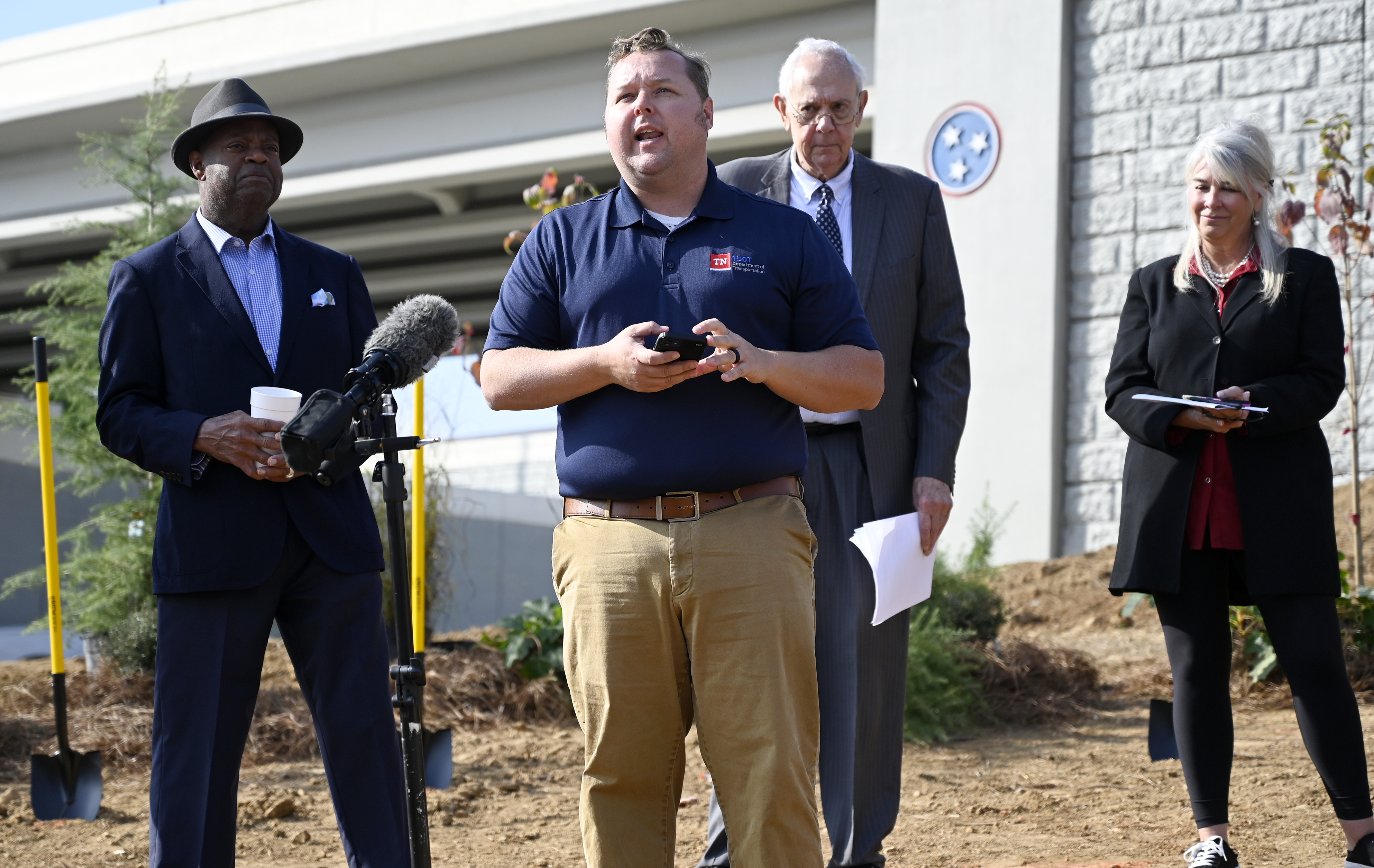
The plant species used in the project will not only provide visual beauty for travelers coming to Chattanooga, but they will also benefit wildlife and pollinators, Michael McClanahan, state highway beautification office transportation manager, said Tuesday. Gateways, used elsewhere in the state, even reduce litter.
“In Tennessee, we saw a decrease in litter of 42% in areas adjacent to those gateways,” McClanahan said. “So not only are we putting good things in the ground, but we’re showing people that we care, and we’re correcting their behavior. There are ripples to what’s being done here.”
McClanahan said the conservancy partnership and maintenance plan for the project are equally important to the success of the project.
“Chattanooga is the Scenic City,” Tim Kelly, Chattanooga’s mayor, said Tuesday. “There was a lot of anxiety during COVID about the increase in litter and what had happened to us, and first impressions matter. It’s a banner day in Chattanooga.”
Other speakers at the groundbreaking included city council member Raquetta Dotley, of East Lake, and county Commissioner Warren Mackey, D-Lake Vista.
The transportation agency will bear the cost of initial planting, while maintenance will be done through the city and the conservancy, according to contract documents.
The second, larger portion of the beautification project at M.L. King Boulevard has not been funded or scheduled, but officials said it is still planned, and Thomas said he has it in his sights.
Tuesday, as Thomas stood looking at the display of trees, shrubs, flowers and grasses to be used in the project, a bird landed in one of the deodar cedar trees.
“The project’s first bird,” Thomas exclaimed, pointing it out to others.
Then he recognized it.
“The Tennessee state bird — a mockingbird.”
Contact Ben Benton at bbenton@timesfreepress.com or 423-757-6569.