
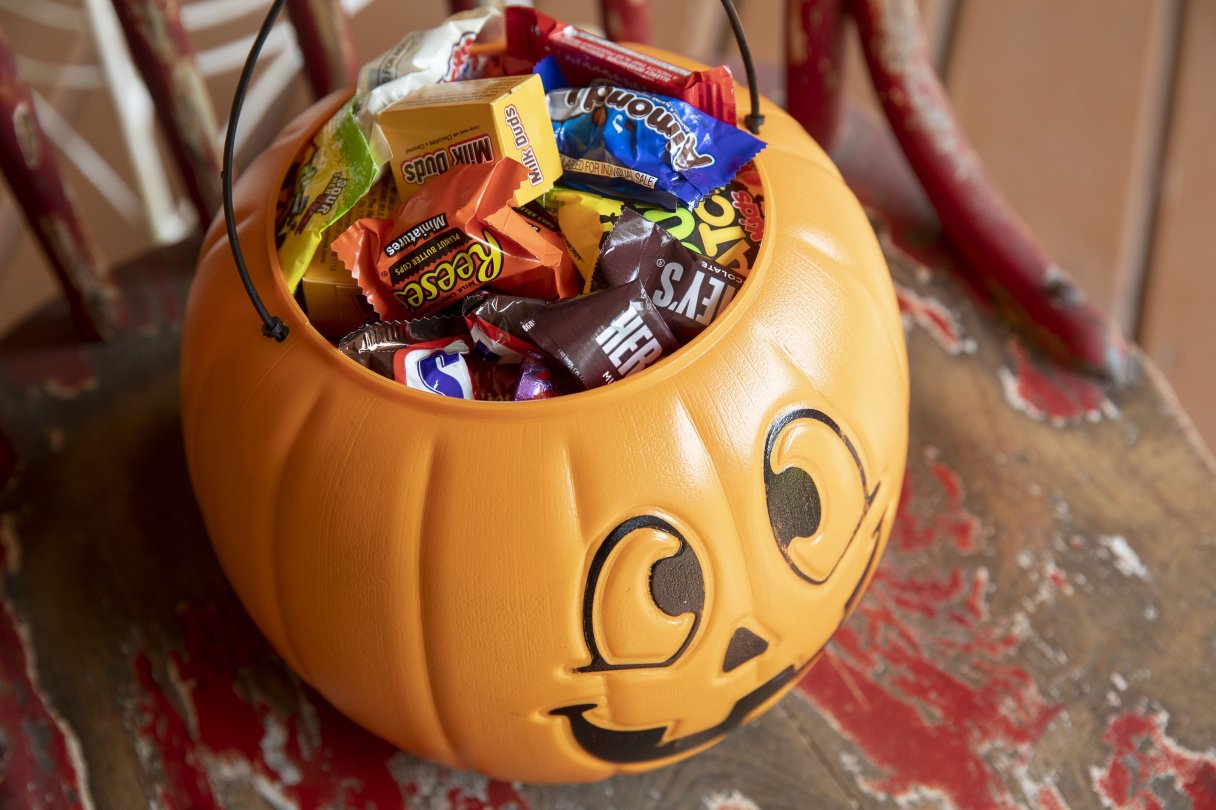
Americans spent more than $3.6 billion in Halloween candy last year, but all those sweet treats come with a bitter truth: The added sugars can pose serious health risks.
A single serving of KitKat has 19 grams of added sugar, Reese’s Milk Chocolate Peanut Butter Cups have 20 grams and a Hershey’s standard 1.55-ounce candy bar has 21 grams. But with billions of dollars in sugary snacks making their way into children’s trick-or-treat bags, kids are at risk of overindulging. The health risks of overconsumption include obesity, Type 2 diabetes and heart disease.
According to the American Academy of Pediatrics, children under 2 years old should have none. Older children should have less than 25 grams per day — that’s around 6 teaspoons.
Eating more than the recommended daily amount on Halloween is usually OK, though, according to Dr. Ben Levinson, a primary-care pediatrician at Nationwide Children’s Hospital.
“I generally will tell families most people can eat whatever they want in one day, and that’s not going to really harm their health in the long run,” he told USA Today. “If we continue eating large amounts of sugar day-after-day, that’s when things are going to add up and really affect us in a negative way.”