
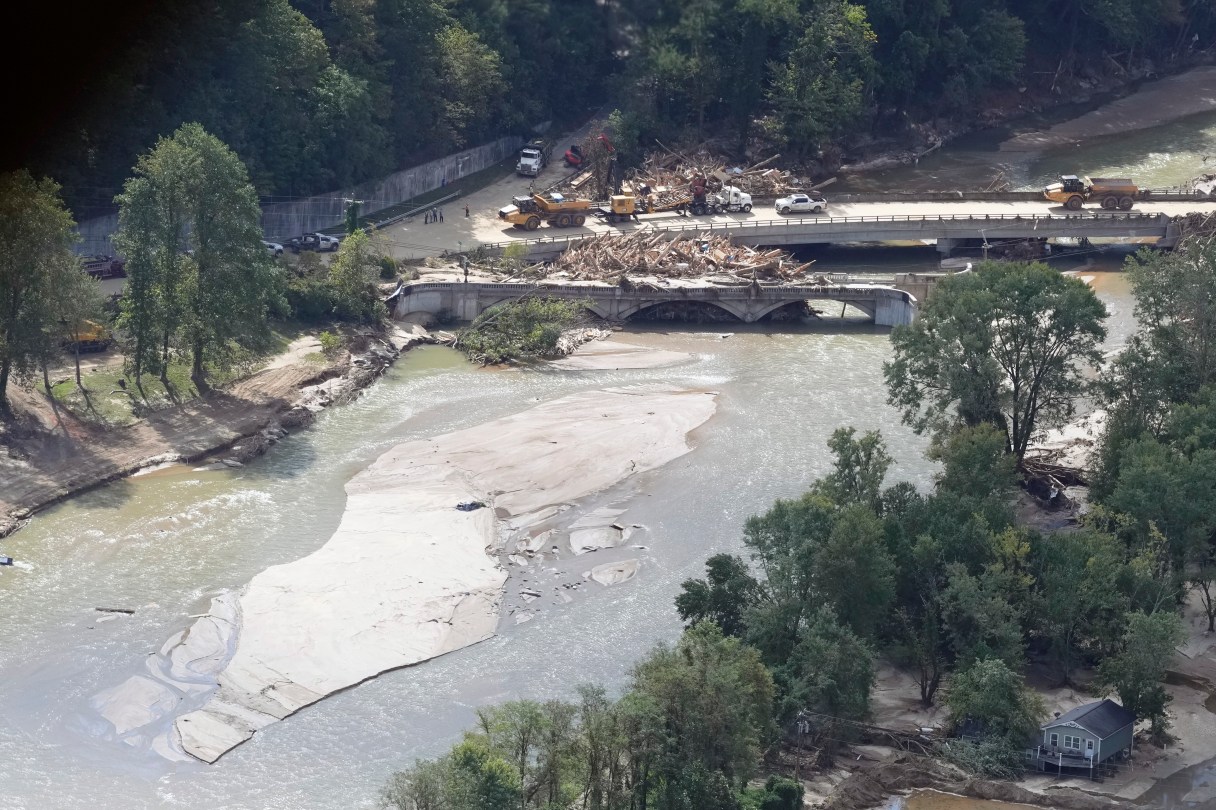
Many people were stunned to see the intense flooding and devastation caused by Hurricane Helene in western North Carolina communities, located inland and tucked thousands of feet above sea level in the Blue Ridge Mountains.
Asheville, North Carolina, has long been considered a “haven” from such disasters. So has the Great Lakes region.
“Unfortunately, extreme weather is always such a timely discussion. We’re talking about Helene, but every week it’s something different, every day it’s something different,” said Bernadette Woods Placky, chief meteorologist at the climate science education nonprofit Climate Central. “Weather is the primary way that people experience climate change.”
But the topic of climate change continues to be contentious, especially in the run-up to November’s presidential election.