
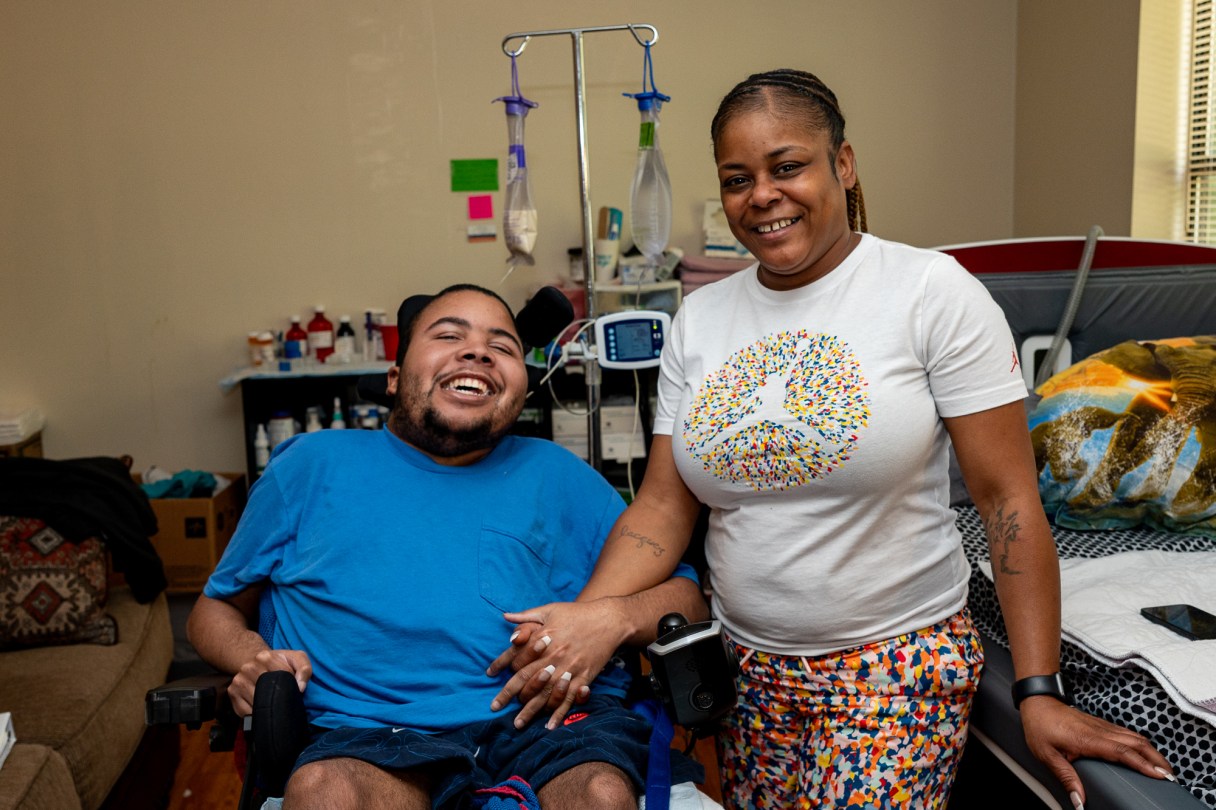
Single mother Kayneasha Smith devoted her life to her son after a car struck and paralyzed the 6-year-old while he was crossing the street in 2009. Since then, Smith has juggled work and education while ensuring her son, her top priority, feels loved.
“I’m at the point where I say I have lived my life,” Smith said. “I want to be able to show him, you know, there’s more to life than just sitting in his chair or sitting at home watching TV.”
Her son, Jacquez Smith, turns 22 in January. He attends Brainerd High School, loves watching wrestling and playing video games with his adaptive controller. He’s fully conscious of his surroundings and will grin after hearing a good joke or his mother brag about his achievements, but he’s wheelchair-bound and has trouble speaking.
Even though Kayneasha Smith thinks taking care of her son has gotten easier as time has gone on, Jacquez Smith still needs assistance in every aspect of daily life and a home nurse to monitor his round-the-clock medication schedule.
His nurse, Crystal Speed, who has 26 years of nursing experience, spent the past two months helping Jacquez Smith for Maxim Healthcare. According to Speed, Smith needs care for everything related to his personal hygiene, intestinal movements and breathing treatments. Moreover, he’s dependent on his feeding tube for 18 hours a day and needs medication through his gastrostomy tube four times daily.
“He is an insulin-dependent diabetic and has his blood glucose checked four times daily with the use of sliding scale insulin in addition to his regular dose of insulin,” Speed said.
(READ MORE: Annual Neediest Cases campaign renamed Ochs Community Fund)
Because Smith can’t survive without constant care, Kayneasha Smith schedules her life activities around being available to tend to him. Up until April, she worked as a dental assistant at a local practice. As she applies for new jobs, her working hours and availability still depend on whether and when she can get home care for her son.
“Every job that I get is like a touch-and-go,” Smith said. “One minute it will be fine … I’m going to work every day, then the next couple of months … due to sickness of a nurse or personal reasons why they can’t come in … I can’t come to work, and most jobs, they don’t care.”
According to Smith, the No. 1 question employers ask is whether there are relief or backup nurses available to take care of her son. She said the residual effects of the pandemic created a nurse shortage, leaving Smith without backup support. When she has to quit her job and keep her son alive, she said it makes finding employment difficult.
“At the end of the day, I’m very independent, so if I can get up and go to work, then that’s what I am going to do,” Smith said. “I just feel like there’s other people out there in far more worse situations than we are that might need it. I don’t go digging for the resources just because they’re out there.”
Jacquez Smith’s disability funds and food stamps help, but they don’t cover the entirety of their rent. Even though Kayneasha Smith is a full-time student at Miller-Motte College, studying for an associate degree in business, she scours the internet every morning for resources in the area to find help for her son, who can’t go to school because of a lack of a usable ramp at their house.
“I’m in the midst of trying to see if there’s programs that can help get us a ramp built or donate us a portable ramp,” she said.
Ochs Community Fund
To donate to the Ochs Community Fund, formerly called Neediest Cases, please visit timesfreepress.com/ochs-fund.
She is also trying to find a more permanent housing solution through the Chattanooga Housing Authority Housing Choice Voucher Program, also called Section 8. According to Speed, Section 8 provides people with stipends for housing and utilities based on need.
“I’m actually waiting to hear back from Section 8 to make sure everything went through, so hopefully, all my worries will be over with,” Smith said.
(READ MORE: Neediest Cases campaign raises nearly $40,000, down from $90,000 during pandemic)
In the meantime, without employment for a few months and behind on rent in August, Smith reached out to the United Way of Greater Chattanooga through its 211 number, which is a free service helping connect people to resources they might need, like the Chattanooga Times Free Press Ochs Community Fund.
Smith said she didn’t know what would have happened to her and her son had she not connected with the United Way.
“You just give them your information, and they take it from there,” she said.
The Times Free Press Ochs Community Fund bears the name of Adolph Ochs, who launched the fund here in 1914 while he was publisher of The Chattanooga Times. The fund receives donations from Times Free Press readers, and the money is administered and distributed to individuals and families in need by the United Way and partner agencies.
Recipients must be working or on a fixed income and be able to demonstrate ongoing stability and self-sufficiency after receiving funds. The fund took in $37,000 last year.
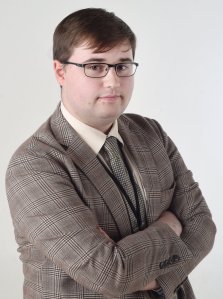
Contact staff writer Mason Edwards at medwards@timesfreepress.com.
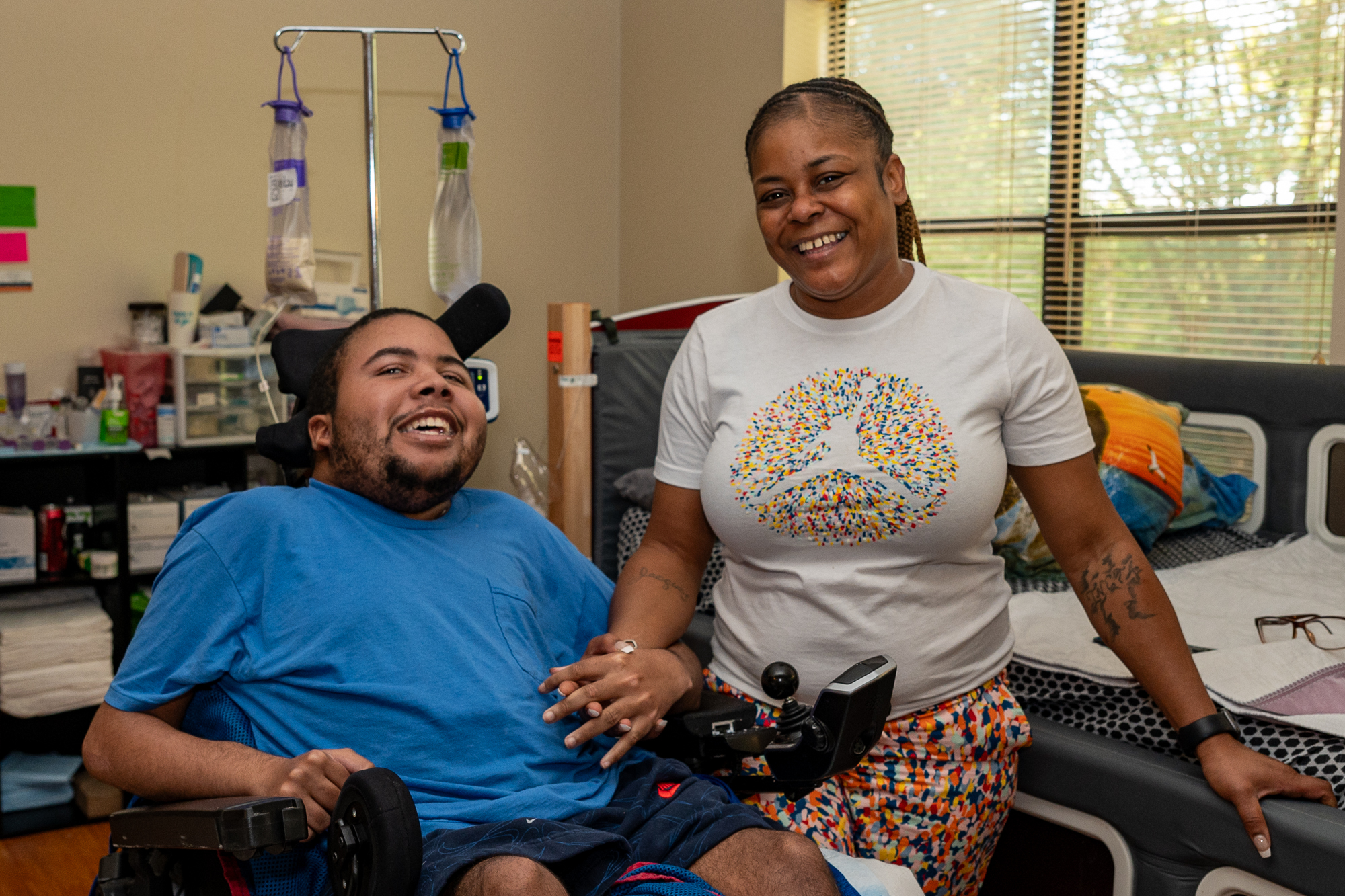 Staff Photo by Mason Edwards / Kayneasha Smith holds her son’s hand in their living room on Sept. 18, 2024. Ever since a vehicle paralyzed her son, Jacquez Smith, Kayneasha Smith has been his sole and primary caretaker in his everyday life activities.