
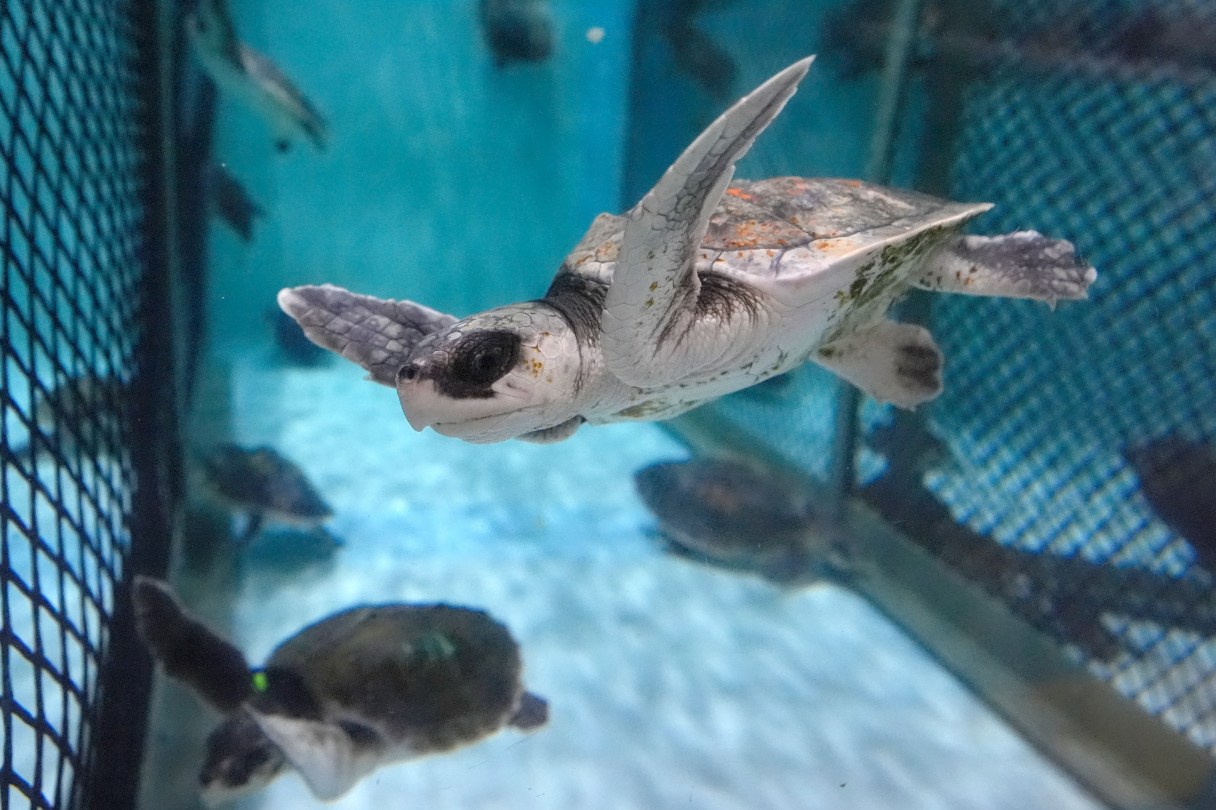
As global warming fills the plankton-rich waters of New England with death traps for sea turtles, the number of stranded reptiles has multiplied over the last 20 years, filling one specialized animal hospital with the endangered creatures.
The animals enter areas such as Cape Cod Bay when it is warm, and when temperatures inevitably drop, they can’t escape the hooked peninsula to head south, said Adam Kennedy, the director of rescue and rehabilitation at the New England Aquarium, which runs a turtle hospital in Quincy, Massachusetts.
More than 200 cold-stunned young turtles were being treated there Tuesday, Kennedy said.
“Climate change certainly is allowing those numbers of turtles to get in where normally the numbers weren’t very high years ago,” he said.
Cold-stunned sea turtles, sometimes near death, wash up on Cape Cod every fall and winter. The aquarium expects the number of turtles it rescues to climb to at least 400, Kennedy said. In 2010, the average was 40, he said.