
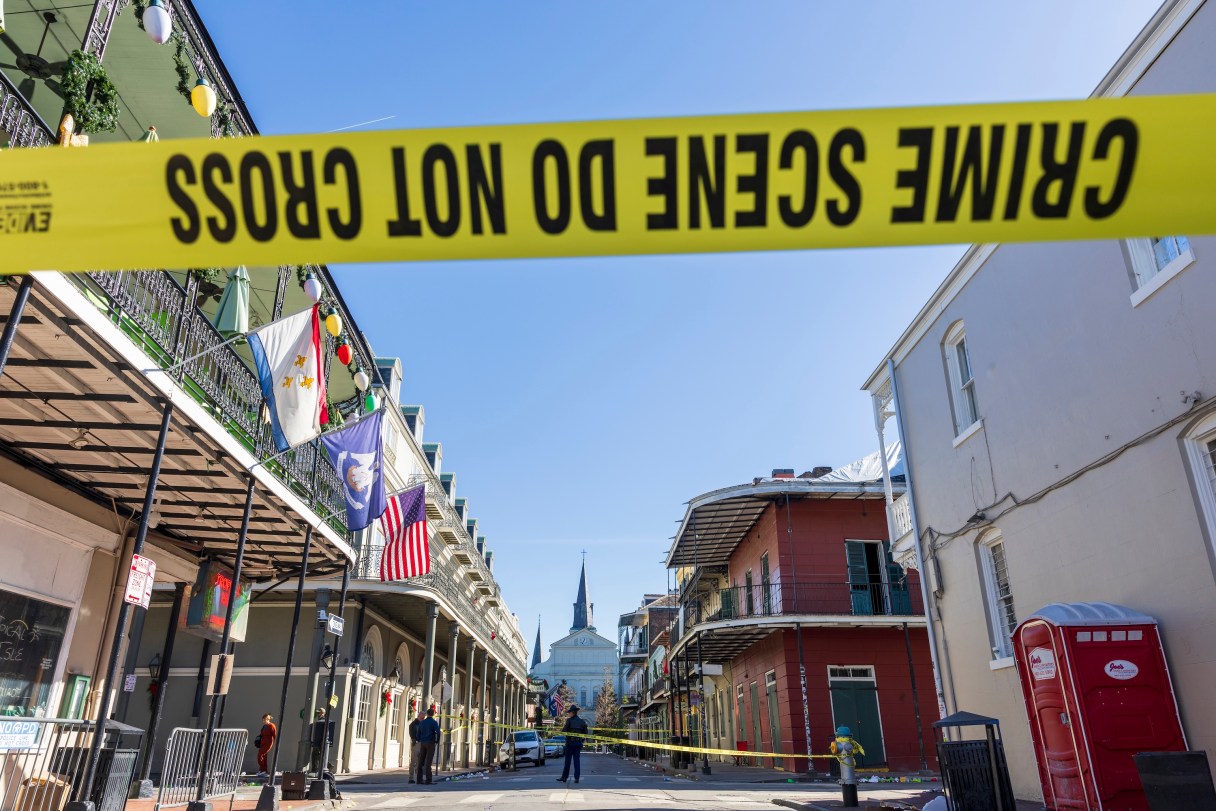
After an Islamic State sympathizer rammed a truck into crowds celebrating Bastille Day in 2016, horrified New Orleans leaders were anxious to protect their city’s famed French Quarter, where crowds of revelers pack the cobblestone streets, especially during big events like Mardi Gras.
By the next year, steel columns known as bollards were installed to restrict vehicle access to Bourbon Street. The posts retracted to allow for deliveries to its bars and restaurants, until — gummed up by Mardi Gras beads, beer and other detritus — their tracks stopped working reliably.
So when New Year’s Eve arrived, the bollards were gone. They were being replaced ahead of the Super Bowl, which New Orleans will host on Feb. 9.
That left a critical security gap as thousands of New Year’s revelers crowded Bourbon Street. Shamsud-Din Jabbar, a U.S. Army veteran inspired by the Islamic State group, exploited that gap when he drove a truck onto a sidewalk early Wednesday and sped around a police car stationed as a temporary barricade, killing 14 people.
It was the attack New Orleans had feared since the deadly 2016 rampage in the French Riviera city of Nice that killed 86 people — and one that could have been prevented or limited with temporary or permanent vehicle barriers, said Rob Reiter, an expert on protecting retail stores and crowds from accelerating vehicles for the Security Industry Association.