
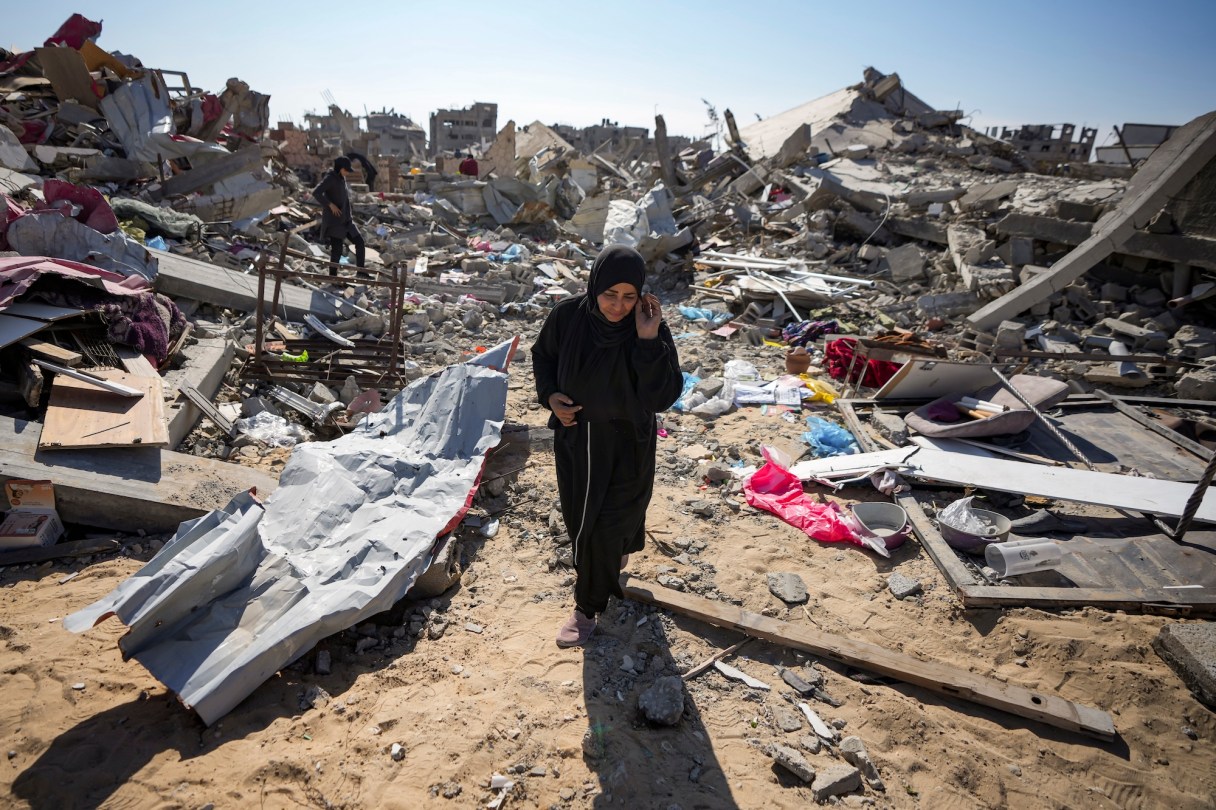
RAFAH, Gaza Strip (AP) — Palestinians in Gaza are confronting an apocalyptic landscape of devastation after a ceasefire paused more than 15 months of fighting between Israel and Hamas.
Across the tiny coastal enclave, where built-up refugee camps are interspersed between cities, drone footage captured by The Associated Press shows mounds of rubble stretching as far as the eye can see — remnants of the longest and deadliest war between Israel and Hamas in their blood-ridden history.
“As you can see, it became a ghost town,” said Hussein Barakat, 38, whose home in the southern city of Rafah was flattened. “There is nothing,” he said, as he sat drinking coffee on a brown armchair perched on the rubble of his three-story home, in a surreal scene.
Critics say Israel has waged a campaign of scorched earth to destroy the fabric of life in Gaza, accusations that are being considered in two global courts, including the crime of genocide. Israel denies those charges and says its military has been fighting a complex battle in dense urban areas and that it tries to avoid causing undue harm to civilians and their infrastructure.
Military experts say the reality is complicated.