
The man was not just a guitarist; he was also a songwriter. But a stroke had partially paralyzed him, leaving him incapable of doing either activity.
Left-handed, he not only couldn’t place his fingers on the guitar strings to form notes and chords, but he couldn’t form the train of thought necessary to write lyrics, either.
“When I met him, he was not even able to pick up a pencil,” says Alexandria Rodriguez, a board-certified music therapist at CHI Memorial Hospital in Chattanooga.
Using music, she helped him regain his own.
“By the end of it, he wrote a song about a dog,” she says.
Although many may think music therapy is simply a case of picking up a guitar and singing “Michael Row the Boat Ashore,” it’s far more.
“There’s a lot of explaining of what we try to do,” Rodriguez says. “Essentially, we use music to reach non-musical goals, and that can be things such as cognition for sensory motor goals. It could also be for speech and language and, oftentimes, all the above and social emotional goals as well.”
Music therapy helps redevelop motor skills for arms and legs. It helps regain brain functions such as talking or reading. It deals with the symptoms of Parkinson’s disease and can address mental issues such as depression and substance abuse. Through such organizations as Freedom Sings USA, it even helps veterans suffering from PTSD.
At its core, though, it helps patients regain confidence and hope.
Kennedi Bryant, director of the music therapy program at the Chattanooga Autism Center, says the use of music therapy “is quickly growing in our Chattanooga area, but in the region, it is slow-growing.”
“People think that we’re just there to play music and have a good time, which isn’t wrong. We are playing music, and we are having a good time,” says Bryant, who graduated in 2021 from the University of Tennessee at Chattanooga with a degree in music therapy.
But within the fun, music therapists set specific goals for their patients — improving their ability to walk or speak or understand instructions, for example — then couple music with scientifically proven techniques to get there, she says.
Photo Gallery
Professionals in Chattanooga are using music therapy to help with a range of emotional and physical issues
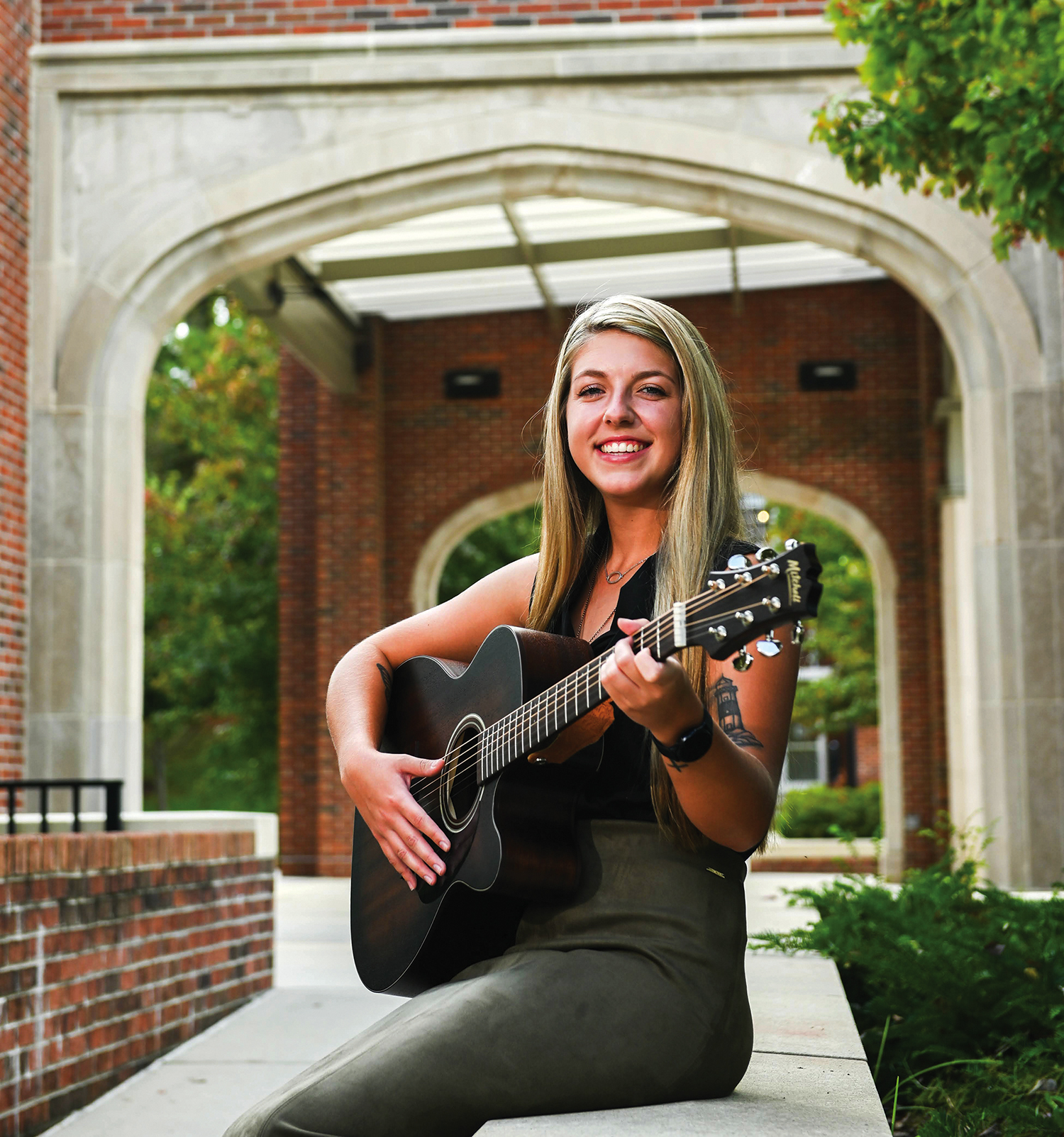
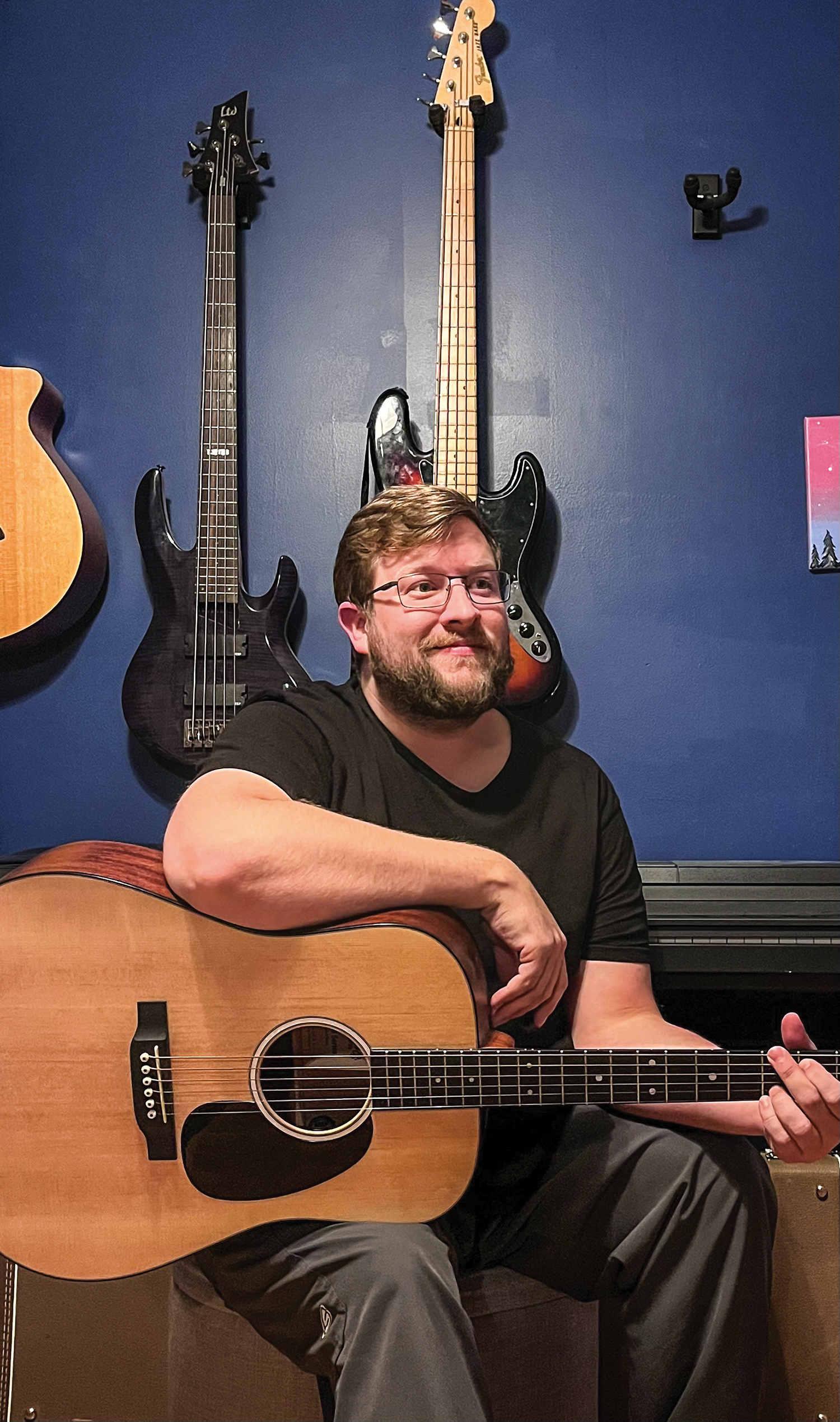
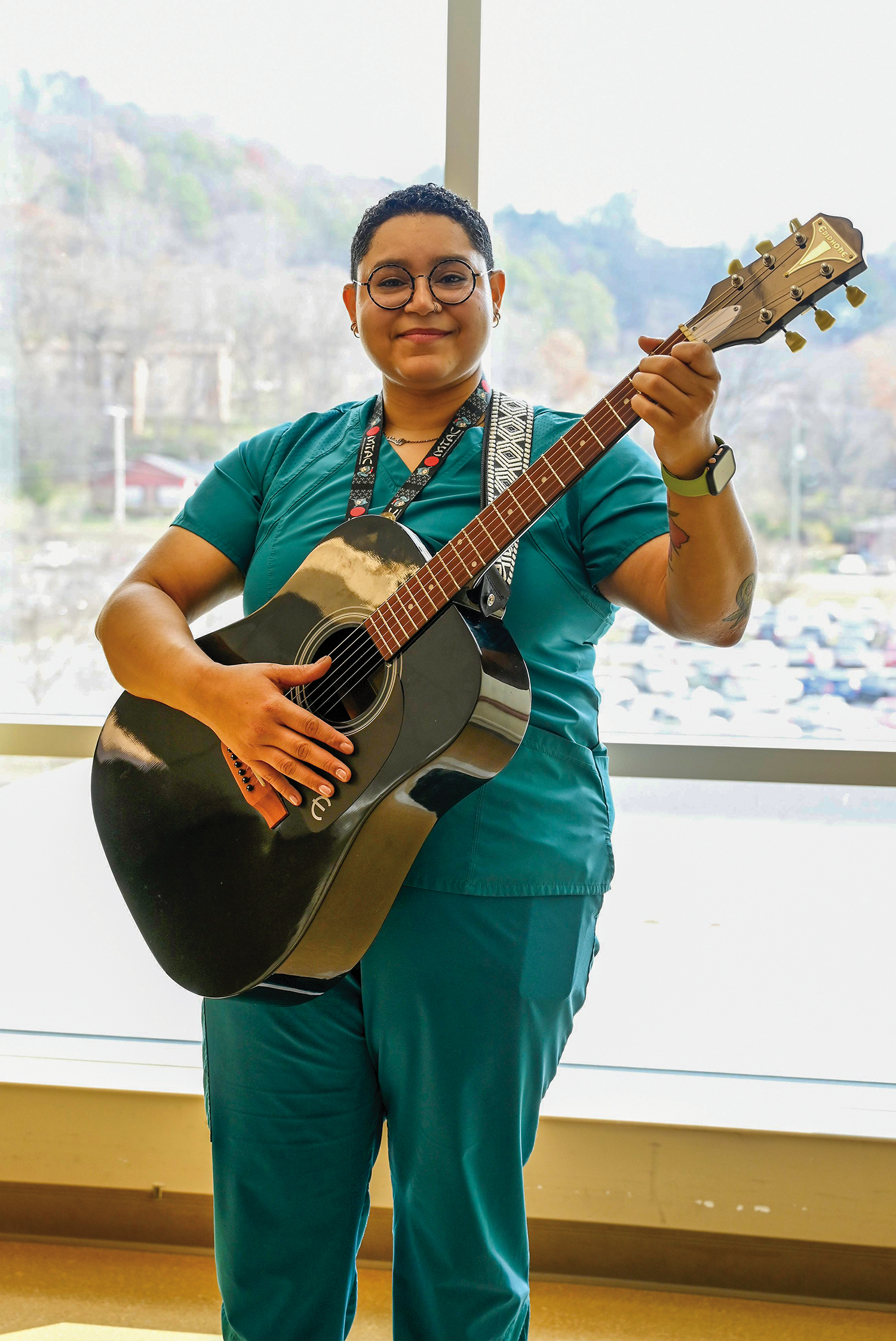
Jordan Wood, who recently began a job in Erlanger Hospital’s neurology program, says patients often have an incomplete understanding of how musical therapy can help them.
“I think people probably have in their mind, ‘Music therapy, you’re just going to play a song for me on the radio, and I’m supposed to feel better,'” he says. “And I’m like, ‘No, everything I do is intentional. I want to learn about you.'”
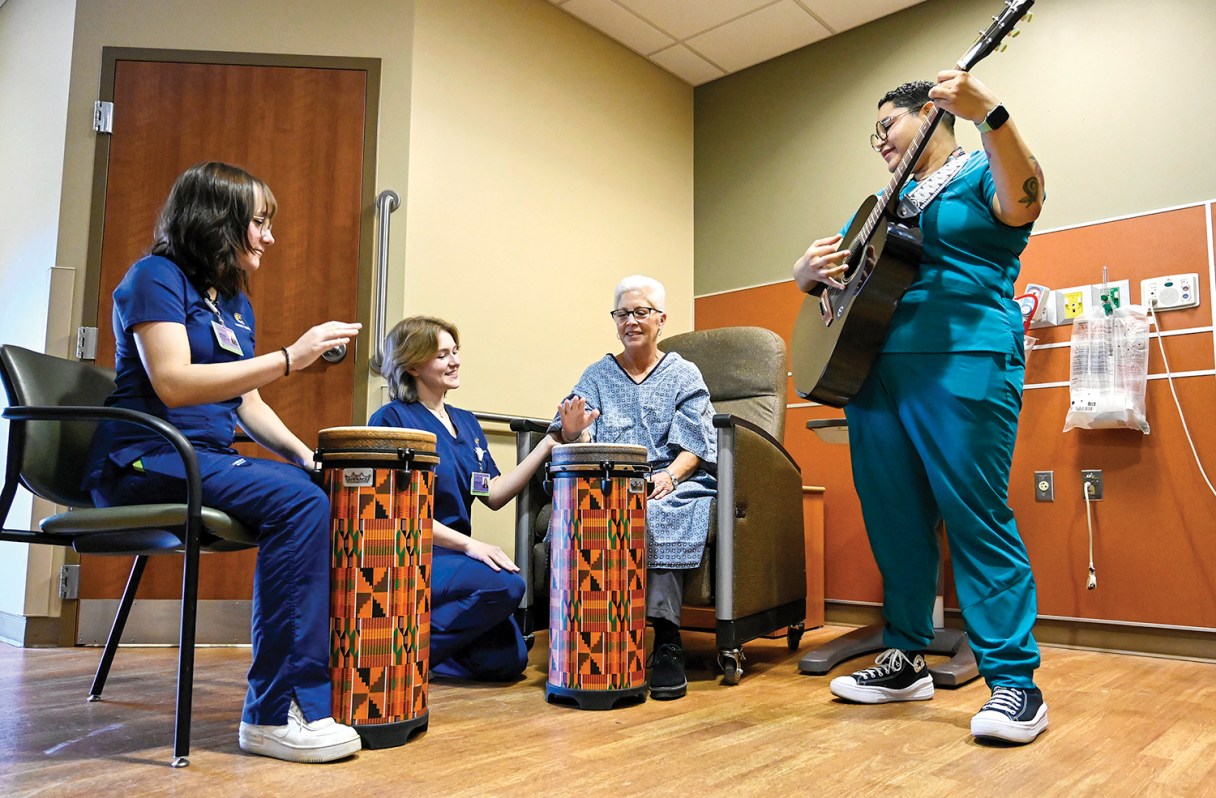
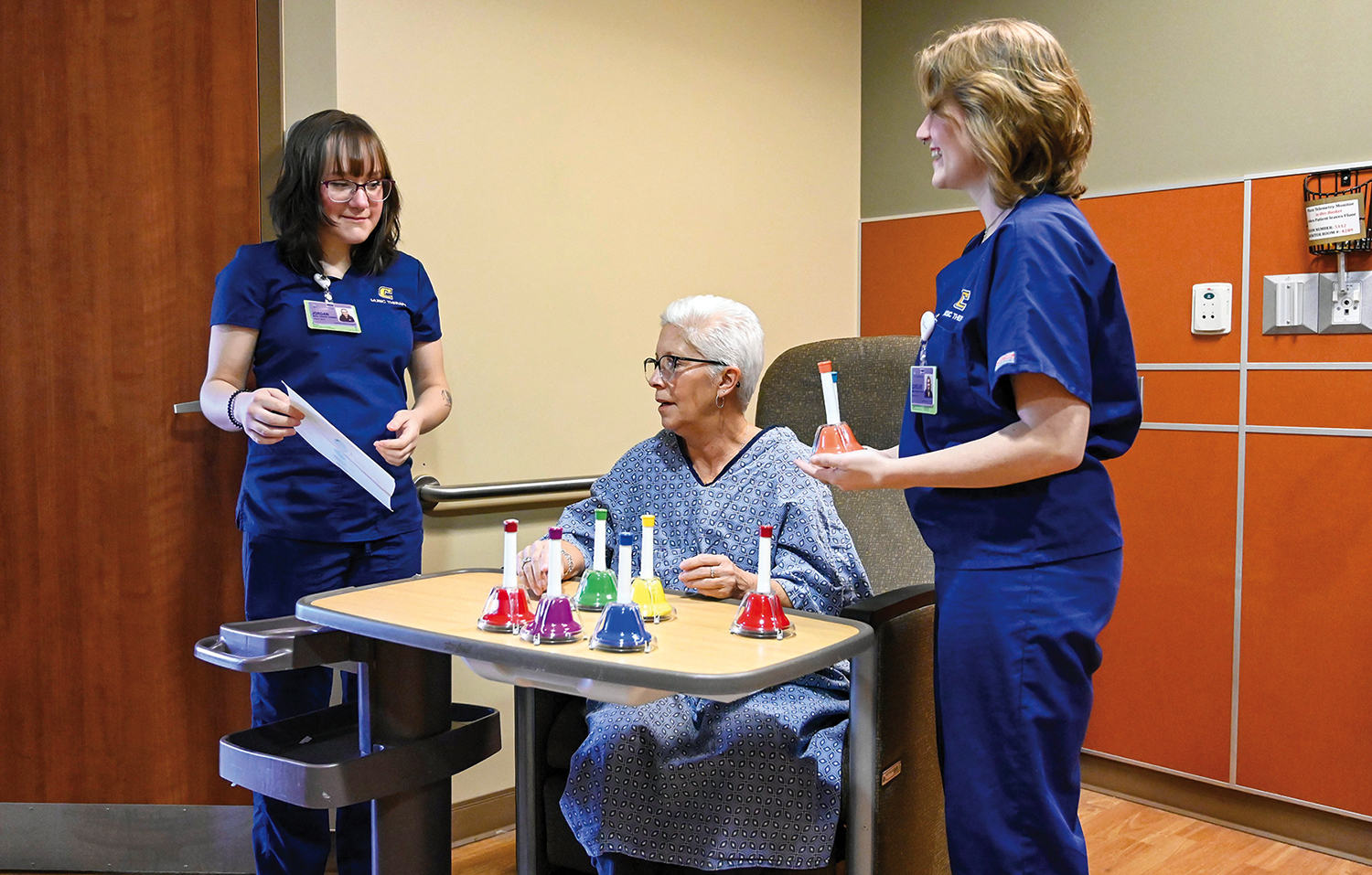
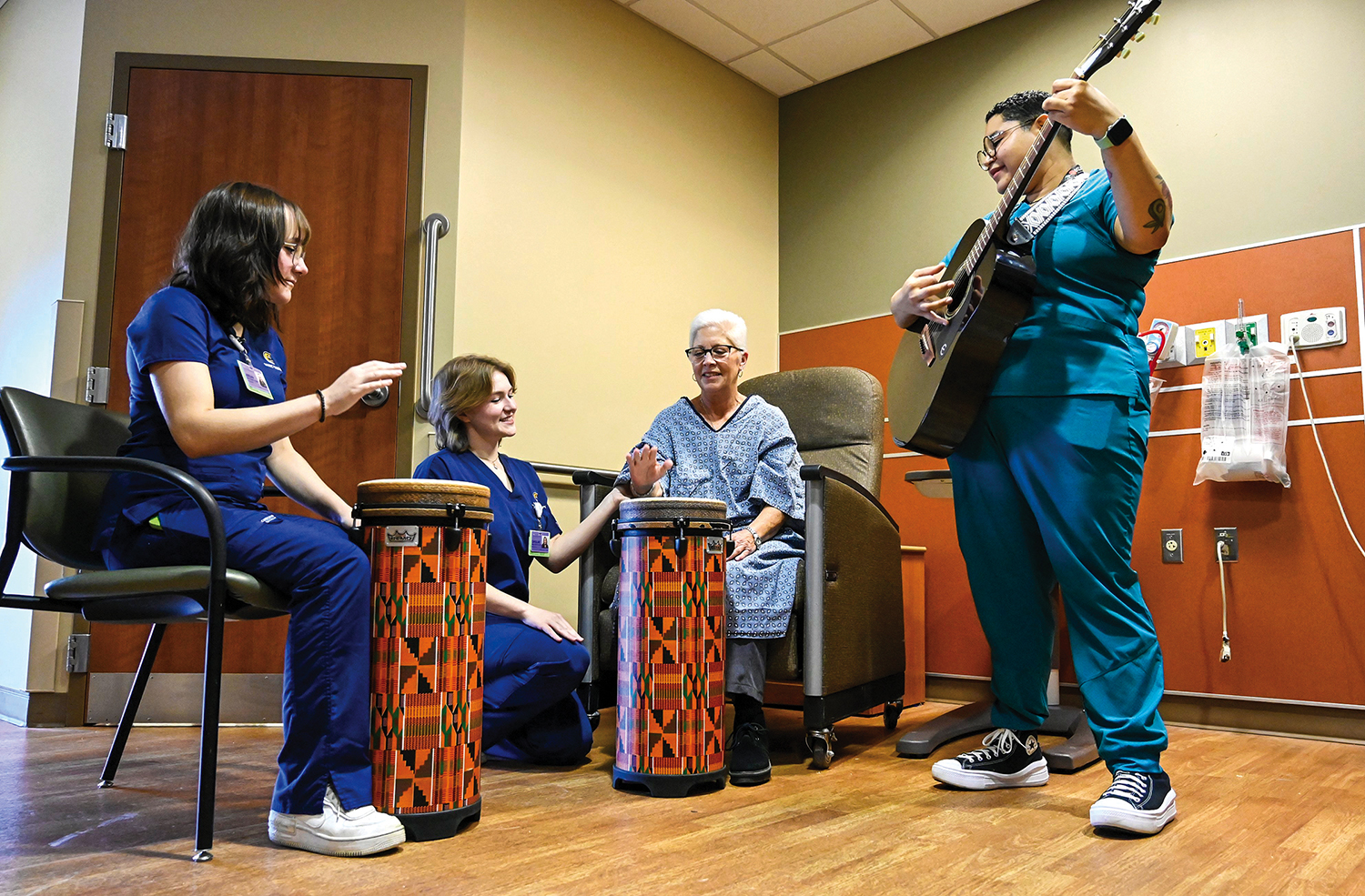
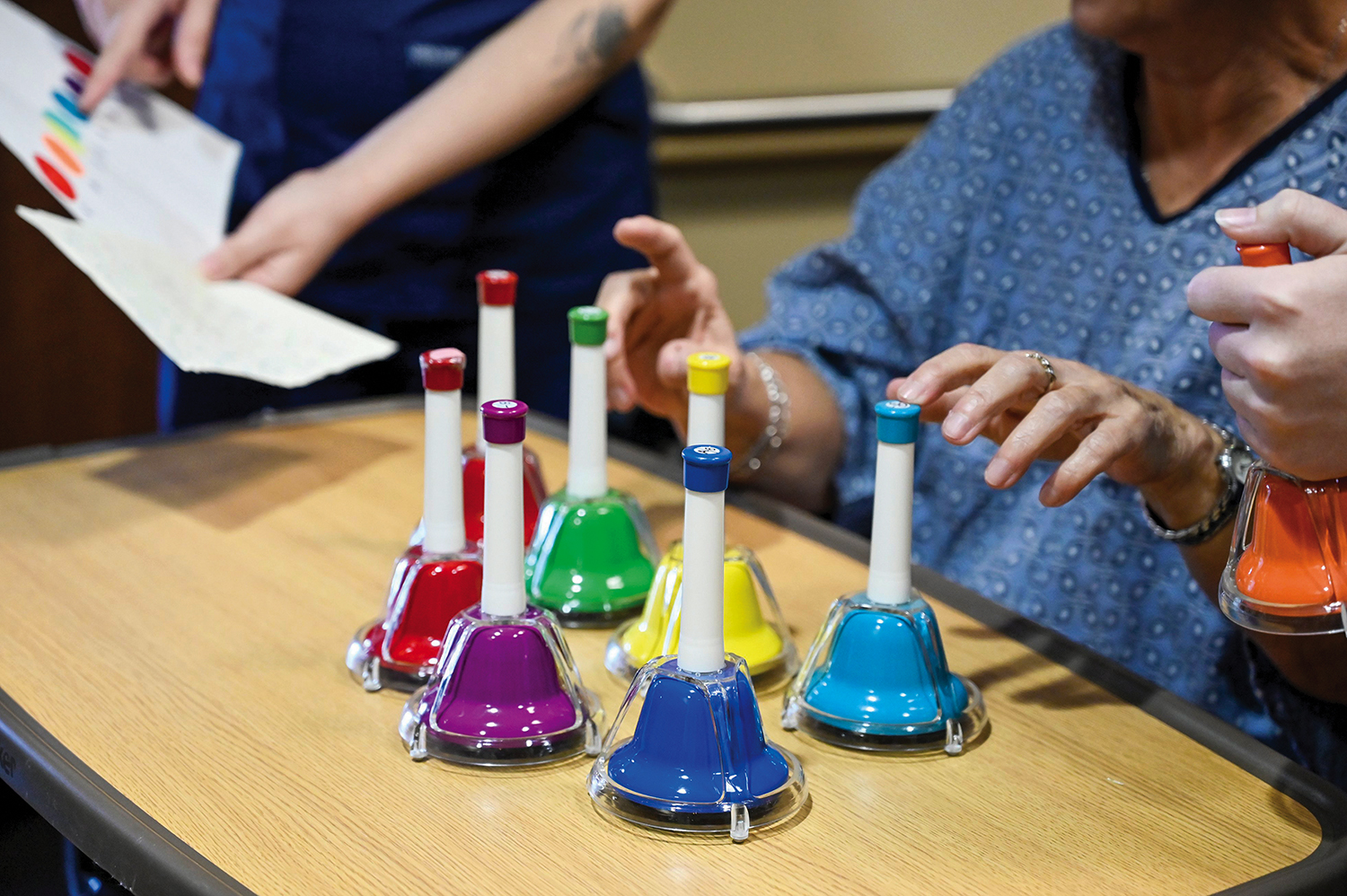
Music therapy uses a variety of instruments — guitars, drums, hand shakers, bells — whatever the patient is capable of using.
“For example, you play a drum, and your body trains to rhythm. And you use that to help with movement, and that transfers to things like reaching for stuff that you need in your home or holding someone’s hand,” Rodriguez says.
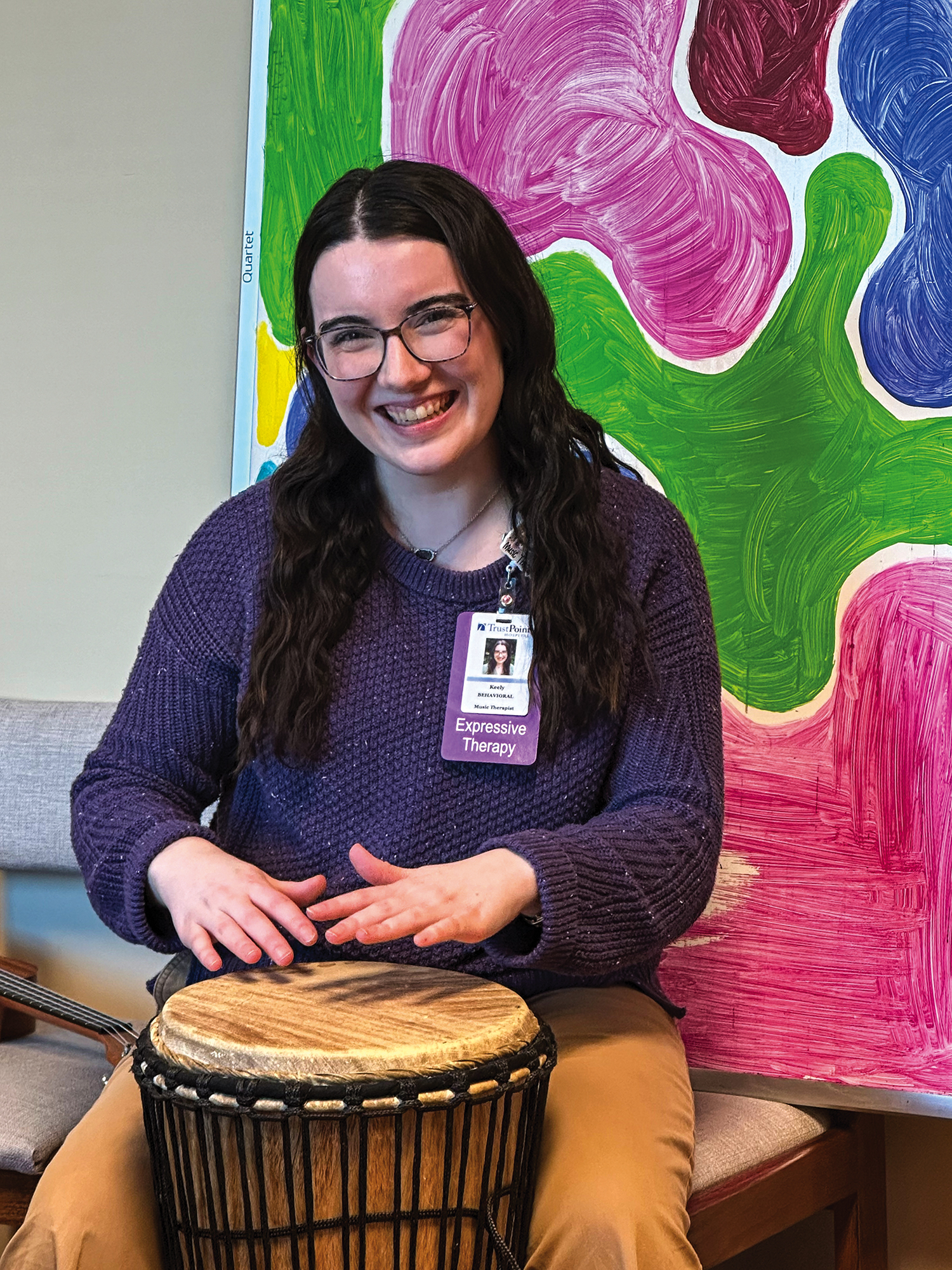
While many music therapists work one-on-one with patients, Keely Phillips, a UTC graduate who now works at Trustpoint Hospital in Murfreesboro, Tennessee, often works in group settings. One of her favorite sessions, she says, is “affirmation drumming,” a call-and-response technique.
“They’ll all listen to me, and repeat after me, then they’ll have the freedom and autonomy to create their own rhythm and have everybody else listening and following them,” she explains.
While drumming, the patient will repeat such statements as “I am enough” or “I am growing and going at my own pace.”
“We talk about some of the negative talk that we sometimes have in our lives and how to rewrite the narrative and uplift ourselves,” she says.
But using music therapy can be tricky, depending on the patient, Wood says. He discovered, for instance, that one of his patients enjoyed religious music, so he thought a hymn would be appropriate.
“The second I started playing, she started crying,” he recalls. “She said, ‘This is my husband’s favorite song, and he passed away. I don’t want to hear this song.'”
For more information on music therapy, go to musictherapy.org.