
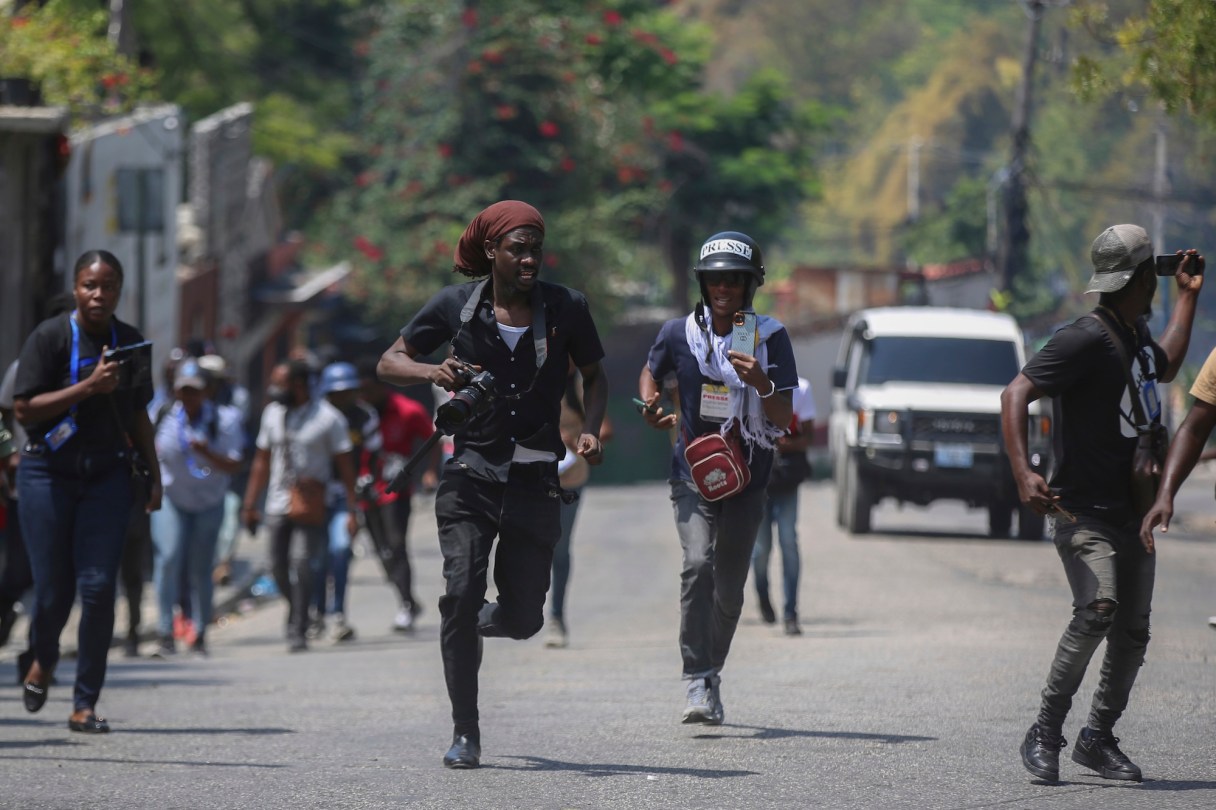
PORT-AU-PRINCE, Haiti (AP) — Jean-Jacques Asperges once relished returning home after a long day working at a radio station in one of the world’s most dangerous places for journalists.
He had a roof and four walls for protection, but gang violence forced him and his family to flee their home twice.
Now, Asperges, 58, his wife and their two children are forced to sleep on the floor of a soiled and overcrowded makeshift shelter with thousands of other Haitians also left homeless by gang violence.
“Bullets fall here all the time,” he said.
Having lost all his work equipment, Asperges relies solely on his phone, but he remains undeterred like dozens of other journalists in Haiti who are under attack like never before. They are dodging bullets, defying censorship and setting personal struggles aside as they document the downfall of Haiti’s capital and the surge in violence blamed on powerful gangs that control 85% of Port-au-Prince.