
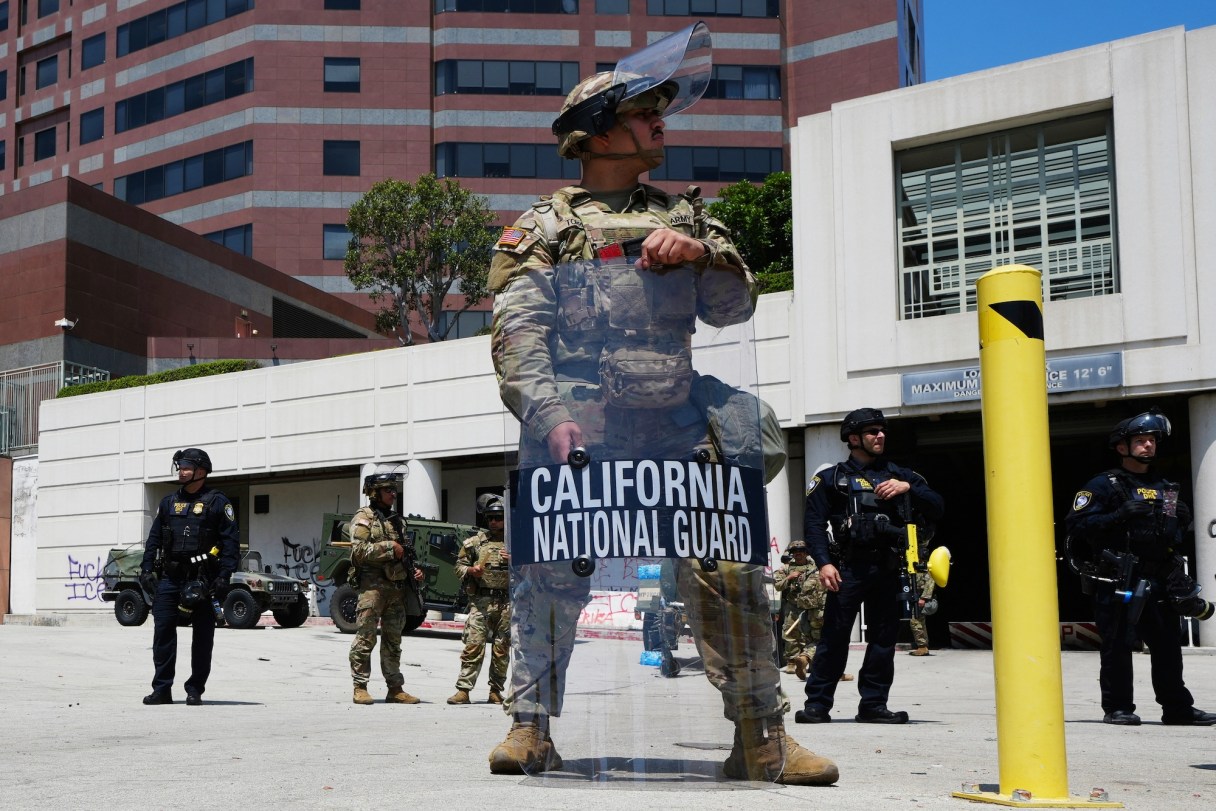
The use of the military to quell protests is something associated with dictators in foreign countries, and as of Saturday night, with a president of the United States.
When President Donald Trump federalized 2,000 members of the California National Guard, deploying them because of protests against federal immigration authorities, he sent a chilling signal about his willingness to use the military against demonstrators.
There are two relevant aspects of federal law: One allows the president to federalize a state’s National Guard, and the other permits the president to use the military in domestic situations. Neither, at this point, provides legal authority for Saturday’s action.
As for the former, a federal statute, 10 U.S.C. section 12406, authorizes the president to take over a state’s National Guard if “the United States, or any of the Commonwealths or possessions, is invaded or is in danger of invasion by a foreign nation; there is a rebellion or danger of a rebellion against the authority of the Government of the United States; the President is unable with the regular forces to execute the laws of the United States.”
This is the statutory provision Trump has invoked. But it is highly questionable that the protests against ICE agents rise to the level of a “rebellion against the authority of the Government.”