
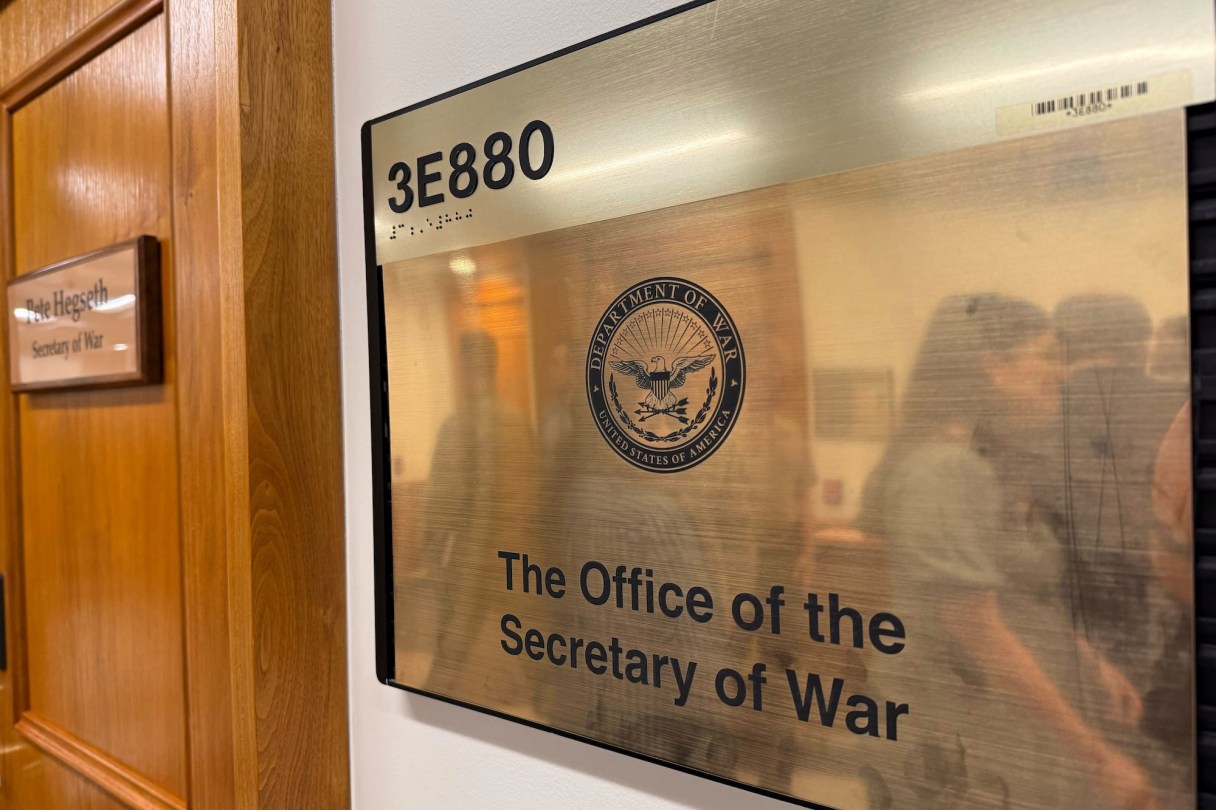
I have no problem with renaming the Department of Defense into the Department of War, as Donald Trump is trying to do. (It’s technically not up to the president but to Congress, but the Republicans there will oblige him.) After all, that martial label was good enough from George Washington to Harry Truman. And “war” is more honest and descriptive than the somewhat euphemistic “defense.” As Trump put it, “we want to be offensive too if we have to be.” Even that holds water.
But that’s the end of my concurrence with this cosmetic stunt of showmanship. Trump likes to rename things because doing so looks bold while skirting the complexities and nuances of real policy. Naming is part of turning his presidency into reality TV, and it works to the extent that it grabs our attention. But a new shingle (and URL) outside the Pentagon does not solve the fiendish challenges of running the Army, Navy, Marine Corps, Air Force, Coast Guard and Space Force. Nor does it signal anything, positive or negative, about strategy.
Strategy — the word comes from the Greek strategos, meaning “general” or “commander” — is the domain that Trump and his Secretary of War, Pete Hegseth, should be concerned with but aren’t.
When Trump announced the name change, Hegseth, the Fox News personality, bloviated again that the new label expresses the “warrior ethos” that he and the president are trying to revive after its alleged near-death under “woke” leaders and elites. The Department of War, Hegseth said, is henceforth about “maximum lethality, not tepid legality, violent effect, not politically correct.”
To people who think deeply about war, and know that it is hell, this vacuous bellicosity is hard to bear. Christopher Preble, who runs a “grand strategy” program at the Stimson Center in Washington, thinks that the Trump-Hegseth obsession with lethality “risks a focus on killing for killing’s sake, and comes at the expense of strategic clarity.”