
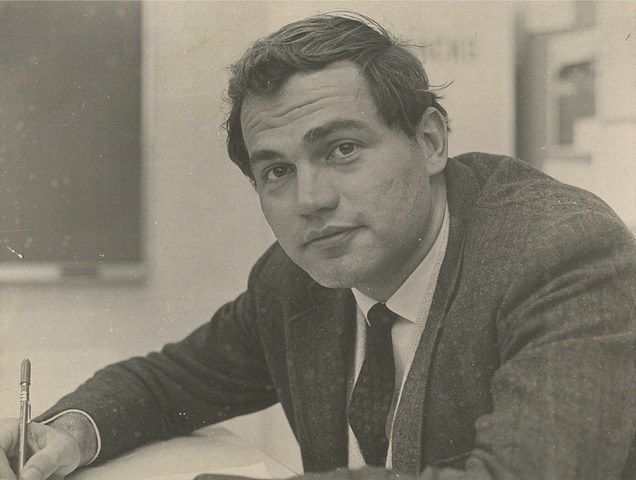
(Editor’s note: The late Charles Flowers wrote this letter in 2017 to Marty Mitchell, the collections coordinator for what is today The Bessie Smith Cultural Center. She had asked him to write about his inspiration for collecting and then donating parts of his African art collection, particularly pieces related to Bessie Smith, Roland Hayes and others over many years.)
Growing up in Brainerd in the 1950s, I longed for the wider world as only the bookish and lonely can. Fortunately, there were many sweet intimations of “elsewhere” scattered here and there. The Hunter Art Gallery, though its holdings then were extravagantly modest, introduced me to the visual arts — empty of visitors as it typically was. Chattanooga’s school board, evidently not intimidated by the drear math of post-war budgets, supported an El-Hi music program as ambitious as any in the Southeast, including subsidized concerts by the Chattanooga Symphony for students. Our City High School marching band performed award-winning halftime routines to Dvorak and Tchaikovsky. Chattanooga had its scarcely-known rogue raptures.
But the most powerful engine of wonder and surprise was the old Chattanooga Public Library on McCallie Avenue, in whose dark underbelly was a sophisticated, musty collection of the most celebrated, experimental, influential and challenging literature of the 20th century — American and British and European (in expurgated translations). This was the project of the unheralded female librarians, many widowed in World War II or supporting their parents, who believed in the life-changing importance of serious prose and poetry.
And so my life at 14 was indeed changed — or found. “All Quiet on the Western Front,” “As I Lay Dying,” “My Antonia,” “Native Son,” “The Golden Bowl,” “Heart of Darkness,” “The Idiot,” “The Sun Also Rises,” “Four Saints in Three Acts,” “Darkness at Noon,” and on and on … the wider world. (How did McCarthyism pass them by?)
After my first novel was published in 1969, I eventually ran out of money in Manhattan (just like so many authors I had read in the library stacks!) and (ditto) soon worked in advertising for a while in the dregs of the Mad Men era. Around that time, the wonderful, warm and enthusiastic Columbia Records producer John Hammond Sr. became a friend. He was bringing out a three-album LP edition of the legendary early recordings of Bessie Smith, whom he had arguably discovered for white audiences when long before he was a student at Dartmouth. Simultaneously, “The Bessie Smith Story,” Chris Albertson’s eccentric landmark biography, was published to some acclaim, including many a nod to Chattanooga. And I happened upon a program from a Boston Symphony Orchestra concert honoring “the great tenor” Roland Hayes, who, it was reported, first heard an opera recording in the home of an editor for the Chattanooga Times. In the instant, he heard where his life must lie. But this native son of Chattanooga — that would be me — had never heard of Bessie Smith or Roland Hayes.