
Wednesday, November 11, 2026Nov 11

Israel releases African migrants from detention center

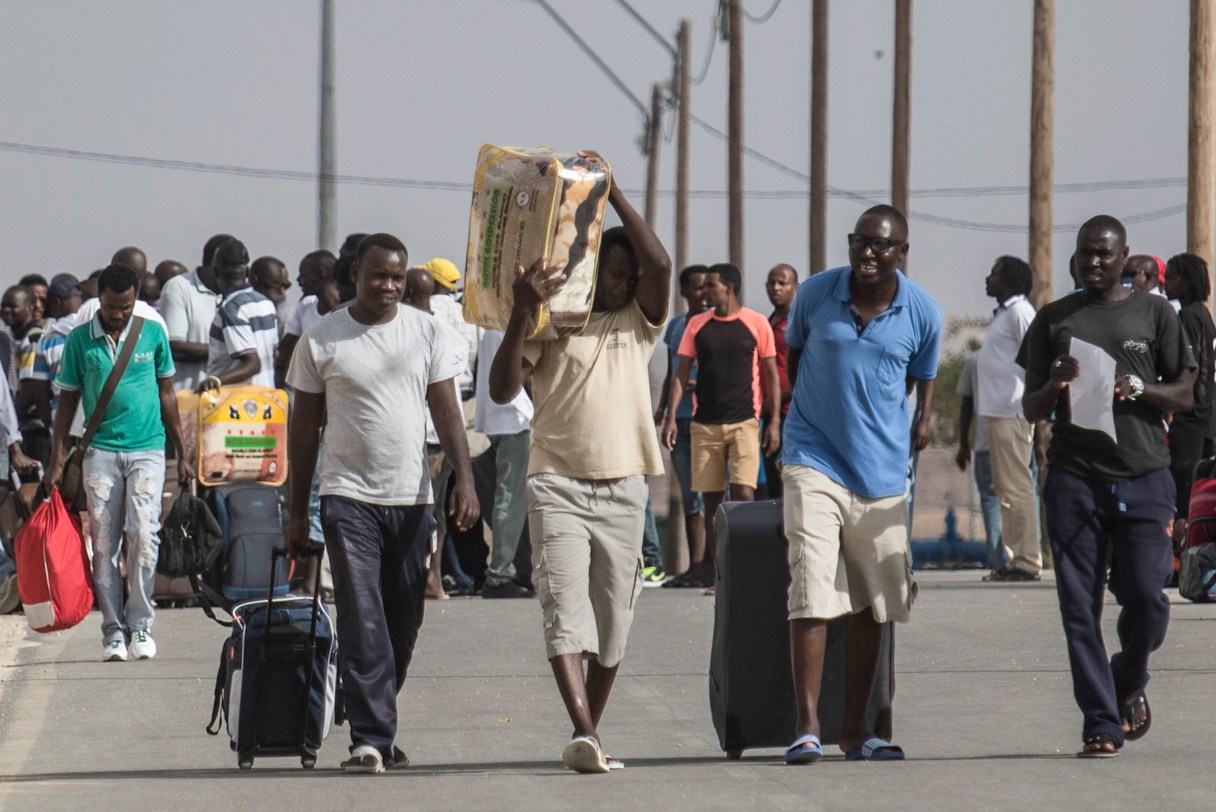
African illegal migrants walk out of the Holot detention center in the Negev desert in southern Israel, Tuesday, Aug. 25, 2015. Since it passed a 2012 “anti-infiltration” law, Israel has sent 1,700 migrants to the Holot facility deep in Israel’s Negev desert. Israel's Supreme Court upheld the law in the latest hearing but ruled that migrants held at Holot for more than 12 months must be freed. About 1,200 migrants are being released beginning Tuesday. (AP Photo/Tsafrir Abayov)
African illegal migrants walk out of the Holot detention center in the Negev desert in southern Israel, Tuesday, Aug. 25, 2015. Since it passed a 2012 “anti-infiltration” law, Israel has sent 1,700 migrants to the Holot facility deep in Israel’s Negev desert. Israel's Supreme Court upheld the law in the latest hearing but ruled that migrants held at Holot for more than 12 months must be freed. About 1,200 migrants are being released beginning Tuesday. (AP Photo/Tsafrir Abayov) African illegal migrants walk out of the Holot detention center in the Negev desert in southern Israel, Tuesday, Aug. 25, 2015. Since it passed a 2012 “anti-infiltration” law, Israel has sent 1,700 migrants to the Holot facility deep in Israel’s Negev desert. Israel's Supreme Court upheld the law in the latest hearing but ruled that migrants held at Holot for more than 12 months must be freed. About 1,200 migrants are being released beginning Tuesday. (AP Photo/Tsafrir Abayov)

HOLOT DETENTION FACILITY, Israel (AP) – Faysal Hussein from Sudan walked out of Israel’s desert detention center Tuesday already sweating with just a backpack, barely enough cash for bus fare and lunch, and after 19 months in custody, no idea where to go.

Hussein was among hundreds of African migrants Israel began freeing from this remote detention facility after a court ruling this month ordered their release. The release reflected Israel’s ongoing struggles in coping with an influx of African migrants that it does not want in the country, but is unable to forcibly send anywhere else.

Tuesday’s release came with an added twist: The migrants not only are legally barred from working, they also cannot go to the cities of Tel Aviv or Eilat, where the largest communities of Africans are located and most work opportunities are.

“I have no place to go. I don’t know anyone. I have no money. I don’t know what to do,” Hussein said.

More than 45,000 African migrants and asylum seekers are in Israel, according to the Israeli Interior Ministry, most from the strife-ridden countries of Eritrea and Sudan.