
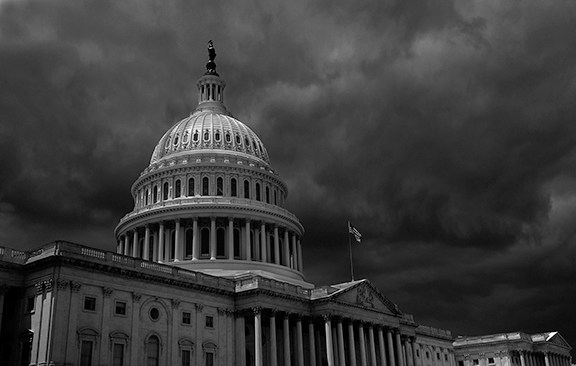
Congress faces a deadline of Oct. 1 to adopt a spending measure to keep the federal government open. Various reporters will be interviewing serious people saying serious things in the basement corridors of the U.S. Capitol. There will also be political posturing, misrepresentation and either braggadocio or evasion. Politics editor Naomi Schalit interviewed congressional expert Charlie Hunt, a political scientist at Boise State University, about the now-perennial drama over spending in Congress and what’s very different about this year’s conflict.
In the past, how did Congress pass budgets so that government could keep operating?
Typically, you would get an actual passage of a full budget for a year. But in the last 20 or 30 years or so, since we’ve become a more polarized country with a polarized Congress, we have a lot of what are called continuing resolutions, or CRs. They’re stopgap measures — not the full budget — and don’t tend to make a lot of changes on a lot of the spending priorities that Congress has.
Continuing resolutions usually just extend current levels of spending for a short time so that the two parties can continue negotiating. But as negotiations over long-term budgets have tended to fail more and more, these CRs are becoming more common, and Congress almost never passes a full budget on a yearly basis at this point.
What’s the role of the president here?