
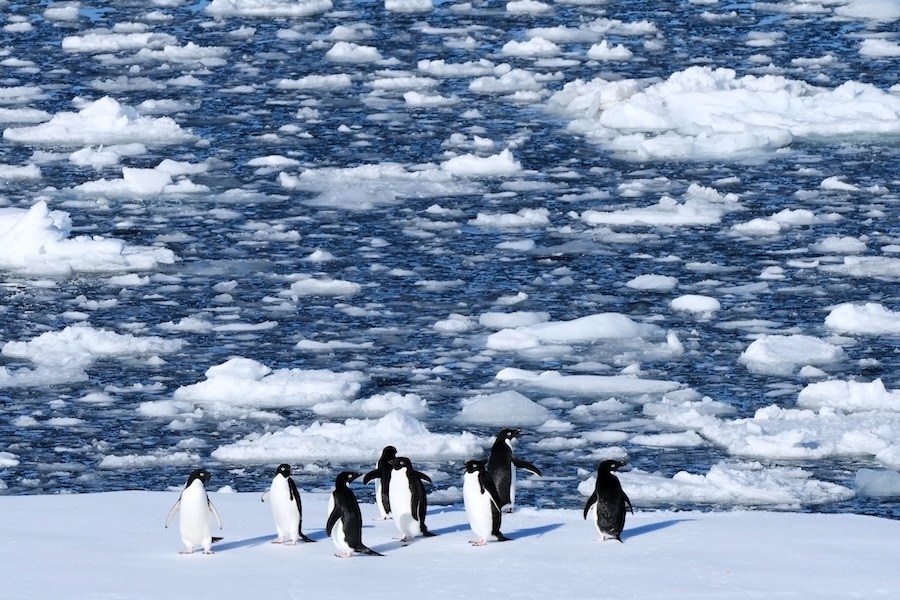
WASHINGTON (AP) — Warming temperatures are forcing Antarctic penguins to breed earlier and that’s a big problem for two of the cute tuxedoed species that face extinction by the end of the century, a study said.
With temperatures in the breeding ground increasing 5.4 degrees Fahrenheit (3 degrees Celsius) from 2012 to 2022, three different penguin species are beginning their reproductive process about two weeks earlier than the decade before, according to a study in Tuesday’s Journal of Animal Ecology. And that sets up potential food problems for young chicks.
“Penguins are changing the time at which they’re breeding at a record speed, faster than any other vertebrate,” said lead author Ignacio Juarez Martinez, a biologist at Oxford University in the United Kingdom. “And this is important because the time at which you breed needs to coincide with the time with most resources in the environment and this is mostly food for your chicks so they have enough to grow.”
For some perspective, scientists have studied changes in the life cycle of great tits, a European bird. They found a similar two-week change, but that took 75 years as opposed to just 10 years for these three penguin species, said study co-author Fiona Suttle, another Oxford biologist.
Researchers used remote control cameras to photograph penguins breeding in dozens of colonies from 2011 to 2021. They say it was the fastest shift in timing of life cycles for any backboned animals that they have seen. The three species are all brush-tailed, so named because their tails drag on the ice: the cartoon-eye Adelie, the black-striped chinstrap and the fast-swimming gentoo.