
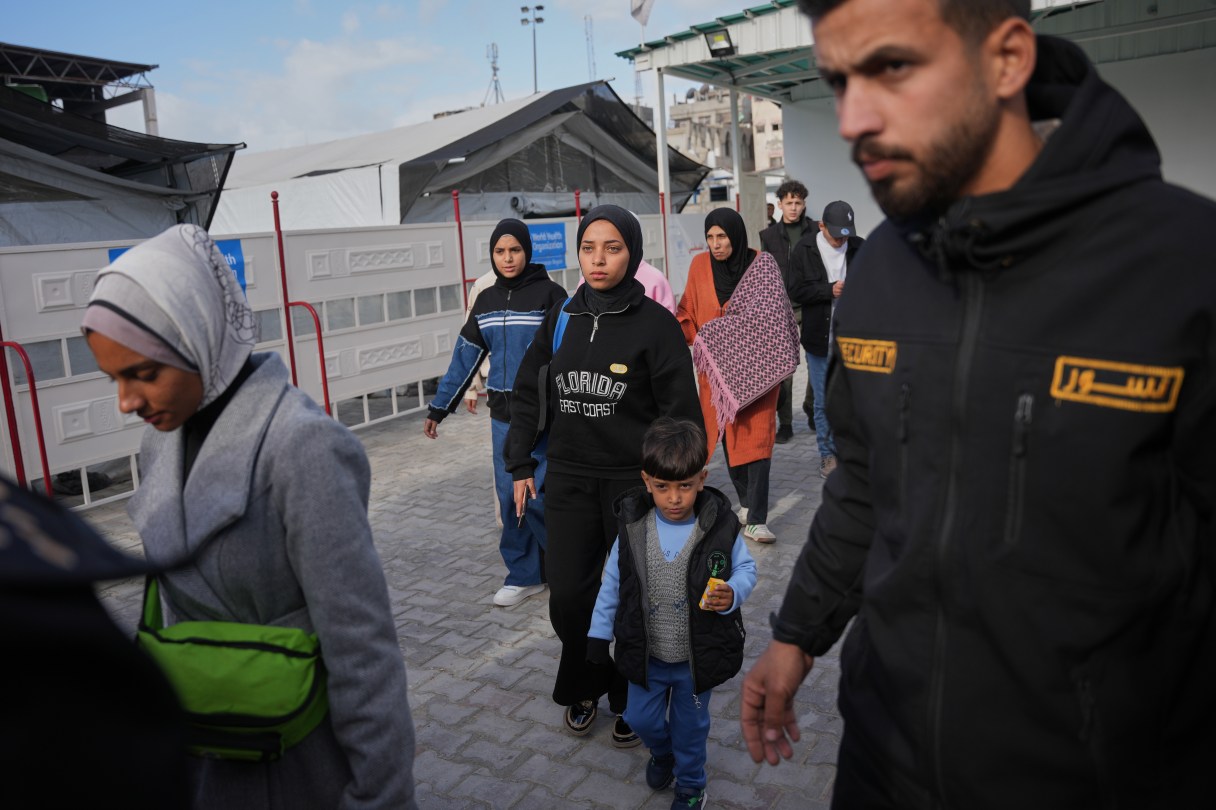
KHAN YOUNIS, Gaza Strip (AP) — When the Rafah border crossing between Gaza and Egypt finally reopened this week, Palestinian officials heralded it as a “window of hope” after two years of war as a fragile ceasefire deal moves forward.
But that hope has been sidetracked by disagreements over who should be allowed through, hourslong delays and Palestinian travelers’ reports of being handcuffed and interrogated by Israeli soldiers.
Far fewer people than expected have crossed in both directions. Restrictions negotiated by Israeli, Egyptian, Palestinian and international officials meant that only 50 people would be allowed to return to Gaza each day and 50 medical patients — along with two companions for each — would be allowed to leave.
But over the first four days of operations, just 36 Palestinians requiring medical care were allowed to leave for Egypt, plus 62 companions, according to United Nations data. Palestinian officials say nearly 20,000 people in Gaza are seeking to leave for medical care that they say is not available in the war-shattered territory.
Amid confusion around the reopening, the Rafah crossing was reportedly closed Friday and Saturday.