
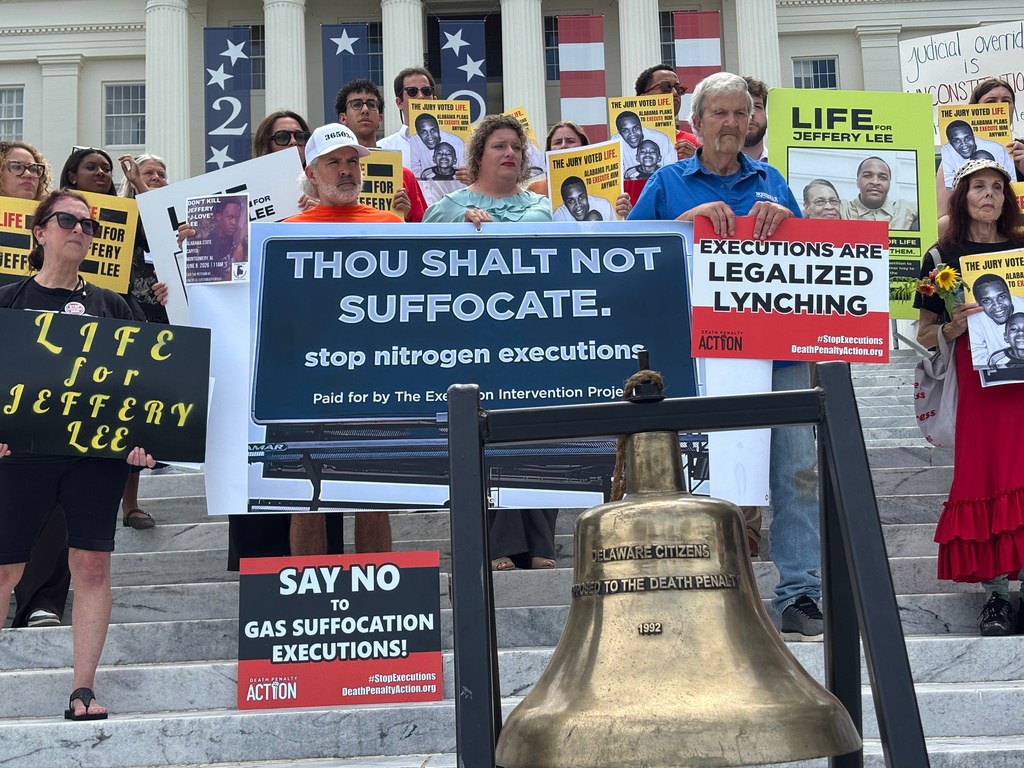
MONTGOMERY, Ala. (AP) — A federal judge on Tuesday permanently blocked Alabama from executing an inmate with nitrogen gas after declaring the method violates the U.S. Constitution’s ban on cruel and unusual punishment.
U.S. District Judge Emily Marks issued the ruling hours after an appeals court reversed her initial finding that the method was constitutional. Marks permanently enjoined the state from executing Jeffrey Lee, 49, by nitrogen gas. He was scheduled to be executed Thursday.
The decision, for now, blocks the use of the controversial new execution method that Alabama has championed since 2024. But the issue seems likely bound for the U.S. Supreme Court, which so far has never ruled a state’s execution method to be unconstitutional.
Alabama Attorney General Steve Marshall’s office is appealing the decision, according to a Tuesday night court filing. Marshall’s office did not issue an immediate comment. A spokeswoman for Lee’s legal team said they did not have an immediate comment.
Marks wrote that the appeals court found the method carried “a substantial risk of serious harm.” She also ruled that the state had the ability to switch to Lee’s preferred method, a firing squad. Inmates challenging execution methods are required to suggest an alternative method.