
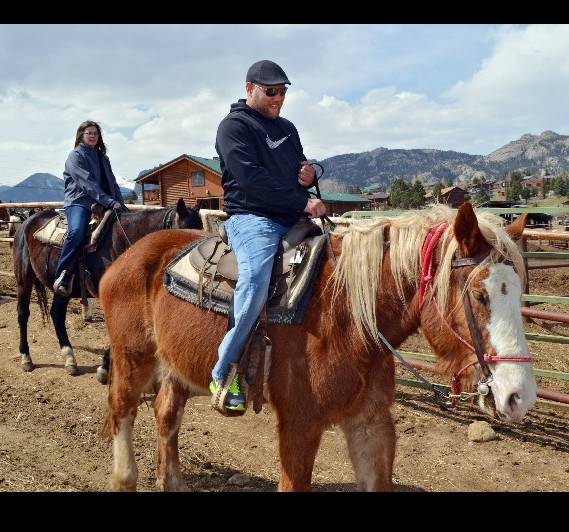
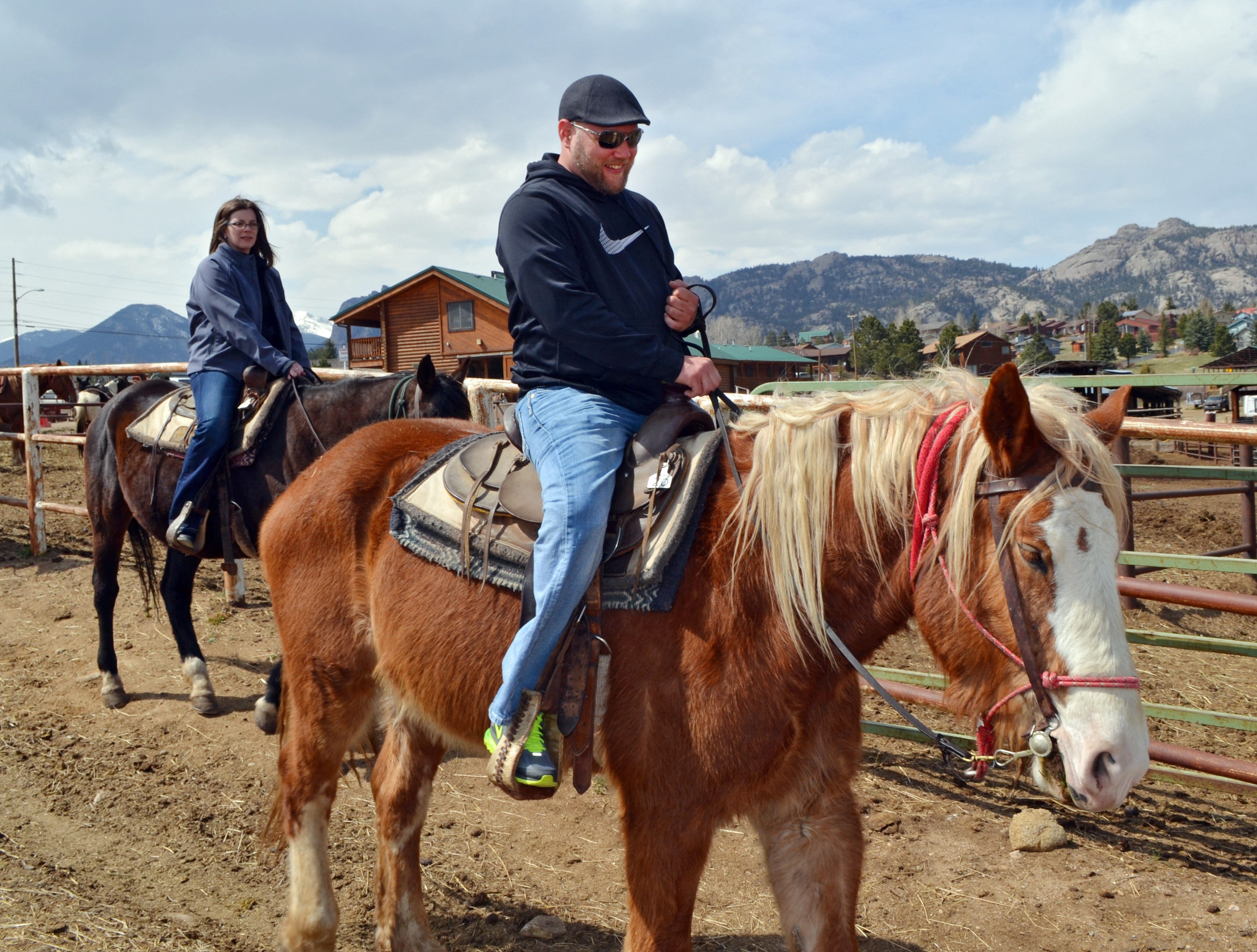
 Tourist Christian Styles, right, and Katy Little, left, both of Des Moines, Iowa, ride at Sombrero Ranches riding stables in Estes Park, Colo. Styles is on Joker, a Belgian draft horse, while Little rides Dodge, a quarter horse. The outfit uses draft horses along with quarter horses for tourists. The bigger horses are better able to handle the mountainous terrain as well as heavy riders.
Wranglers in the West who have for decades cashed in on the allure of getting on a horse and setting out on an open trail say they have had to add bigger horses to their stables to help carry larger tourists over the rugged terrain.
The ranches say they are using draft horses, the diesels of the horse world, in ever greater numbers to make sure they don’t lose out on income from potential customers of any size who come out to get closer to the West of yesteryear.
“Even though a person might be overweight, or, you know, heavier than the average American, it’s kind of nice we can provide a situation where they can ride with their family,” says wrangler T. James “Doc” Humphrey.
Humphrey’s 10-gallon hat, goatee, black vest and spurs are a tourist favorite at Sombrero Ranches, east of Rocky Mountain National Park, where they have 20 draft horses, inclu ding Belgians and Percherons, and 25 draft horses mixes.
Ranch operators say they began adding the bigger horses in the 1990s, but the pace has picked up in recent years. Over the last 20 years, obesity has increased to more than a third of adults and about 17 percent of children age 2 to 19, according to federal statistics.