
Snake: a limbless, scaled reptile with a long, tapering body and salivary glands that often produce venom. Or, a “worthless and treacherous fellow,” according to Mirriam-Webster’s first two definitions of the word.
ID in an instant
If you’re in Wi-Fi range, a simple way to find out about a snake is a Facebook page called “Snake Identification” which has page moderators from around the world who can identify a snake by its photo in a matter of moments, Bakland says.
Since biblical times, the snake has been viewed with a deep mistrust, often even portrayed as the embodiment of evil itself. But such a view is detrimental not only to the creatures, but to the environment.
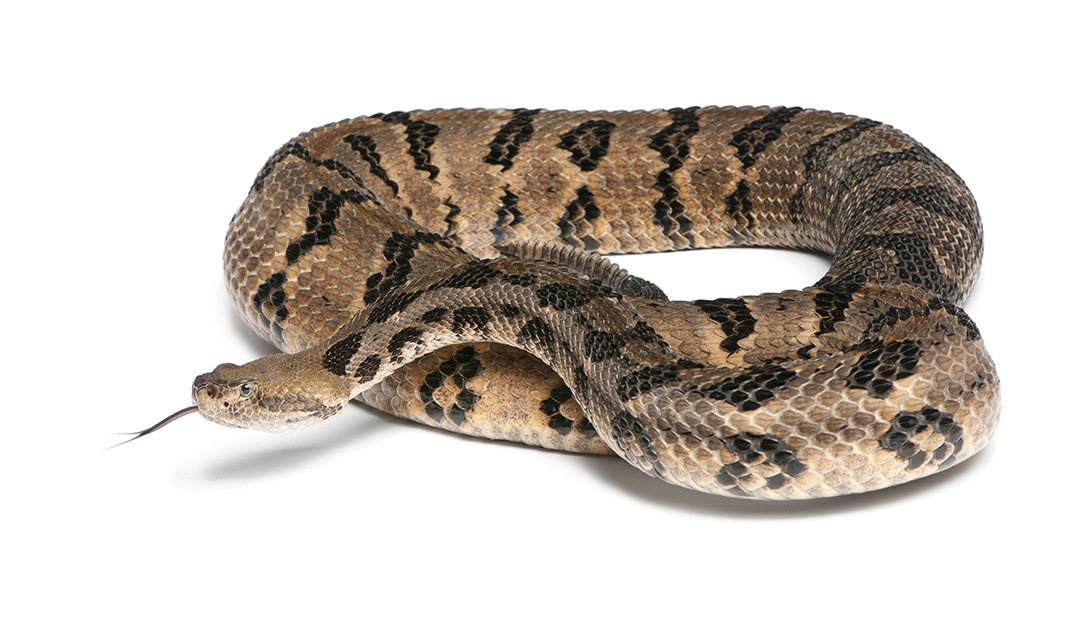 Timber rattlesnake
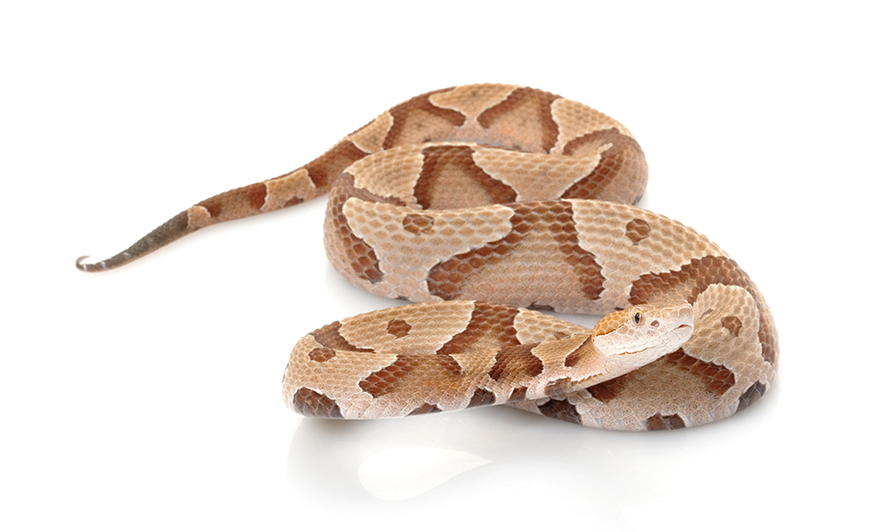 Copperhead
Snakes serve a vital ecological role, says Paul-Erik Bakland, a herpetology graduate student at the University of Tennessee – Chattanooga and educational volunteer at Reflection Riding Nature Center. The reptiles are key in keeping rodent and other pest problems at a minimum, thus limiting the spread of any disease carried by their prey, including tick-born illnesses such as Rocky Mountain spotted fever and Lyme disease.
“[People] think, ‘Well, I’m just going to kill this snake because it will make my area safer. But diseases carried by rodents are far more insidious than a few snakes on your property. There are studies that show that areas with high densities of rattlesnakes have lower instances of Lyme disease because these snakes are eating up all these rodents that are carrying the ticks. So they’re eating up huge amounts of parasites that are legitimately problematic.”