
Thursday, October 29, 2026Oct 29

This story is free to read.

Churches mostly empty for Orthodox Easter due to coronavirus rules

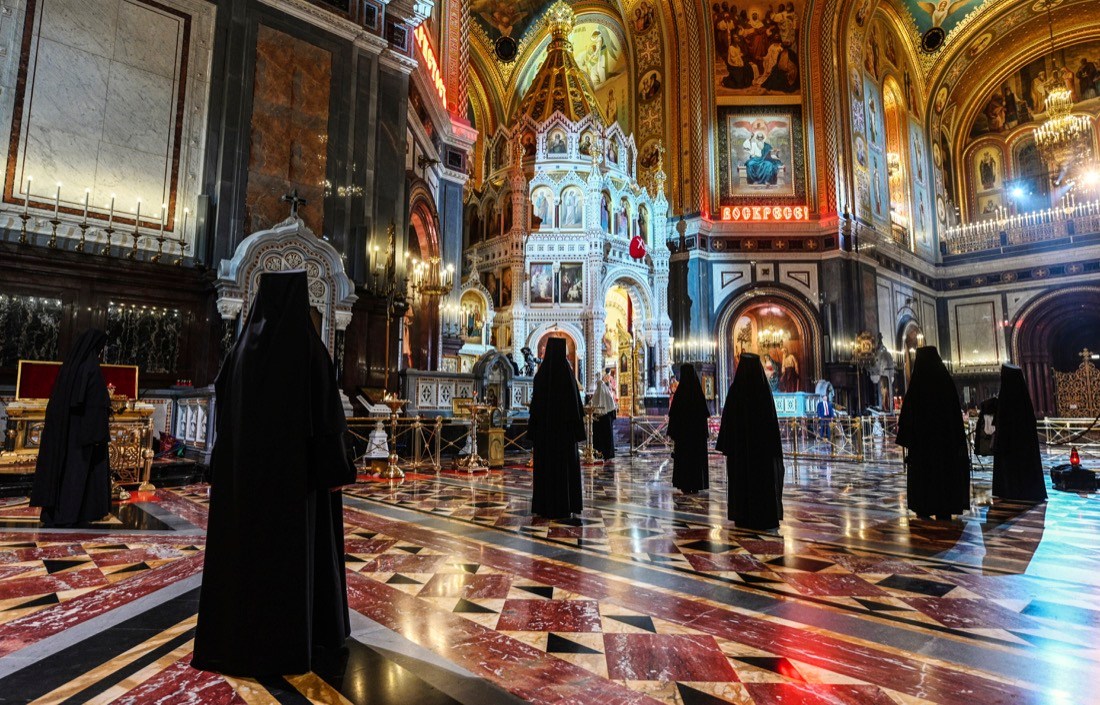
Russian Orthodox Church nuns, observe social distancing guidelines as they attend the church's main service celebrating Orthodox Easter at Moscow's Christ the Savior Cathedral in Moscow, Russia, early Sunday, April 19, 2020. Orthodox priests in much of Europe held Easter services in churches empty of parishioners because of restrictions imposed to block the spread of coronavirus. (Oleg Varov, Russian Orthodox Church Press Service via AP)
Russian Orthodox Church nuns, observe social distancing guidelines as they attend the church's main service celebrating Orthodox Easter at Moscow's Christ the Savior Cathedral in Moscow, Russia, early Sunday, April 19, 2020. Orthodox priests in much of Europe held Easter services in churches empty of parishioners because of restrictions imposed to block the spread of coronavirus. (Oleg Varov, Russian Orthodox Church Press Service via AP) Russian Orthodox Church nuns, observe social distancing guidelines as they attend the church's main service celebrating Orthodox Easter at Moscow's Christ the Savior Cathedral in Moscow, Russia, early Sunday, April 19, 2020. Orthodox priests in much of Europe held Easter services in churches empty of parishioners because of restrictions imposed to block the spread of coronavirus. (Oleg Varov, Russian Orthodox Church Press Service via AP)

MOSCOW (AP) – The holiest day of the year for Orthodox Christians was reserved and glum in many countries where churches were closed to worshipers for Easter services because of restrictions aimed at suppressing the spread of the coronavirus.

From Moscow to Addis Ababa, believers were either banned from attending Sunday services or urged to stay home and watch them on national television broadcasts.

In Georgia, where some churches remained open, some worshipers went through a long ordeal to attend services that began late Saturday night in order to conform with a nationwide curfew – arriving at churches before 9 p.m. and required to stay until 6 a.m.

Serbia’s curfew was even more strict, lasting 84 hours from Friday afternoon until Tuesday morning. The head of the Serbian Orthodox Church, Patriarch Irinej, held the Easter liturgy at midnight without believers but there were reports that some people entered churches to attend morning services.

Most churches in Russia were closed to the public, including Moscow’s Christ the Savior Cathedral, where the leader of the world’s largest Orthodox denomination, Patriarch Kirill, conducted the nighttime service in the presence only of other clerics, a choir and some church workers.