
Wednesday, November 11, 2026Nov 11

Disappearance of Bolivia’s No. 2 lake a harbinger

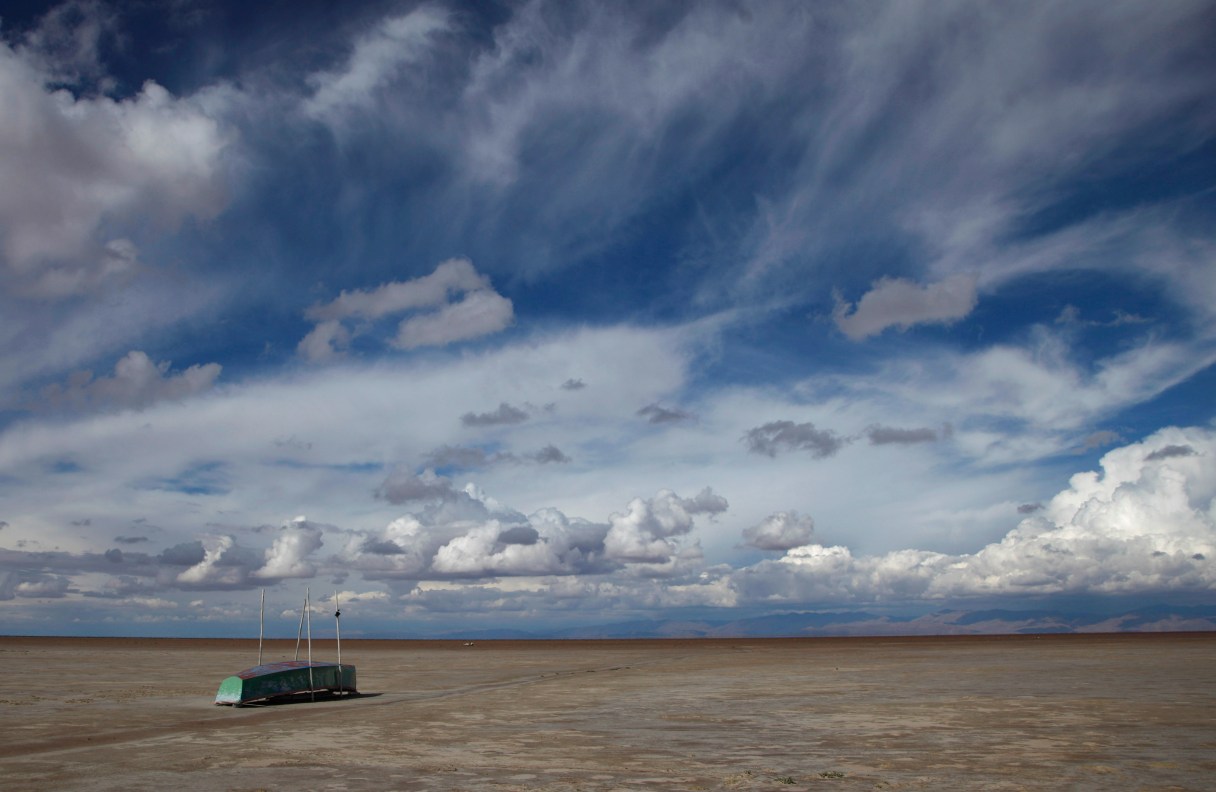
In this Jan. 12, 2016 photo, an abandoned boat lies on the dried up lake bed of Lake Poopo, on the outskirts of Untavi, Bolivia. Drought caused by the recurrent El Nino meteorological phenomenon is considered the main driver of the lake's demise. Along with glacial melting, authorities say another factor is the diversion of water from Poopo’s tributaries, mostly for mining but also for agriculture. (AP Photo/Juan Karita)
In this Jan. 12, 2016 photo, an abandoned boat lies on the dried up lake bed of Lake Poopo, on the outskirts of Untavi, Bolivia. Drought caused by the recurrent El Nino meteorological phenomenon is considered the main driver of the lake's demise. Along with glacial melting, authorities say another factor is the diversion of water from Poopo’s tributaries, mostly for mining but also for agriculture. (AP Photo/Juan Karita) In this Jan. 12, 2016 photo, an abandoned boat lies on the dried up lake bed of Lake Poopo, on the outskirts of Untavi, Bolivia. Drought caused by the recurrent El Nino meteorological phenomenon is considered the main driver of the lake's demise. Along with glacial melting, authorities say another factor is the diversion of water from Poopo’s tributaries, mostly for mining but also for agriculture. (AP Photo/Juan Karita)

UNTAVI, Bolivia (AP) – Overturned fishing skiffs lie abandoned on the shores of what was Bolivia’s second-largest lake. Beetles dine on bird carcasses and gulls fight for scraps under a glaring sun in what marshes remain.

Lake Poopo was officially declared evaporated last month. Hundreds, if not thousands, of people have lost their livelihoods and gone.

High on Bolivia’s semi-arid Andean plains at 3,700 meters (more than 12,000 feet) and long subject to climatic whims, the shallow saline lake has essentially dried up before only to rebound to twice the area of Los Angeles.

But recovery may no longer be possible, scientists say.

“This is a picture of the future of climate change,” says Dirk Hoffman, a German glaciologist who studies how rising temperatures from the burning of fossil fuels has accelerated glacial melting in Bolivia.