
Wednesday, November 11, 2026Nov 11

In drought, “pop-up” wetlands provide bird habitat

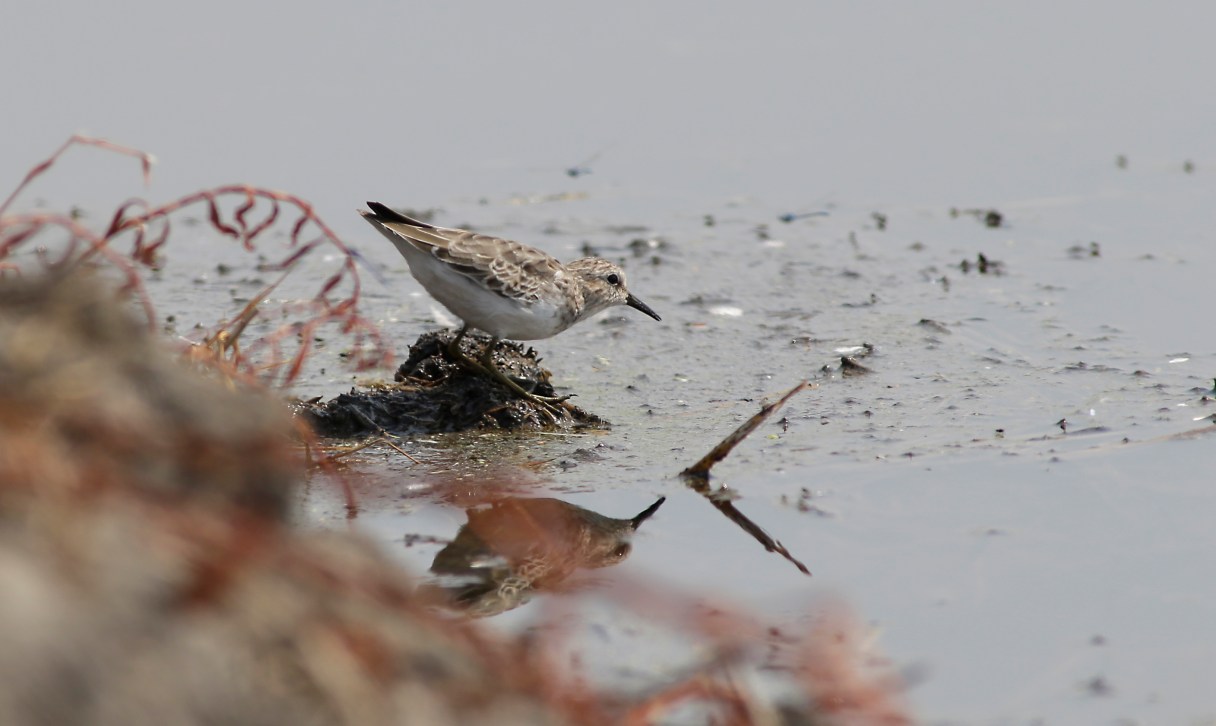
In this photo taken Tuesday, Sept. 9, 2014,  a Least Sandpiper forages for food in a rice field near Knights Landing, Calif.  Due to the severe drought California's critical wetlands has been cut to as little as one-sixth, threatening the habitat of migrating birds along the Pacific Flyway. The Nature Conservancy has embarked on a program to lease 14,000 acres from rice farmers, to be flooded long enough to create "pop-up habitats" that will give migrating birds resting and feeding grounds needed to survive their long flights  to and from the north.(AP Photo/Rich Pedroncelli)
In this photo taken Tuesday, Sept. 9, 2014, a Least Sandpiper forages for food in a rice field near Knights Landing, Calif. Due to the severe drought California's critical wetlands has been cut to as little as one-sixth, threatening the habitat of migrating birds along the Pacific Flyway. The Nature Conservancy has embarked on a program to lease 14,000 acres from rice farmers, to be flooded long enough to create "pop-up habitats" that will give migrating birds resting and feeding grounds needed to survive their long flights to and from the north.(AP Photo/Rich Pedroncelli) In this photo taken Tuesday, Sept. 9, 2014, a Least Sandpiper forages for food in a rice field near Knights Landing, Calif. Due to the severe drought California's critical wetlands has been cut to as little as one-sixth, threatening the habitat of migrating birds along the Pacific Flyway. The Nature Conservancy has embarked on a program to lease 14,000 acres from rice farmers, to be flooded long enough to create "pop-up habitats" that will give migrating birds resting and feeding grounds needed to survive their long flights to and from the north.(AP Photo/Rich Pedroncelli)

YUBA CITY, Calif. (AP) – For the swirling flock of migrating shorebirds banking to a landing in California’s Central Valley, a recently flooded rice field is providing a new kind of triage station during a drought that’s drastically reducing places where they can rest on their long journeys.

The new arrivals to the field – hundreds of them – are dowichers, says conservationist Greg Gulot, standing on a dirt berm and focusing his binoculars to identify a wading bird that is one of the first to fly south in an annual migration that brings 350 species to California’s Sacramento and San Joaquin valleys.

With millions of birds on their way from the Arctic and subarctic and the drought cutting critical wetlands to as little as one-sixth, the field is one of the first to come on line this fall under a new program of “pop-up” habitats.

Conservationists are temporarily renting 14,000 acres from rice farmers and flooding them just long enough to give the migrating birds the rest and food they need to survive their flights.

Within hours of workers flooding the field two weeks earlier, hundreds of migrating birds appeared.